
Coffea arabica (Arabian coffee)
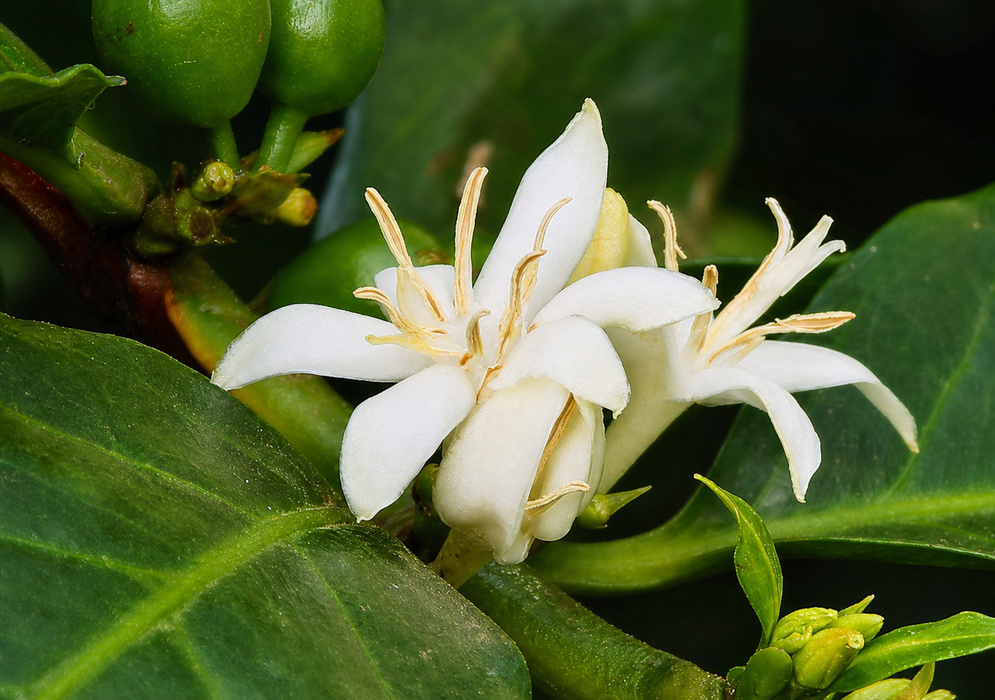
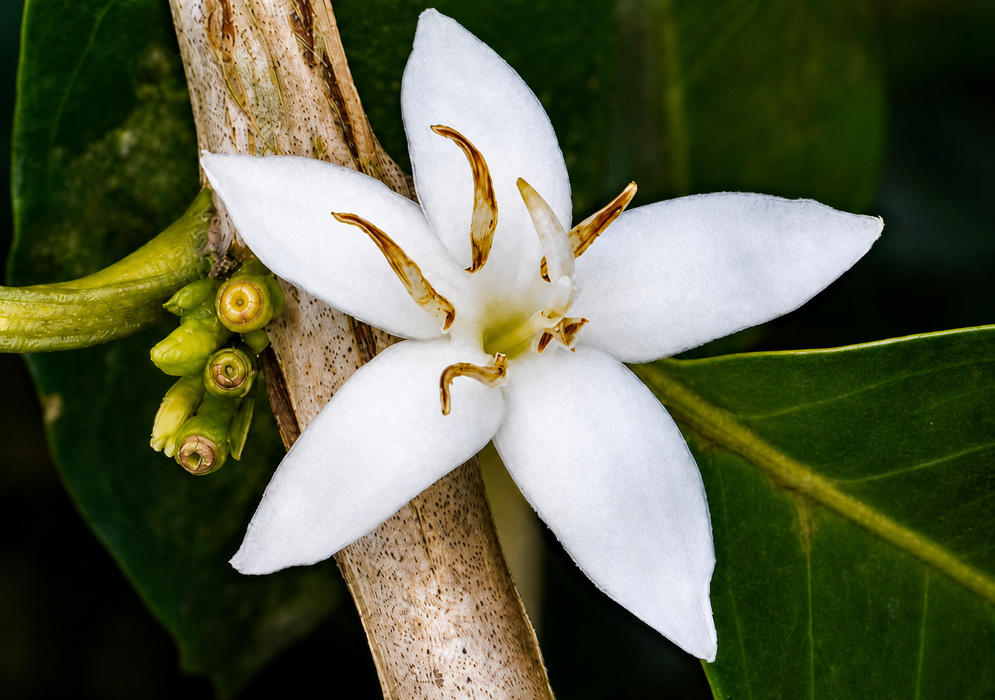
Native to eastern South Sudan, southwestern Ethiopia, and northern Kenya, it is an evergreen shrub or small tree with horizontal branches and glossy leaves. Its oval leaves have pointed tips and often wavy edges. Sweetly scented white flowers form clusters where the leaves meet the branches, usually with five spreading corolla lobes. The fleshy fruits, called coffee cherries, generally ripen red, although cultivated forms can produce yellow or purple fruits. Each usually contains two seeds, the coffee beans, which are processed, roasted, and ground to make coffee. A plant can produce fertile seeds using its own pollen. The species arose through natural hybridization between Coffea eugenioides and Coffea canephora. Despite extensive cultivation, wild Arabica is Endangered, with deforestation and climate change threatening its native forest populations. Photographed in the central Andes mountain range of Colombia.