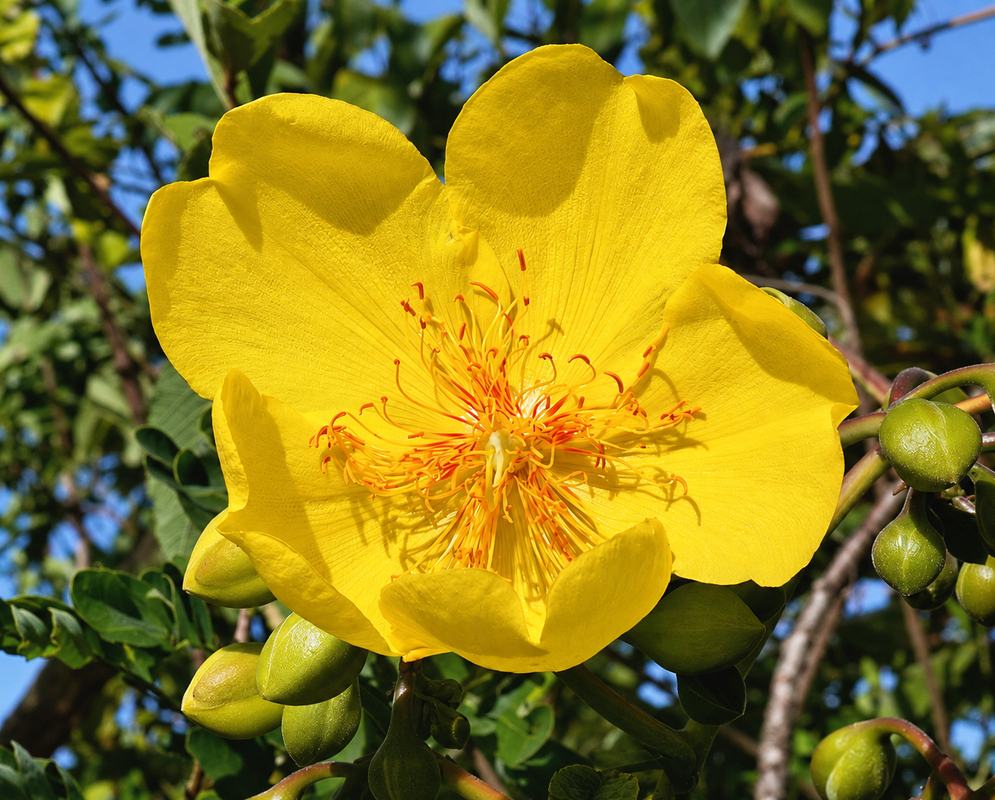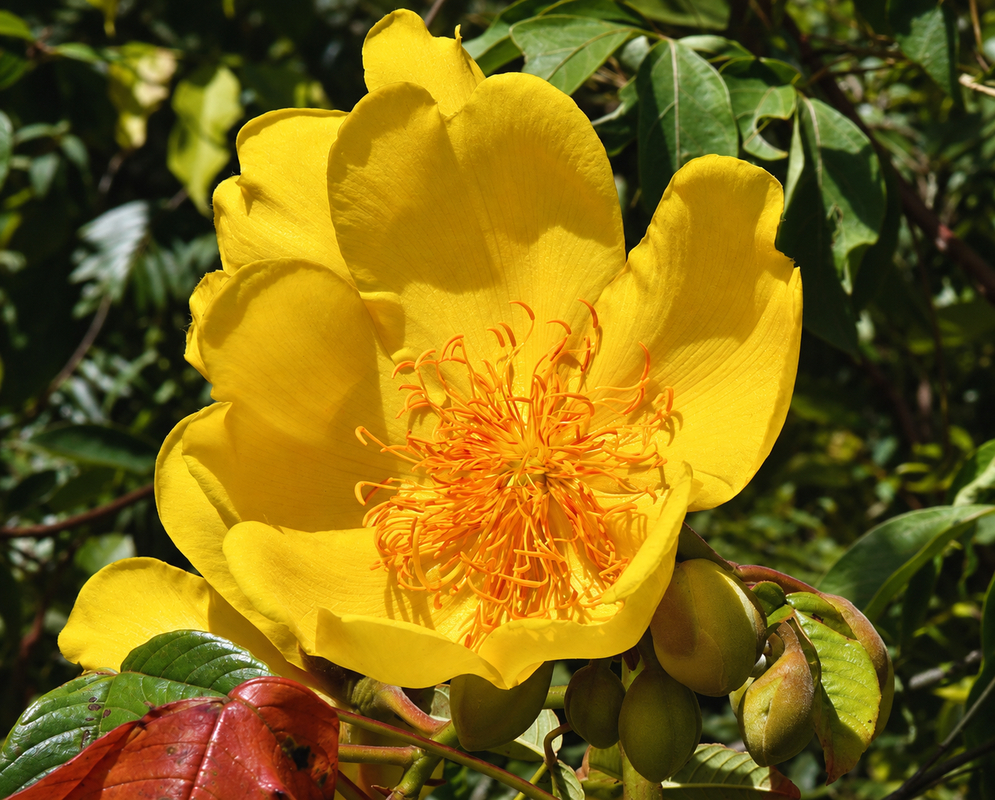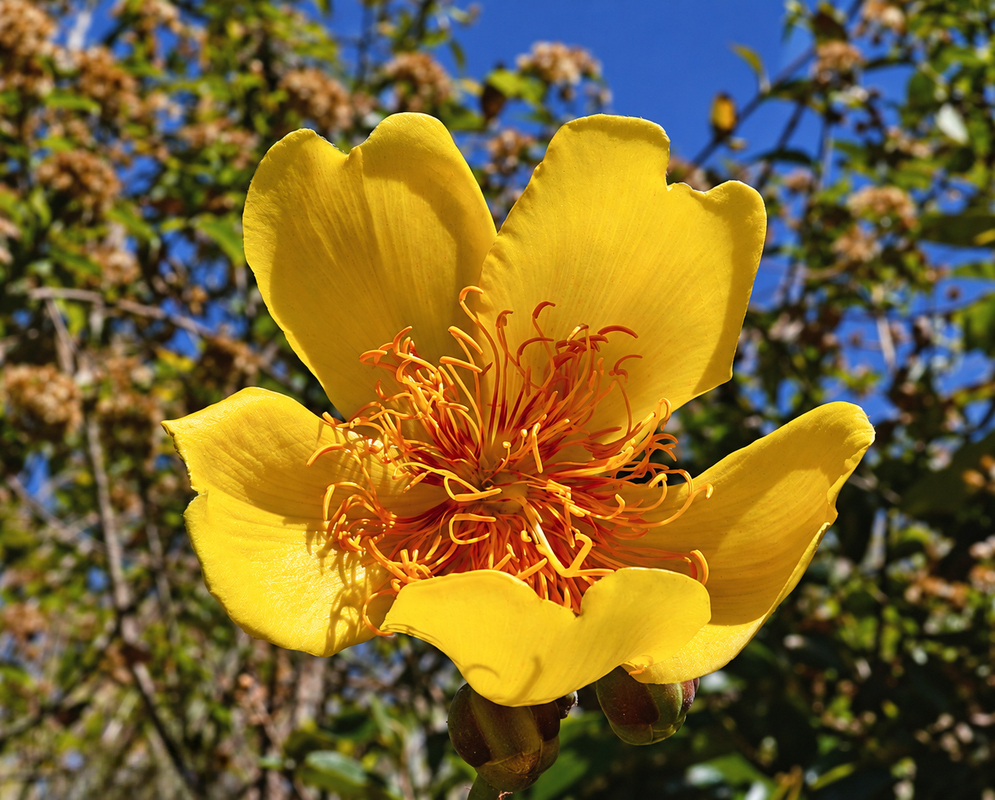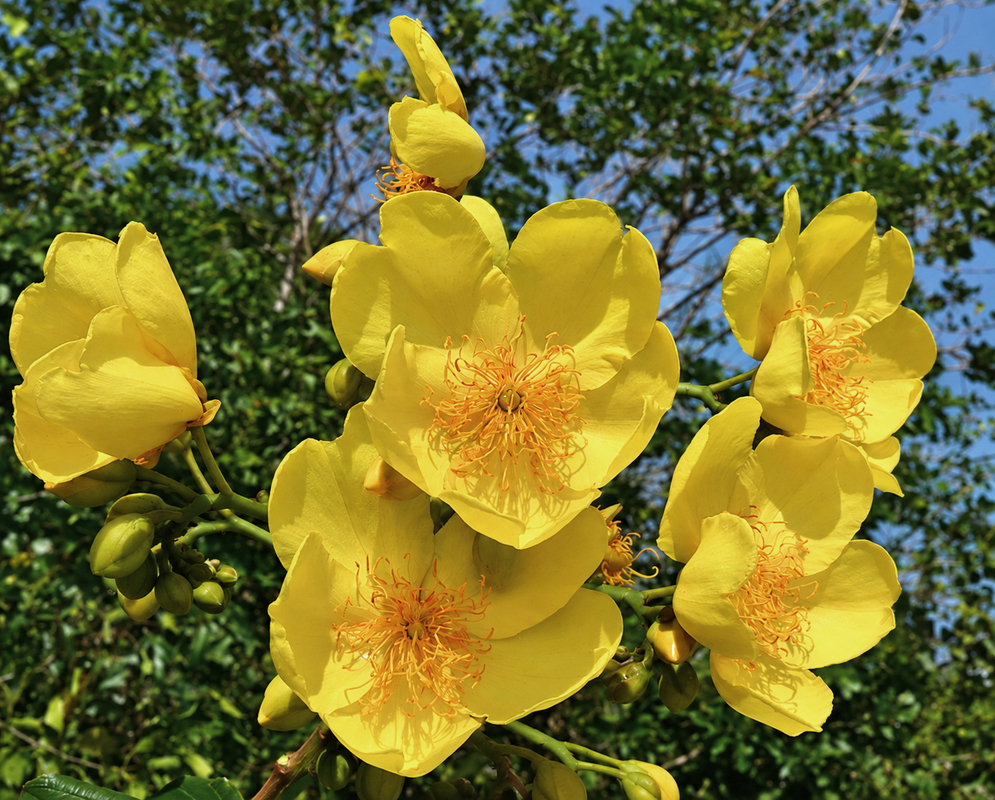

Cochlospermum vitifolium (Buttercup Tree)
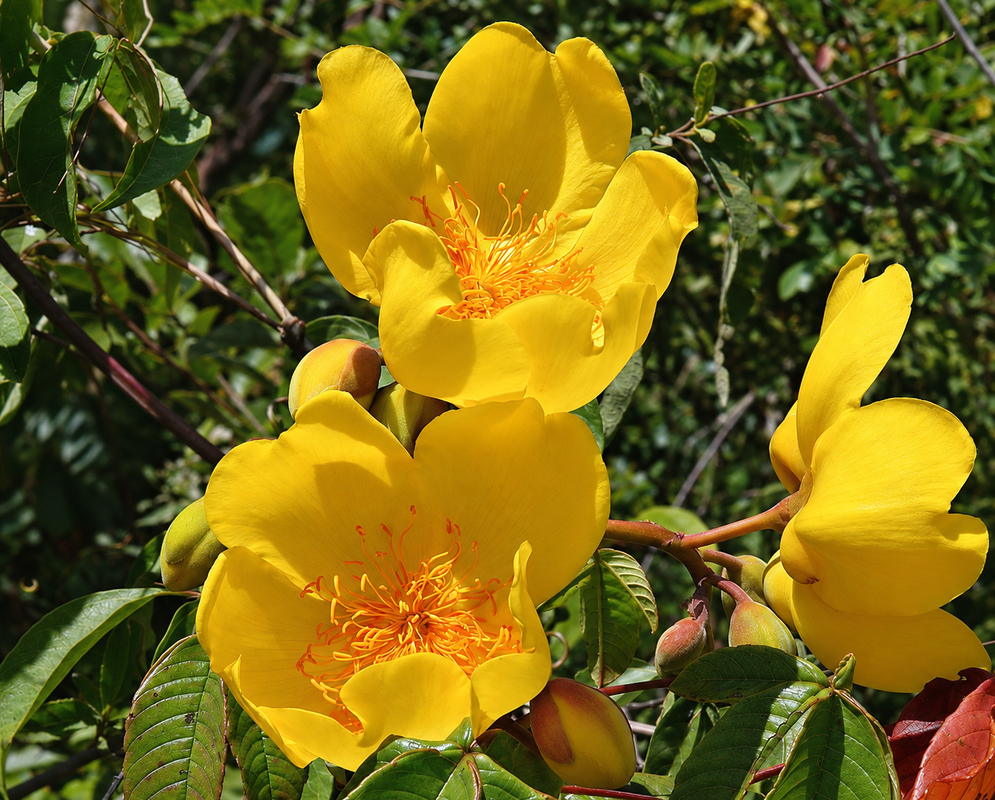
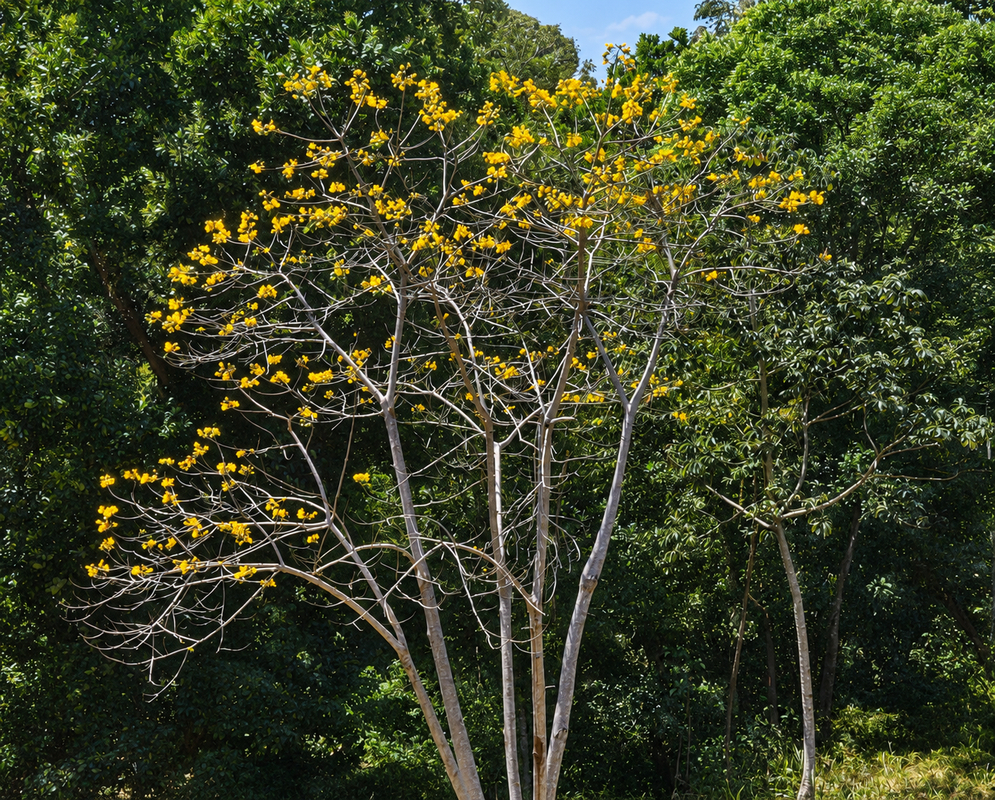
Native from Mexico through Central America into tropical South America, and also to Cuba, buttercup tree is a deciduous tree of seasonally dry forests. It sheds its leaves during the dry season, when clusters of yellow flowers appear at the branch tips. Each flower usually has five rounded, often notched petals surrounding numerous stamens whose anthers release pollen through pores. Double-flowered forms with many additional petals are grown ornamentally in parts of Mexico. The seed capsules split into five sections, releasing curved seeds surrounded by cottonlike hairs that help them travel on the wind.
In Mexico, the bark fibers have been used for cordage, and the seed hairs for stuffing pillows and cloth dolls. Wixárika communities have used the flowers to make a yellow colorant for ceremonial face painting. The species also supplies living fence posts. Stem and bark preparations have a history of traditional use for diabetes and jaundice. Experimental bark extracts have lowered blood glucose in rats. A clinical case associated repeated consumption of an infusion with liver injury that improved after the preparation was stopped. Photographed in western Panama.