

Cobaea scandens (Cathedral Bells)
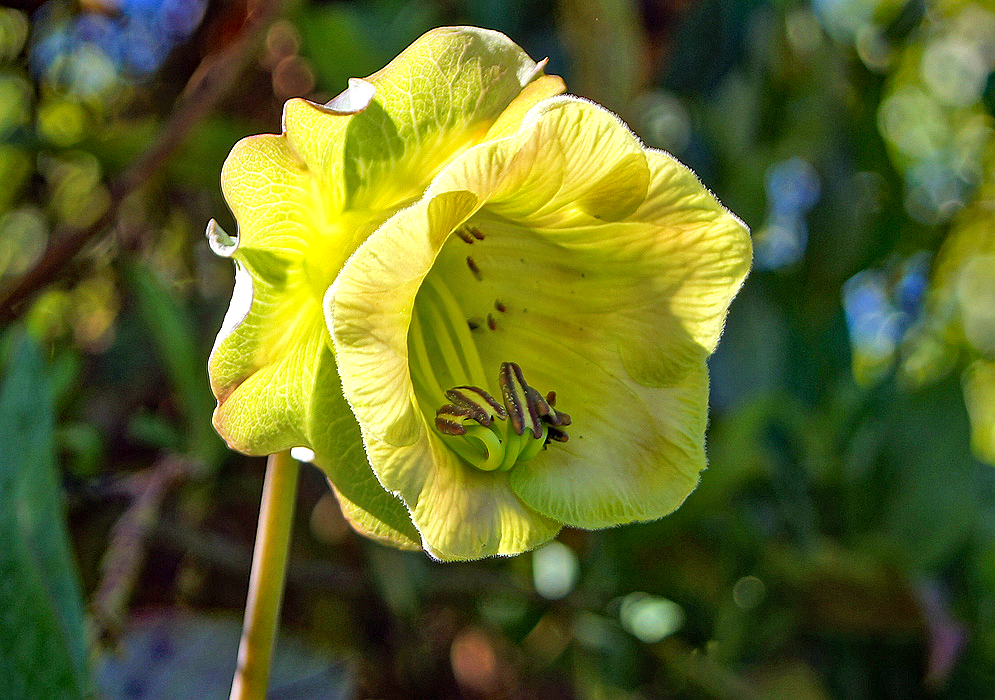
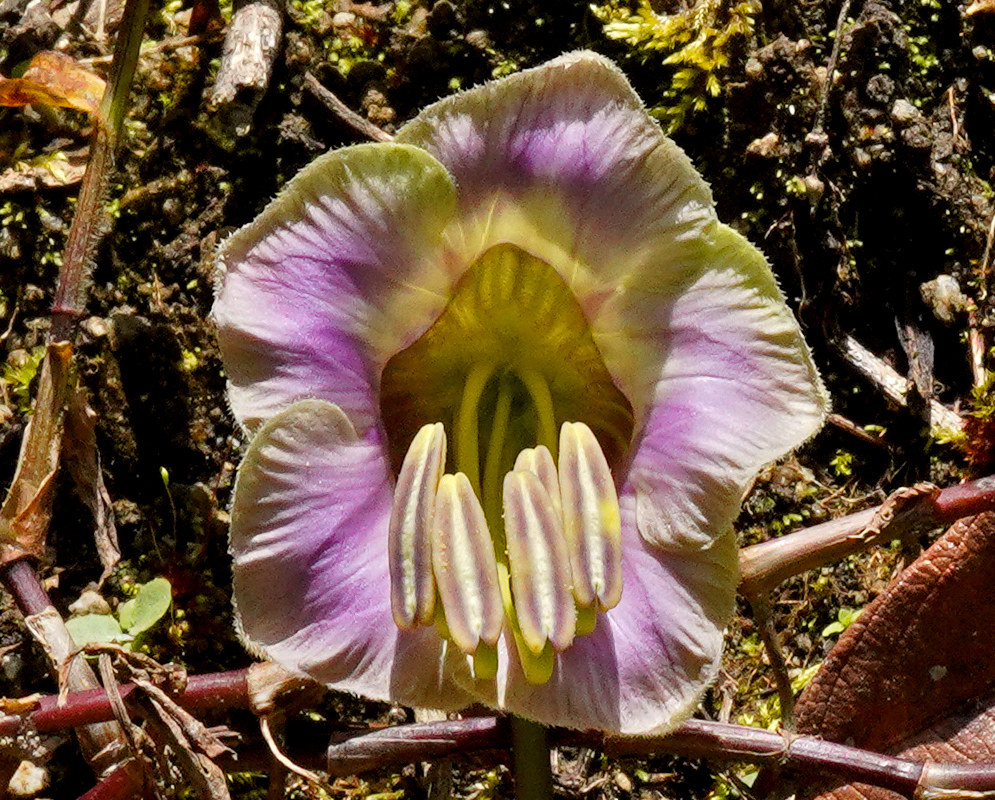
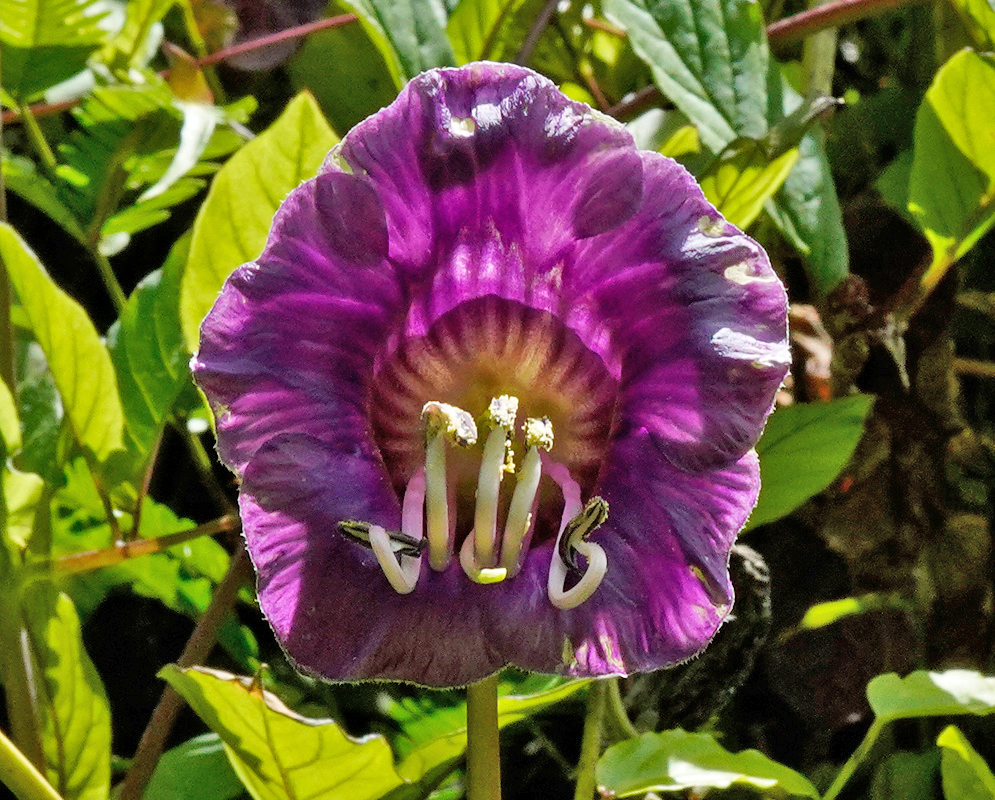
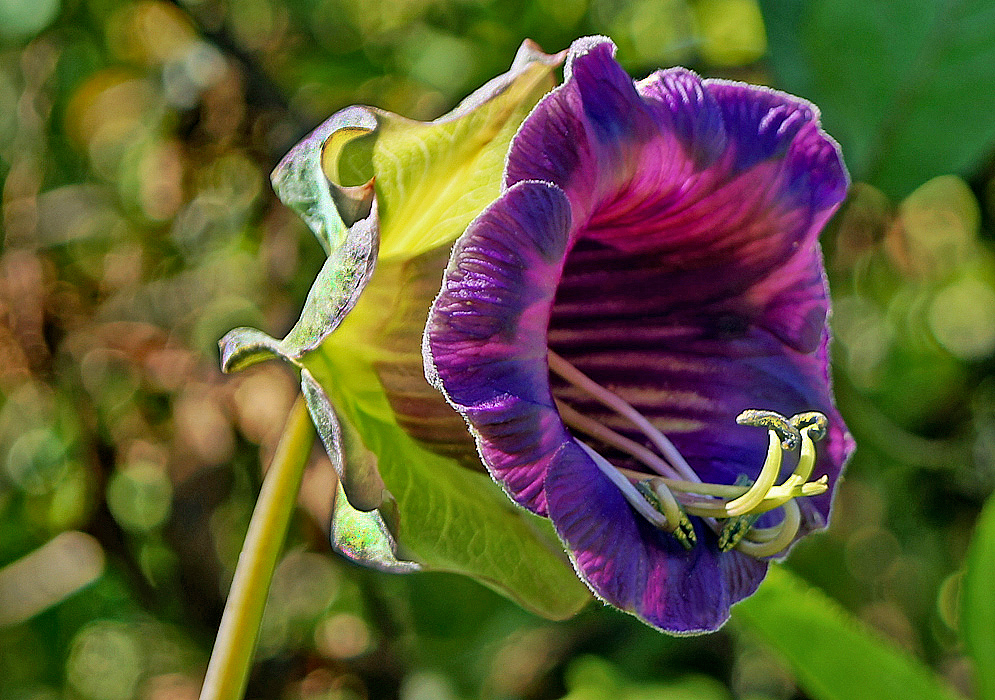
Native to Mexico, cathedral bells is a vigorous perennial climbing vine that attaches to surrounding vegetation with branched, hooked tendrils. Its bell-shaped corolla sits inside a spreading green calyx, creating the cup-and-saucer appearance behind another familiar common name. The flowers open greenish cream with a musky scent, then become violet to deep purple and more sweetly scented as they mature. Long stamens extend beyond the corolla, and nectar-feeding bats can pollinate the flowers. The white-flowered form, often sold as ‘Alba’, remains creamy white rather than turning purple.
The species received the Royal Horticultural Society’s Award of Garden Merit in 1993 and is grown as an ornamental in Europe and the United States. In New Zealand, escaped vines are invasive and can smother other vegetation. In the Orizaba region of Mexico, it has been used traditionally for diabetes, jaundice, and bladder complaints. Photographed in the eastern Andes mountain range of Colombia.