

Clusia lanceolata
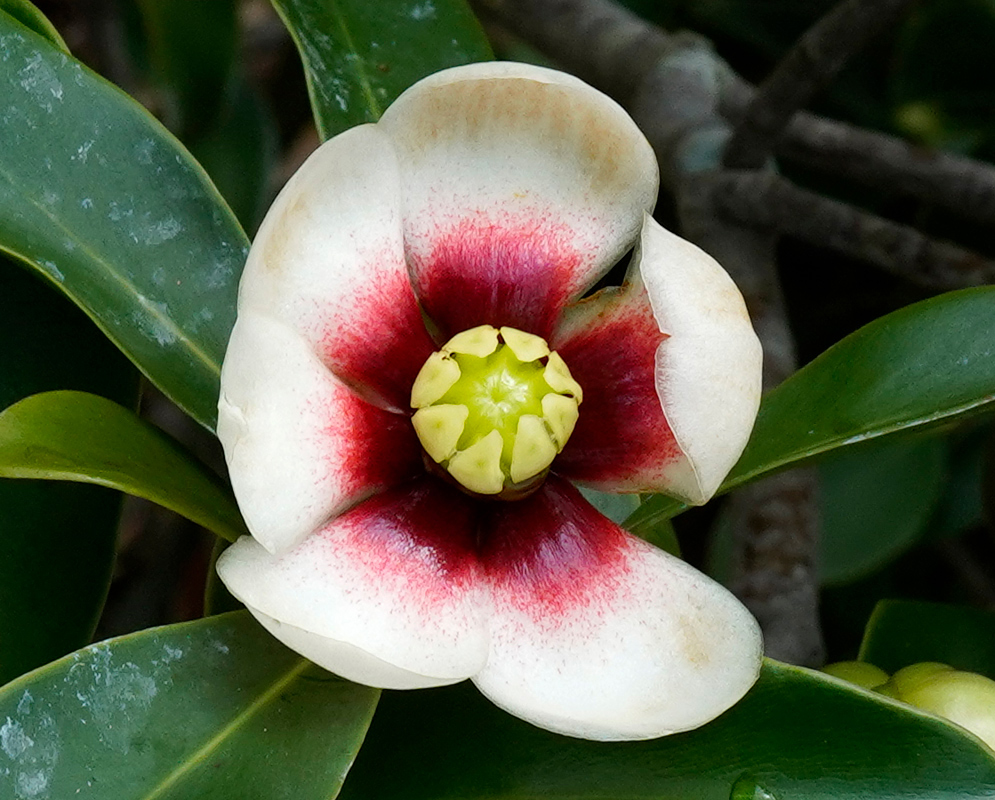
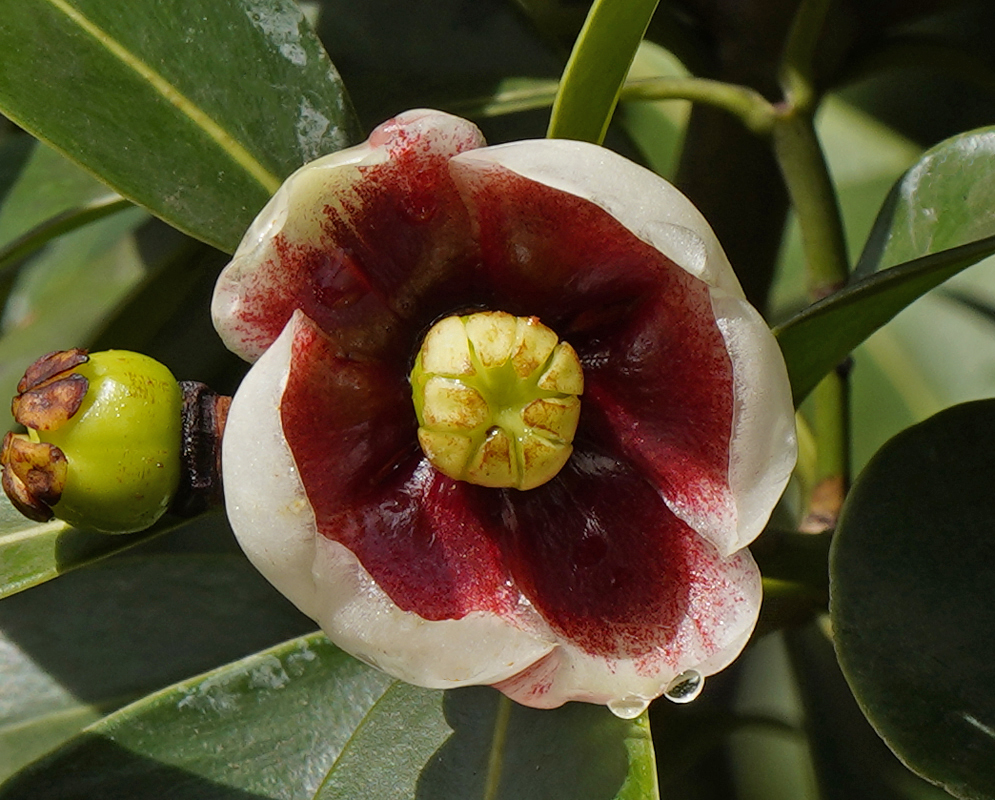
Native to southeastern Brazil, it is a shrub or small tree with an irregular crown, often branching from near the base. Its stems contain white to yellowish latex. The leaves are narrow, elliptical to broader toward the tip, and somewhat leathery. Flowers grow singly or in small groups at branch tips, with white petals marked deep red at their bases. Male and female flowers occur on separate plants. The rounded fruit capsules split open to expose seeds with yellow-orange fleshy coverings.
This species can combine ordinary daytime photosynthesis with crassulacean acid metabolism, or CAM, which allows some carbon dioxide uptake at night. Photographed in Florida.