Clitoria ternatea (Butterfly Pea)
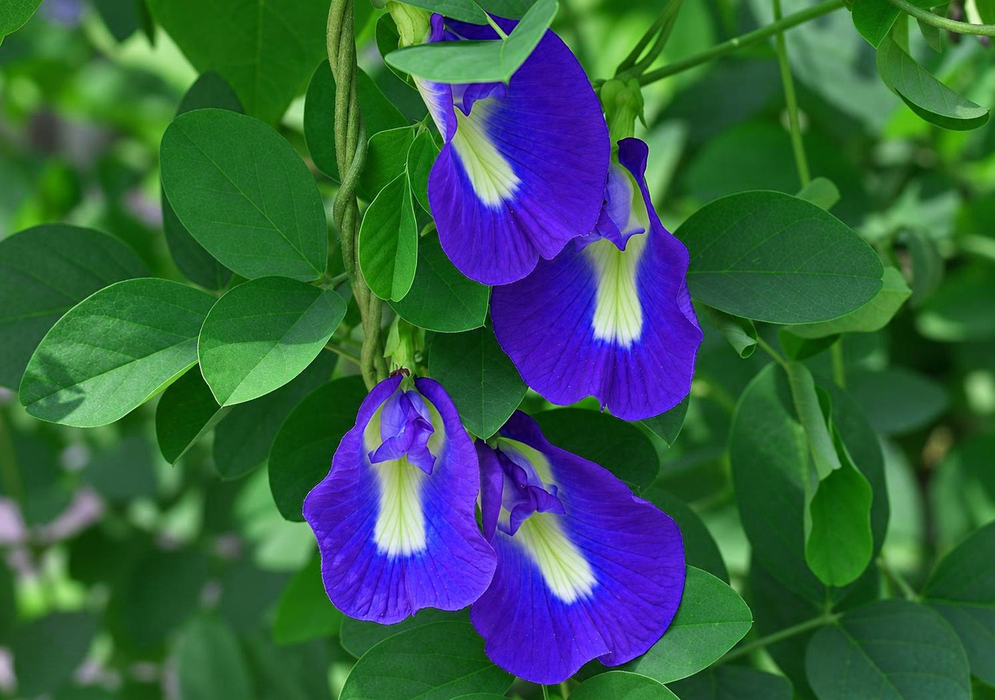
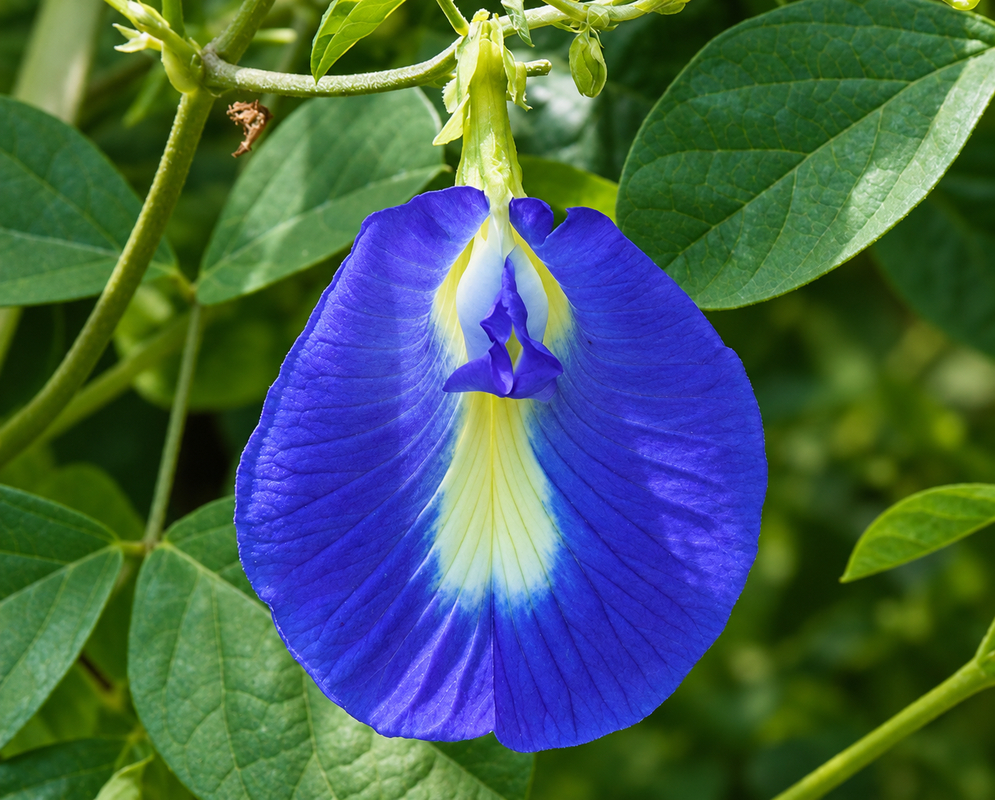
Native to parts of Africa and the Arabian Peninsula and now widespread across the tropics, butterfly pea is a perennial twining vine. Its usually deep blue flowers have a pale central patch and an inverted arrangement, with the broad standard petal held below the smaller petals. White-flowered and double-flowered forms also occur. The blue flowers color traditional Malay and Peranakan rice dishes and sweets and are used in herbal teas. Their ternatin pigments change with acidity, so lemon juice shifts a blue infusion toward purple or pink. A specified flower extract is approved in the United States as a color additive for selected foods and drinks, with additional food uses authorized in 2025. The species is also grown as forage and a cover crop, and plant extracts are used in the Australian commercial insecticide Sero-X.
In Ayurveda, the root is used traditionally for pain, swelling, skin complaints, and urinary disorders. Human research has examined flower extracts separately: a small randomized crossover trial in 15 healthy men found a lower blood-glucose response when the extract was taken with a sucrose drink. A second small trial in 16 overweight or obese men found a lower overall triglyceride response after a high-fat meal, without a significant glucose effect. These were short experiments lasting hours and do not establish long-term treatment benefits for diabetes or other illnesses. Photographed in Barranquilla, Colombia.