
Clerodendrum paniculatum (Pagoda Flower)
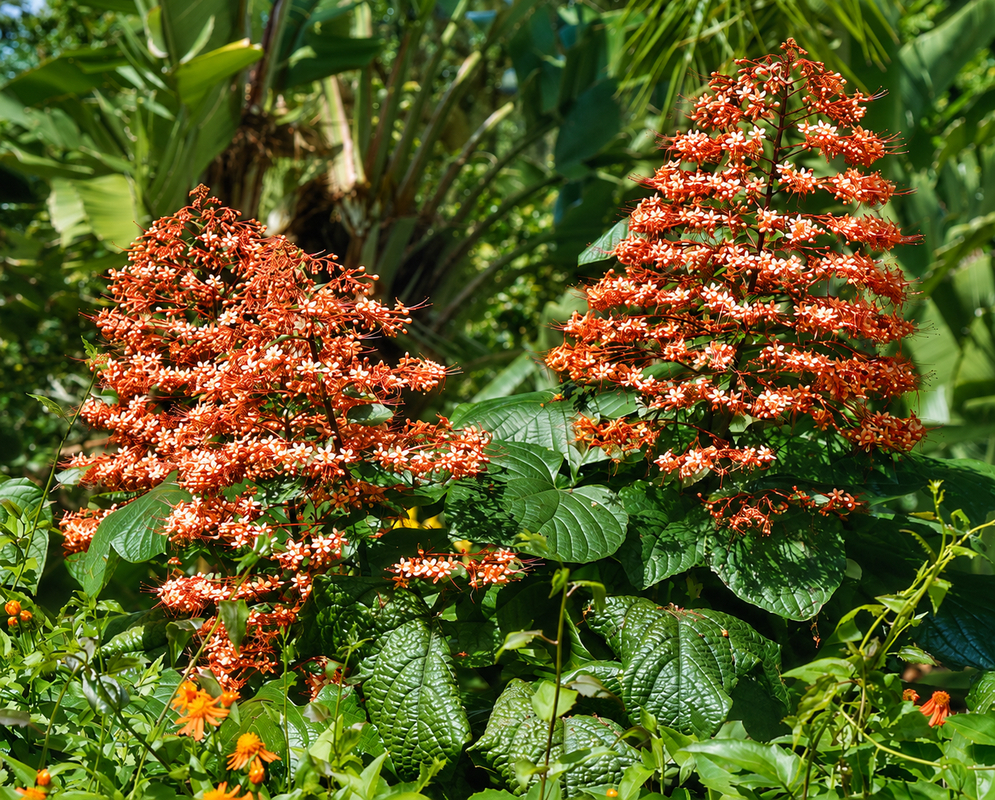
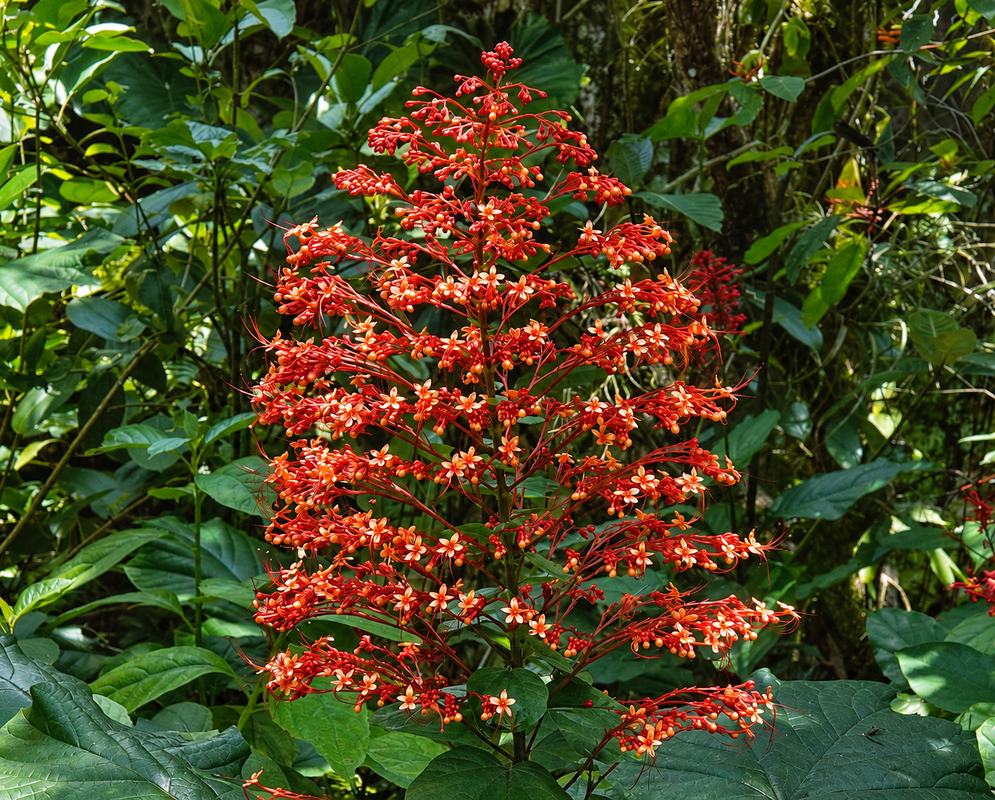
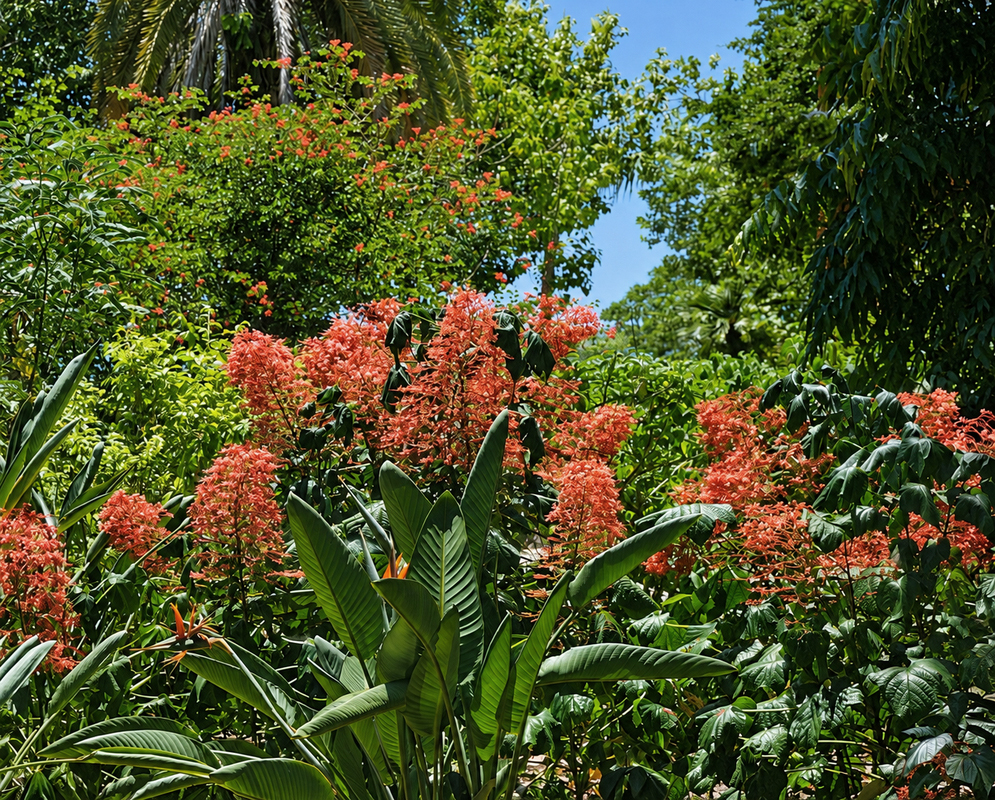
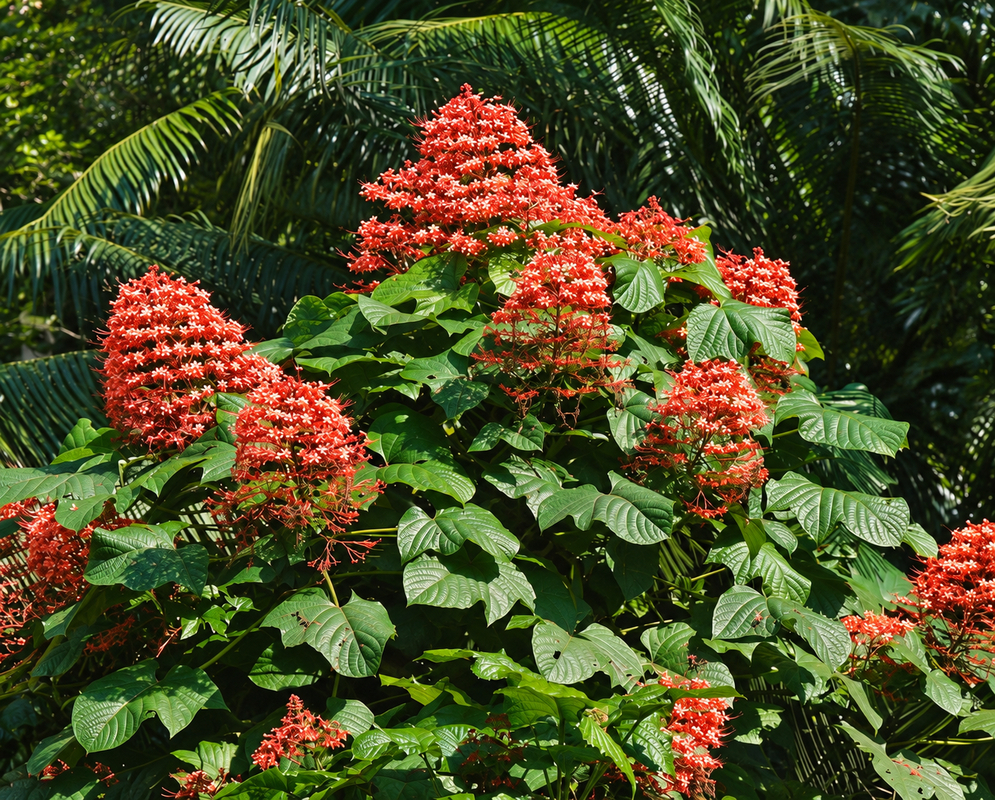
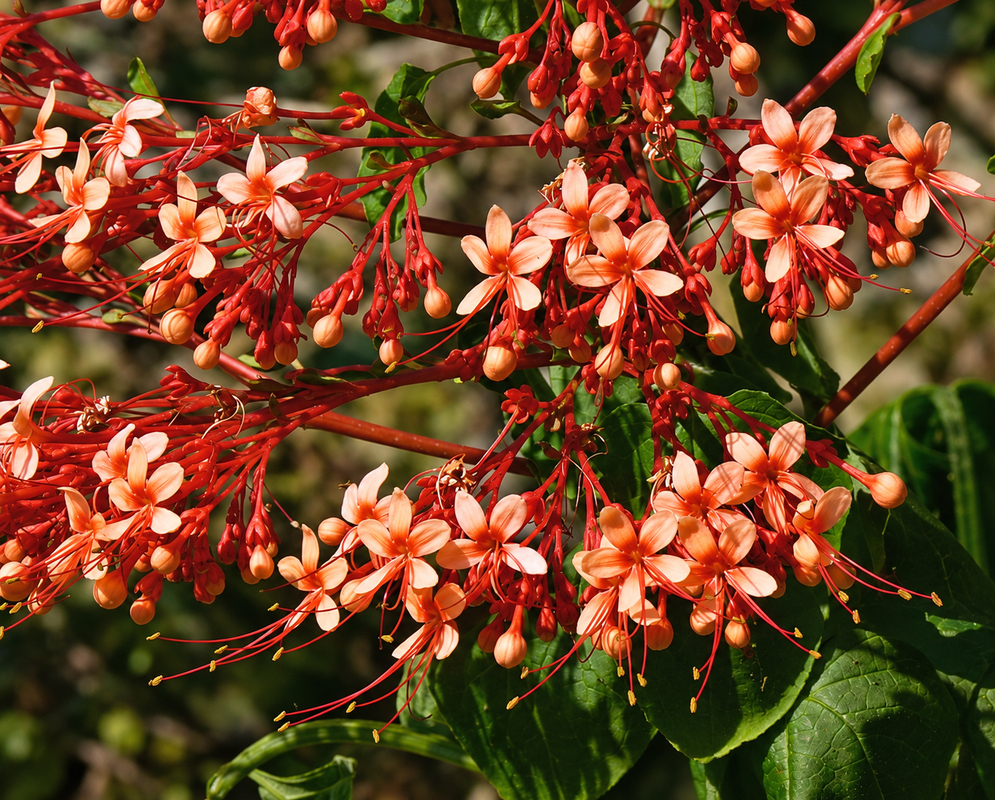
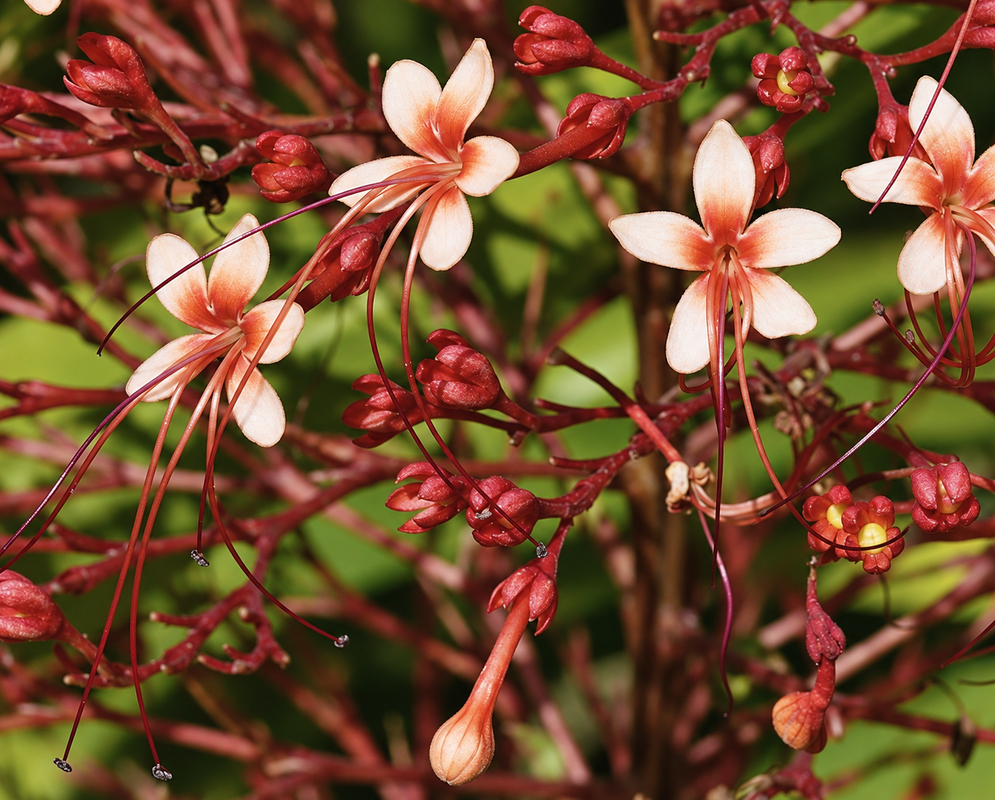
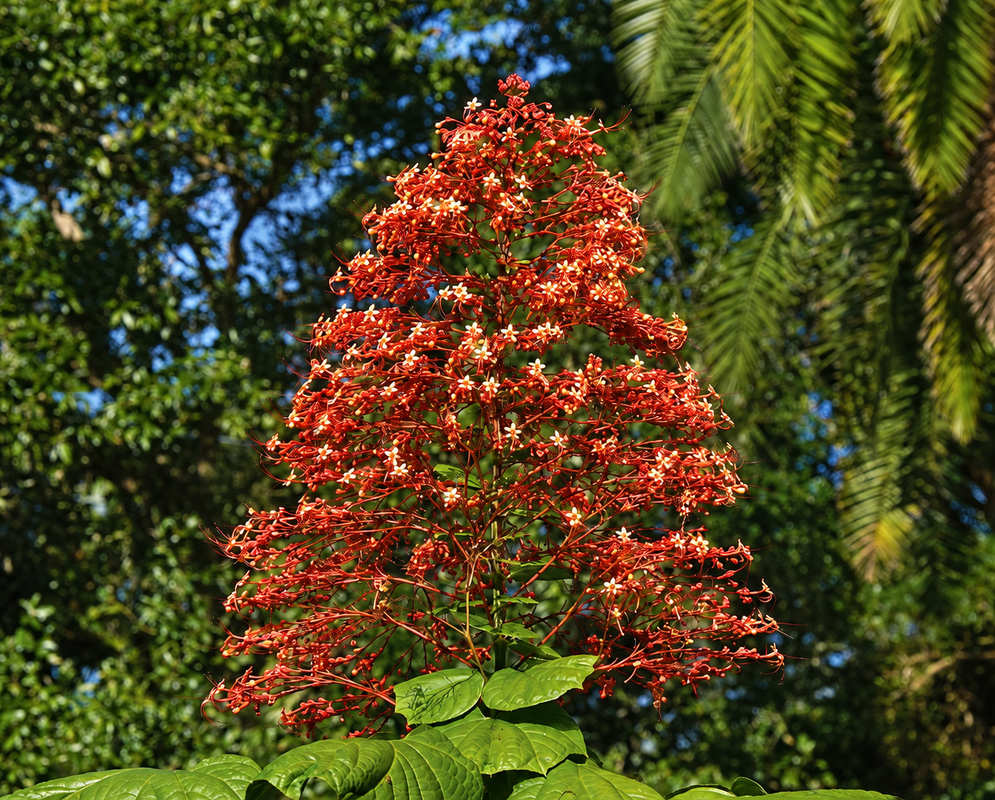
Native across tropical and subtropical Asia, from India and southern China through Southeast Asia to New Guinea and the Bismarck Archipelago, pagoda flower is a shrub named for its tiered, pyramidal flower clusters. Slender orange-red tubes open into five small spreading lobes, with long stamens and a style projecting beyond them. A naturally occurring cream to pale-yellow form has green flower-cluster branches and is cultivated as ‘Alba’. Cultivated plants often produce little or no fruit because much of their pollen is sterile, while root suckers allow clonal stands to spread.
In Malaysia, the plant is used traditionally as a purgative and in external applications for abdominal swelling. Yunnanese Chinese communities in northern Thailand include its leaves in herbal steam baths after childbirth. Laboratory research on leaf extracts has also found reduced swelling in rats with experimentally induced paw inflammation; this animal result does not establish a treatment for people. Long grown ornamentally in Asia, it reached Britain from Java in 1809 as a greenhouse plant. Photographed in Guaduas, Colombia, and Florida.