
Cleome anomala
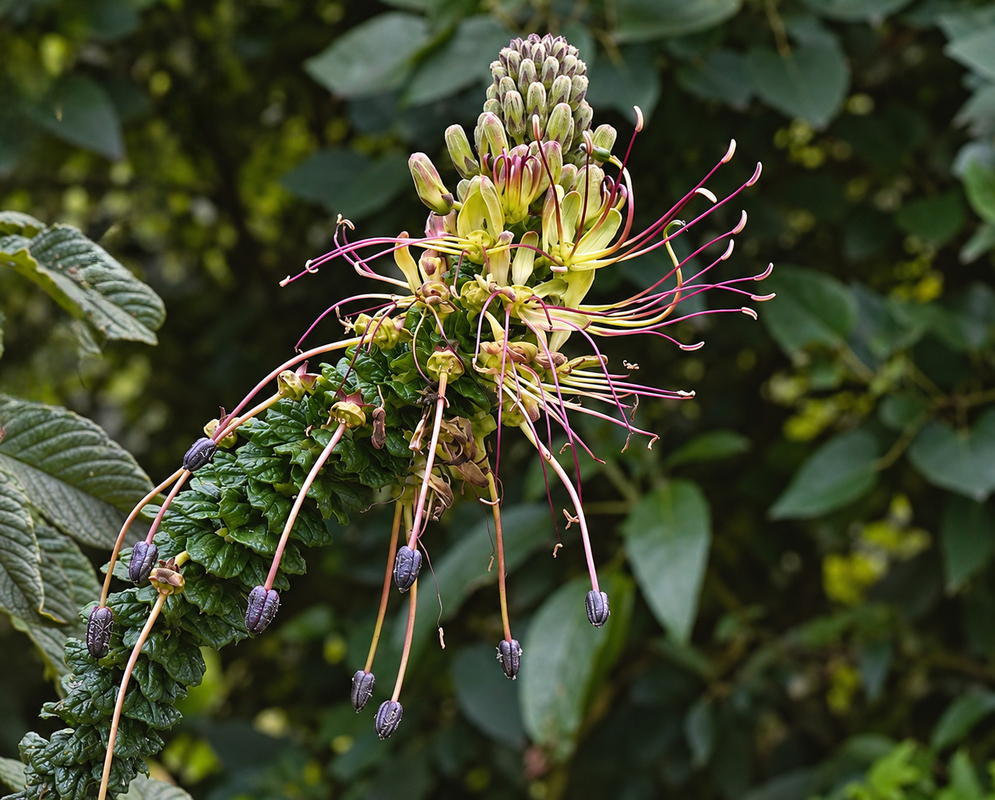
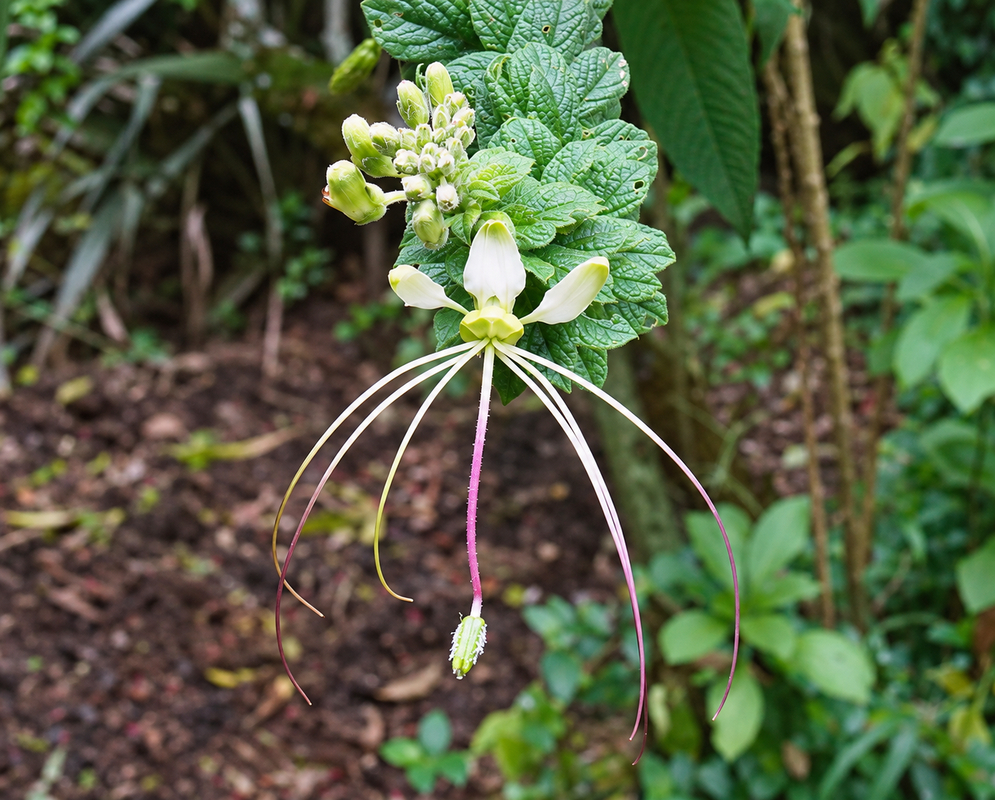
Native to the Andes of northwestern Venezuela, Colombia, and Ecuador, this shrub is known locally as mismia. In Colombia it grows at approximately 4,900–11,100 feet, including moist ravines, stream banks, and open mountain vegetation. Upright clusters develop at the branch tips, with leafy bracts beneath the flowers. Each flower has four pale greenish-white petals and six long, slender stamens that extend beyond them, giving the clusters a spidery appearance. The stalked capsules contain numerous rounded seeds and are covered with hairs.
In Ecuadorian traditional medicine, the seeds have been used for gum complaints in Chimborazo, and the plant has been used for spasms in Cotopaxi. The leaves are used as a rubefacient, an application intended to redden the skin; they are strongly irritating and can produce blisters. The shrub is also planted ornamentally in the Andean region. Photographed in the Eastern Andes of Colombia.