

Cinchona pubescens (Quinine Tree)
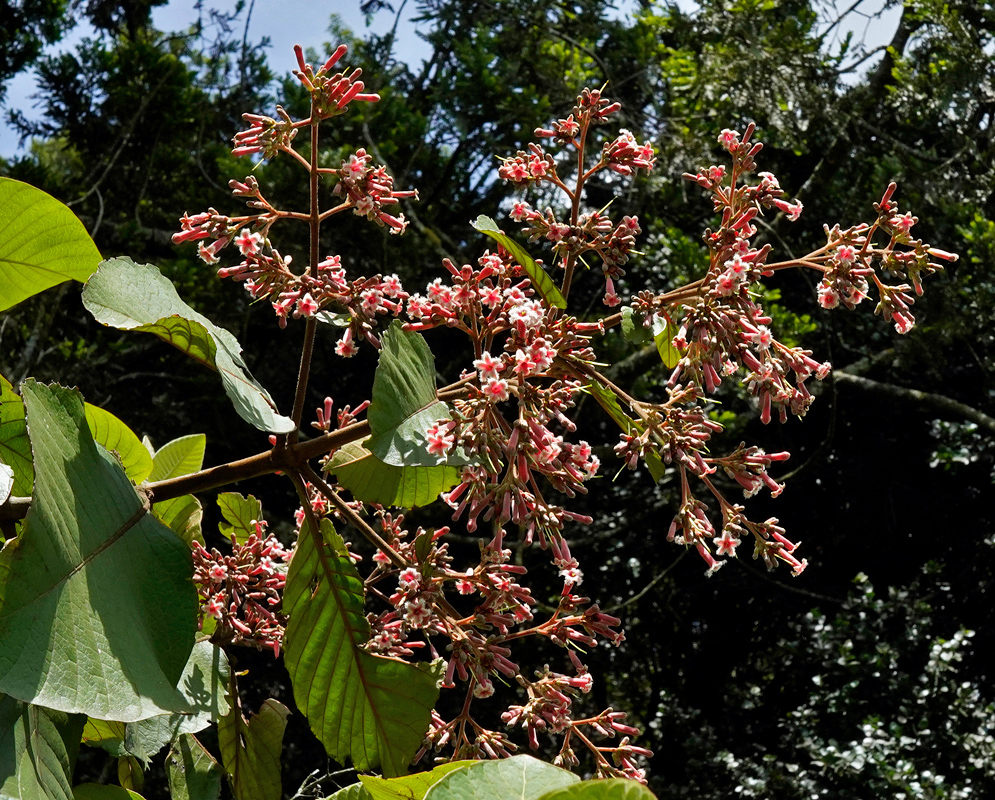
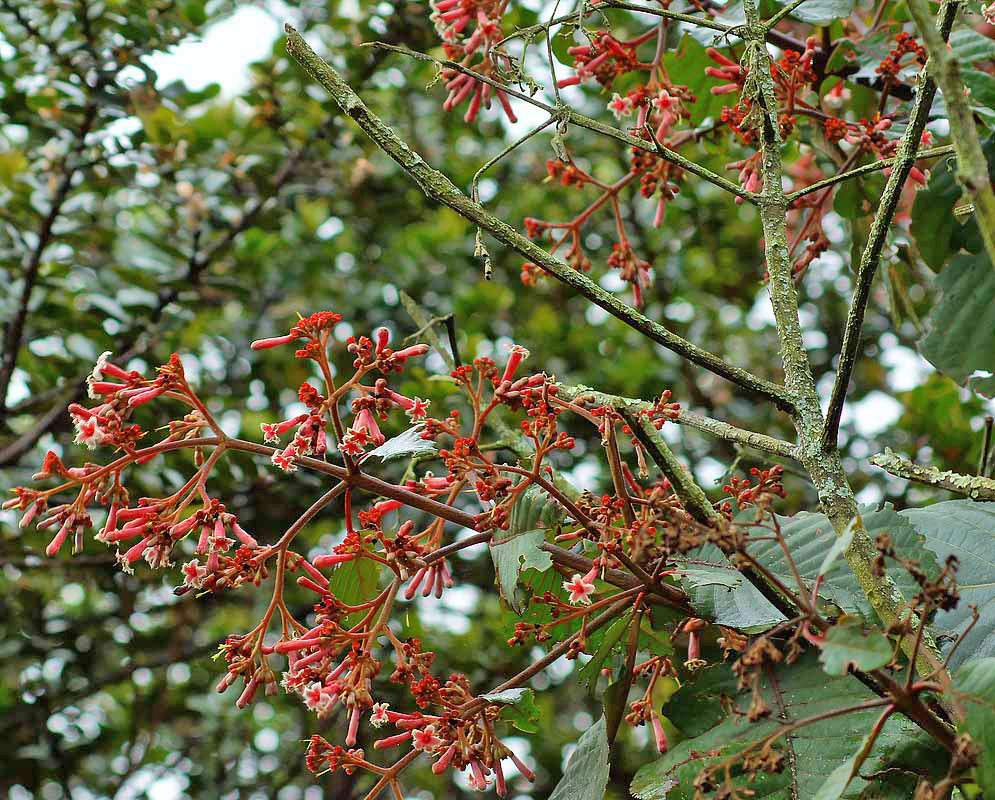
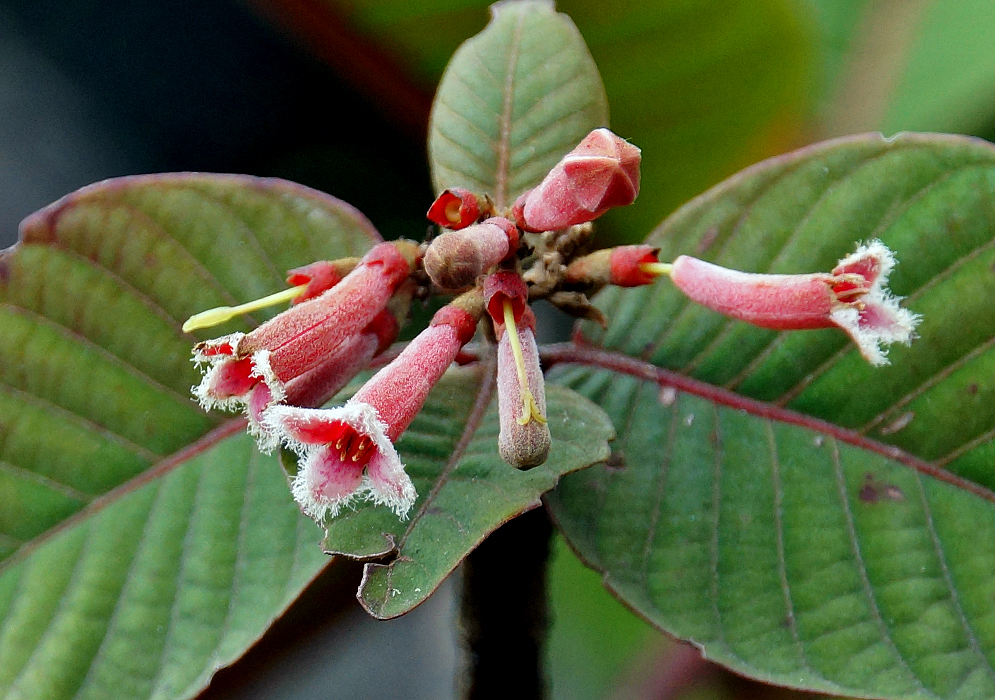
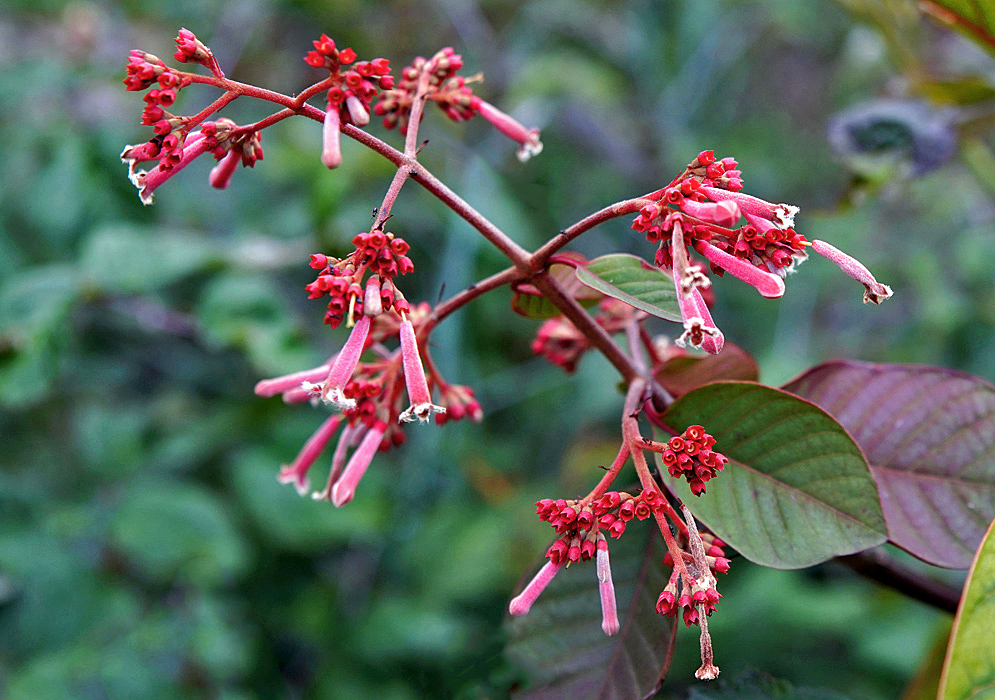
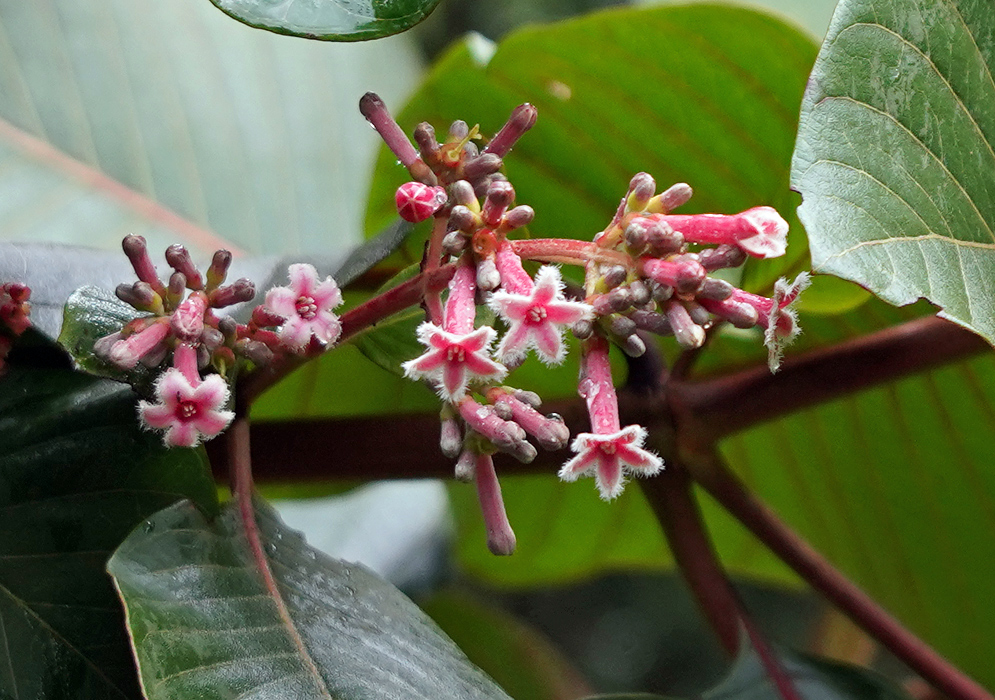
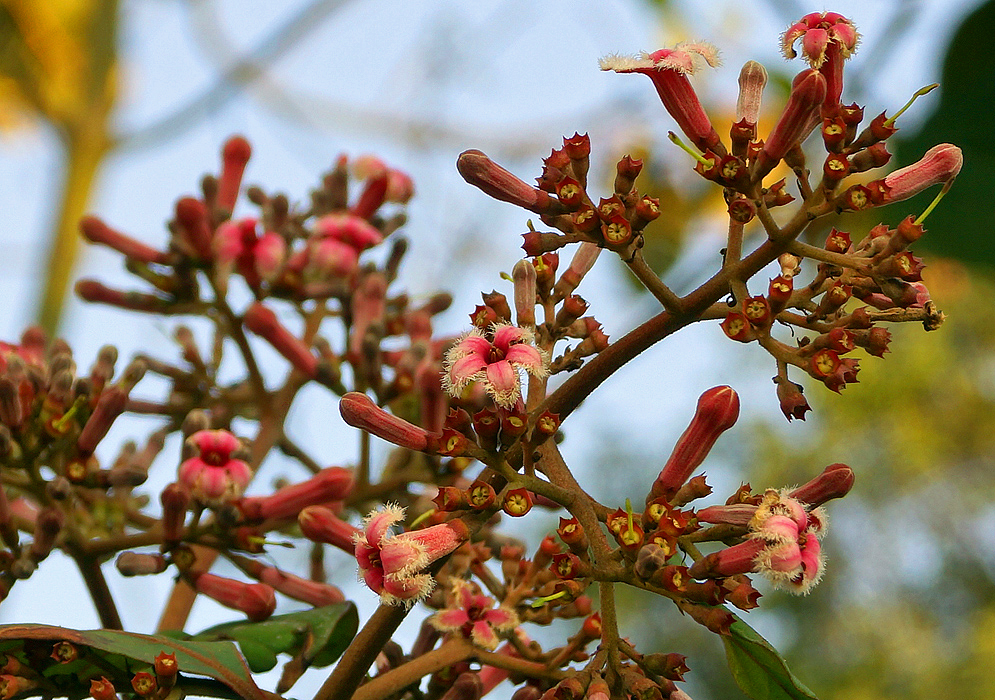
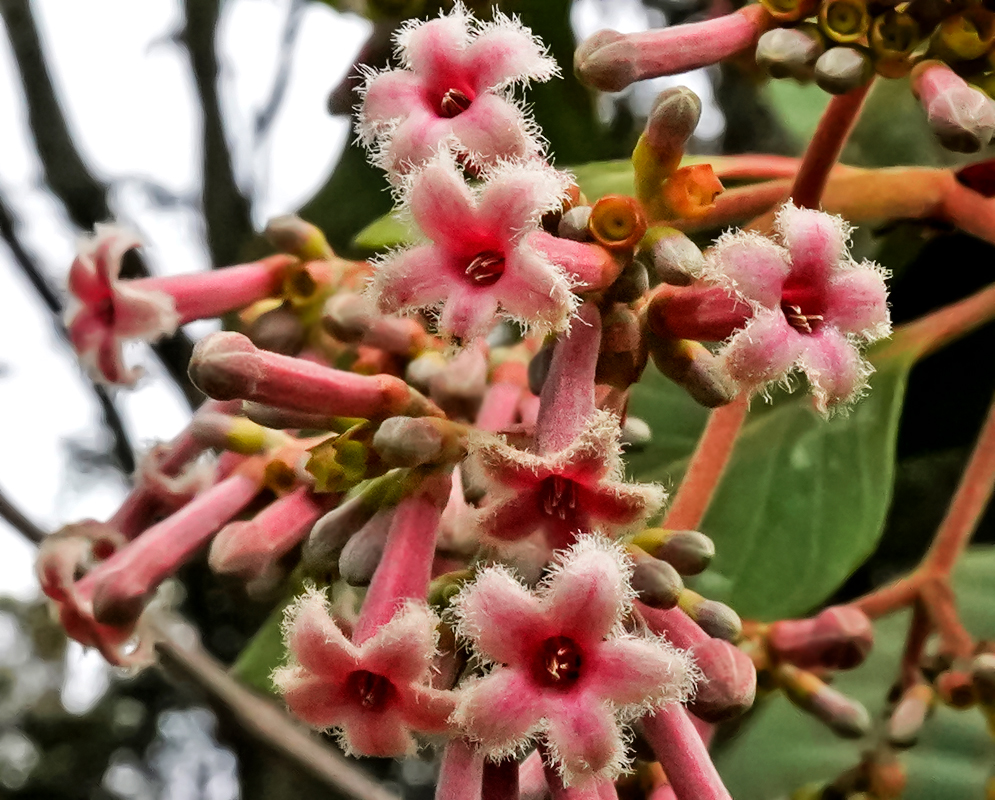
Native from Costa Rica through the Andes to Bolivia, including Venezuela, red cinchona is an evergreen tree of montane forests. Its fragrant white to pink flowers grow in branched clusters, with dense hairs lining the spreading corolla lobes. Older leaves can turn conspicuously red while still attached. Capsules release numerous winged seeds, and underground stems produce connected suckers that help the tree spread.
Its bark is a source of quinine, the bitter alkaloid that transformed malaria treatment. Indigenous Andean peoples used cinchona bark medicinally before its adoption in Europe, where it became known as Jesuit’s bark. Purified quinine remains an approved medicine for uncomplicated Plasmodium falciparum malaria; the pharmaceutical drug is distinct from taking raw bark. Quinine also gives tonic water its bitterness, although the amount in the drink does not protect against malaria. The tree’s value as a bark crop led to cultivation far beyond the Americas. Introduced to Santa Cruz in the Galápagos in 1946, it became invasive, converting naturally open highland vegetation into dense stands and reducing native plant cover and diversity. Photographed in the eastern Andes mountain range of Colombia.