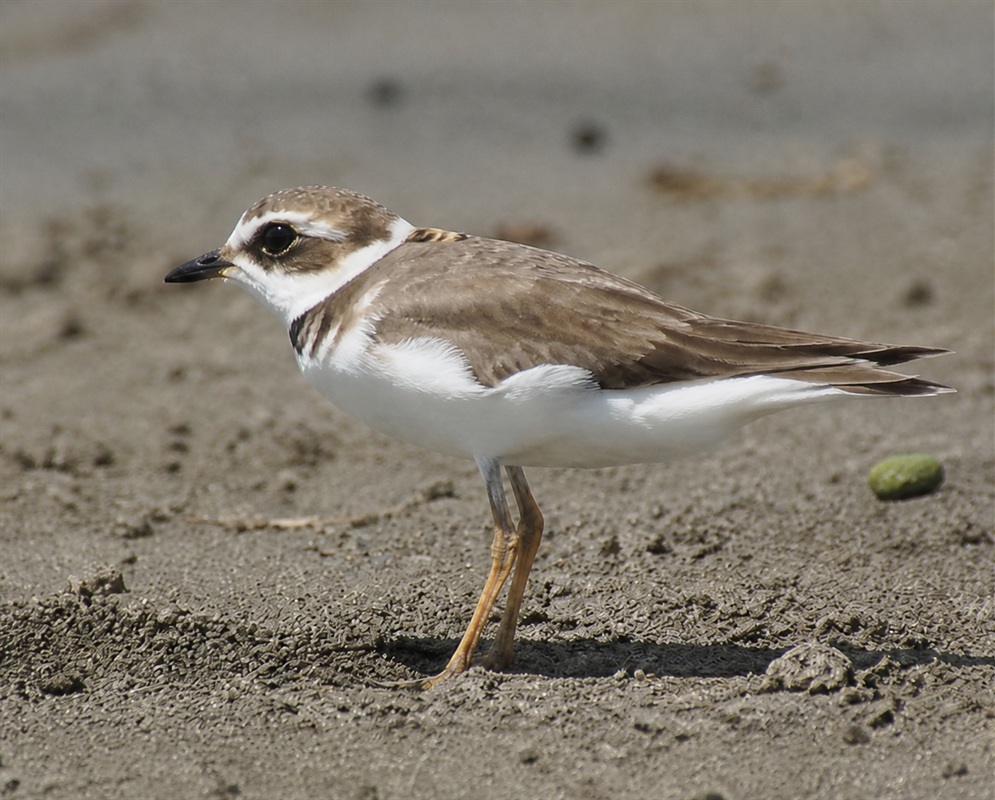


Charadrius semipalmatus (Semipalmated plover)
Charadrius semipalmatus (Semipalmated plover) is a small migratory shorebird that breeds across Alaska and northern Canada, including tundra, gravel bars, and open shores near freshwater. After nesting, it migrates along both North American coasts and through the continent’s interior. Its nonbreeding range extends through the Caribbean and Central America to coastal South America, reaching southern Chile and Argentina. Adults measure roughly seven inches long and have brown upperparts, white underparts, a single dark breast band, orange legs, and a short bill that develops an orange base during the breeding season. The name refers to the slight webbing between the front toes.
On beaches, tidal flats, salt-marsh edges, and exposed mud, it feeds with a rapid run-stop-peck pattern. The bird watches the surface, rushes forward, and takes small crustaceans, marine worms, insects, and other invertebrates. Migrants may gather at rich feeding areas, although individuals usually remain more dispersed than tightly packed sandpiper flocks. During breeding, a male scrapes several shallow nest sites and the female selects one; the eggs are camouflaged against stones and vegetation. Both parents incubate and attend the mobile chicks. The IUCN classifies the species as Least Concern because of its broad range and large population, while coastal disturbance and habitat change can affect important migration and wintering sites. Photographed in Colombia.