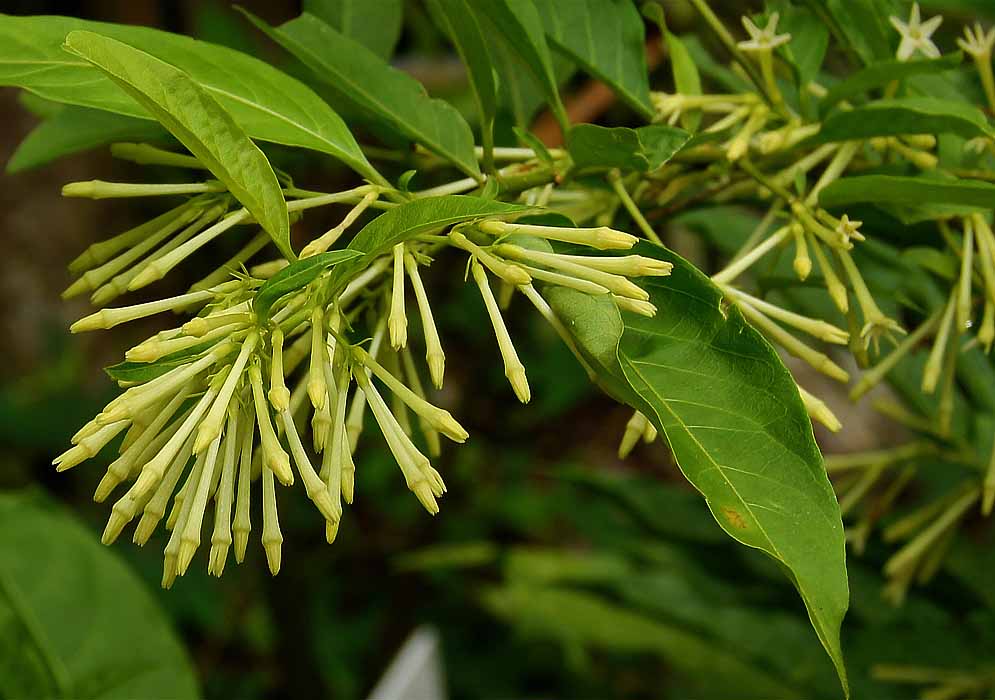


Cestrum nocturnum
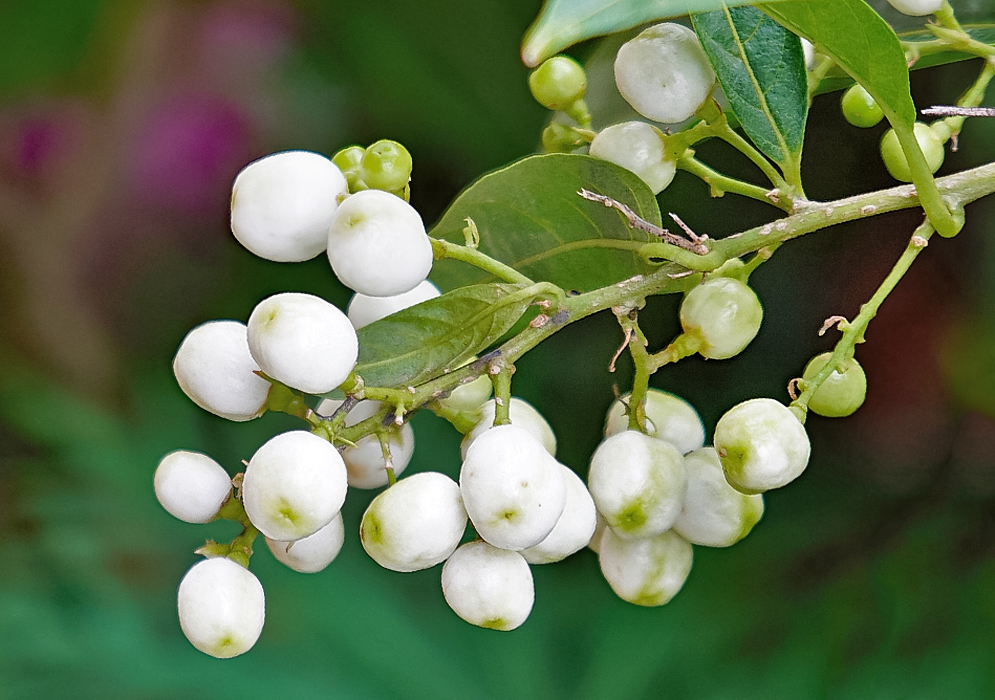
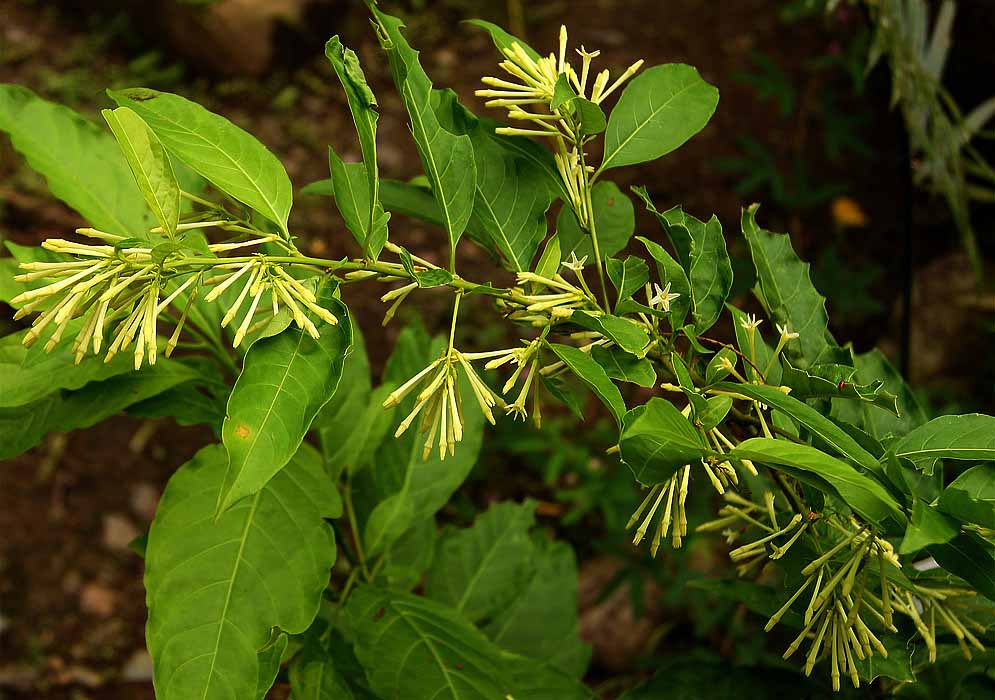
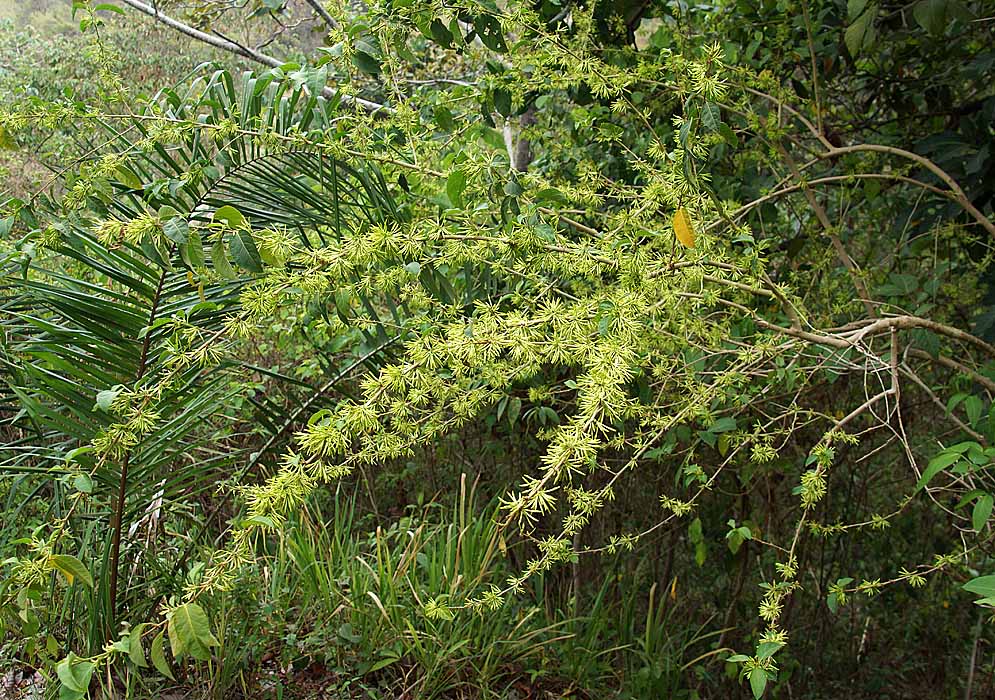
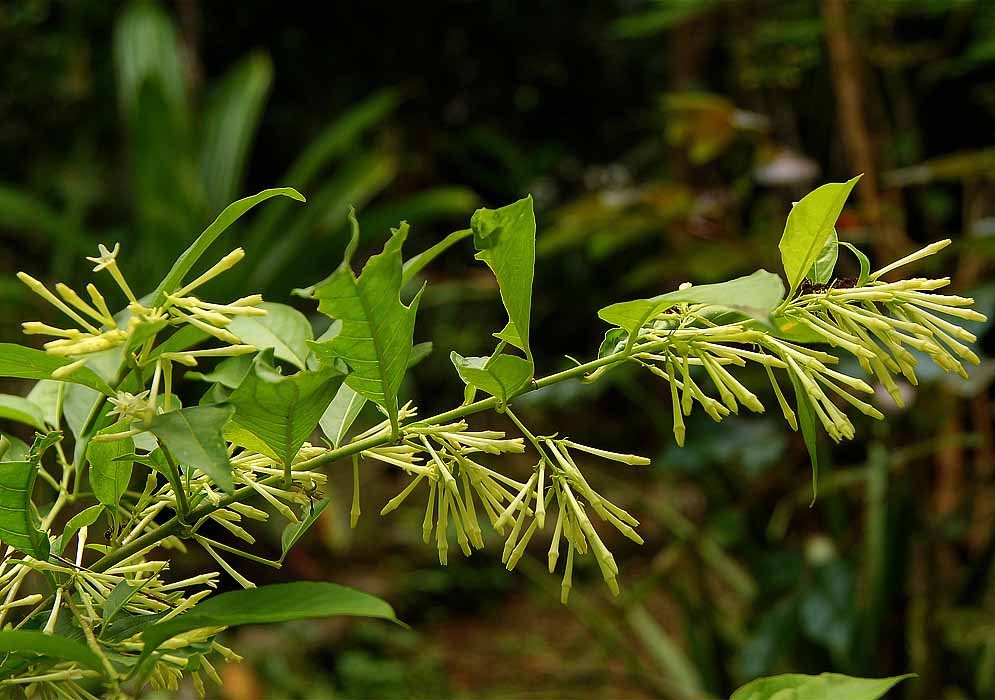
Native from Mexico through Central America to Venezuela, night-blooming jasmine is an evergreen shrub whose clusters of slender, greenish-white to pale-yellow flowers release an exceptionally strong fragrance after dark. The tubes open into five small lobes, and flowering can recur in flushes during the year in tropical conditions. White berries follow the flowers. Despite its common name, it belongs to Cestrum rather than the true jasmines. It has long been grown for its night perfume and received the Royal Horticultural Society’s Award of Garden Merit in 2023.
In Central America and the Caribbean, its leaves are used traditionally in lotions for skin eruptions; in Chinese folk medicine they are applied externally to burns and swellings. All parts are poisonous if eaten, and livestock deaths have occurred after ingestion. Its spread beyond gardens is also a concern: in New Zealand it can form dense stands that prevent native seedlings from establishing. Photographed in the Sierra Nevada de Santa Marta, Colombia.