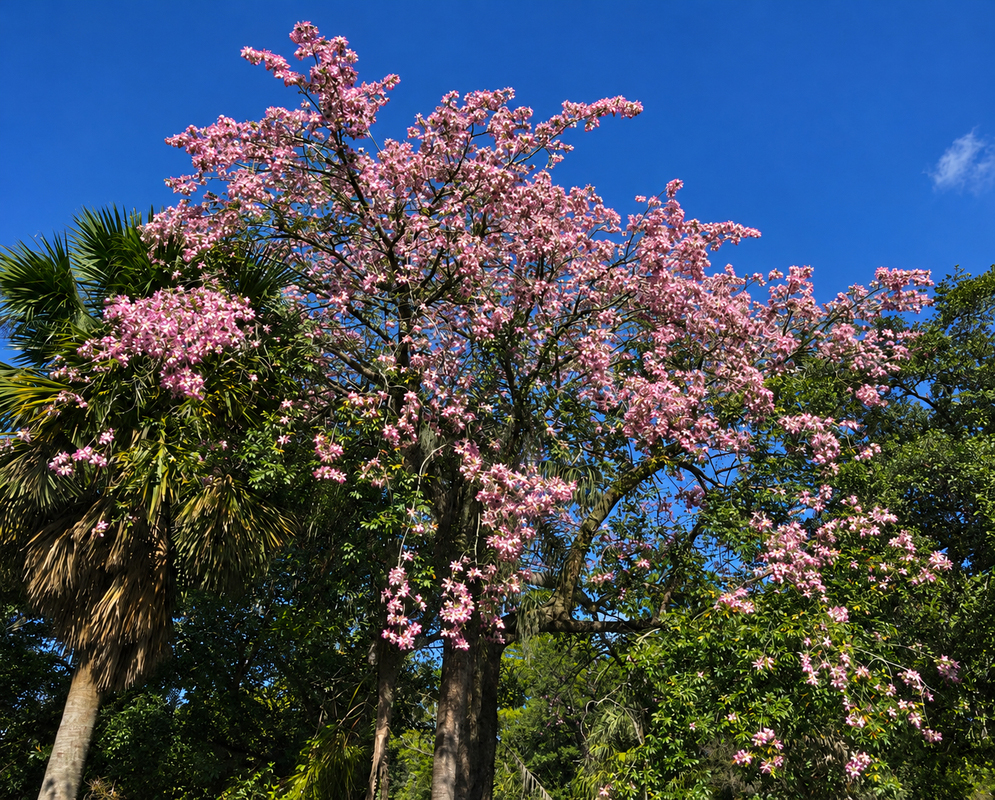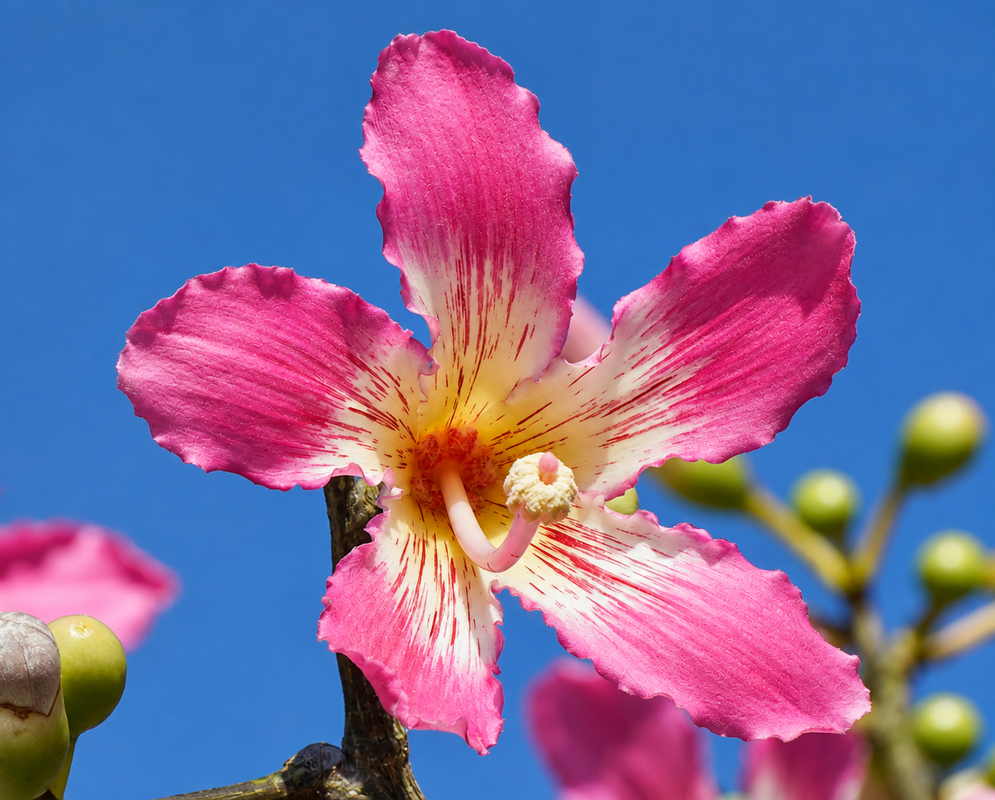

Ceiba speciosa (Silk Floss Tree)
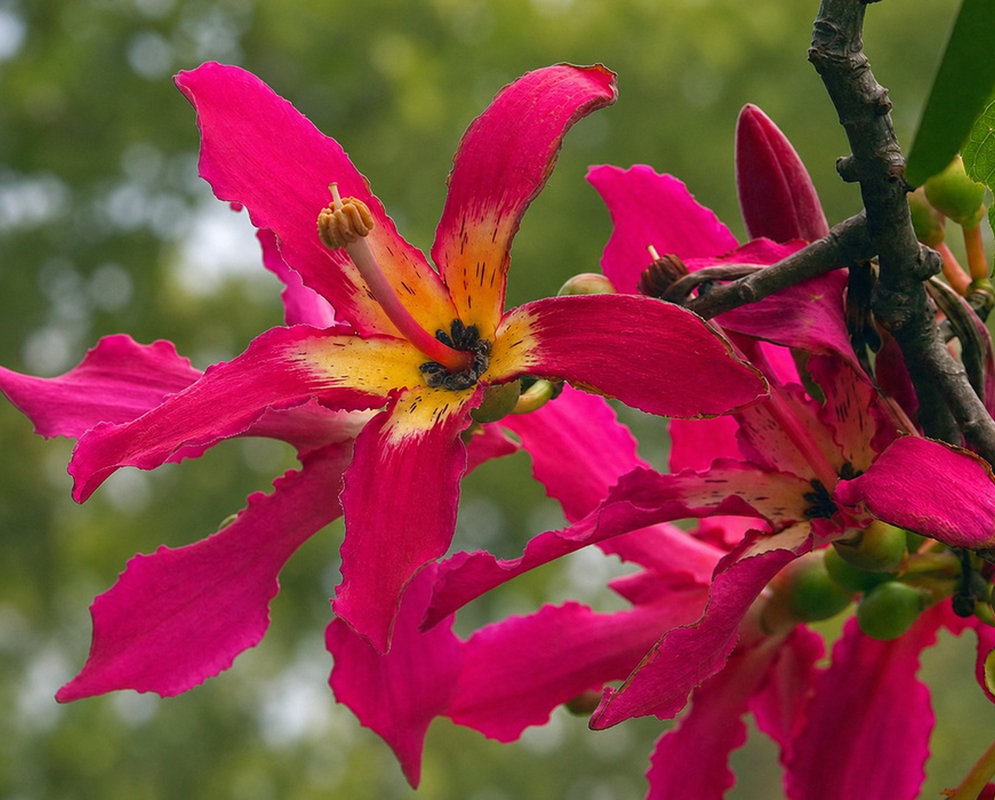
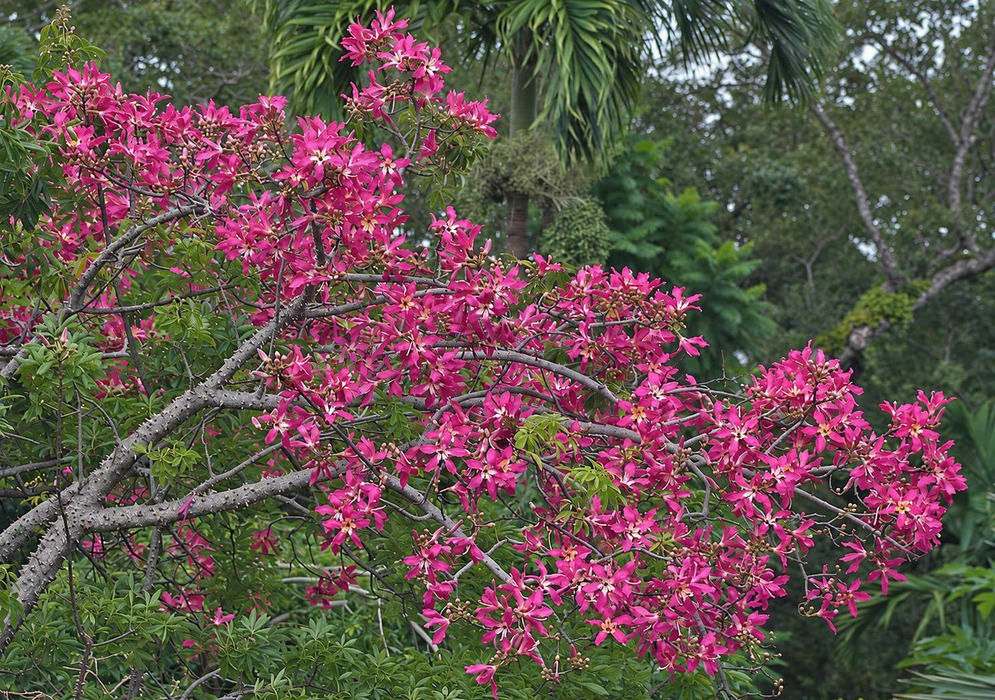
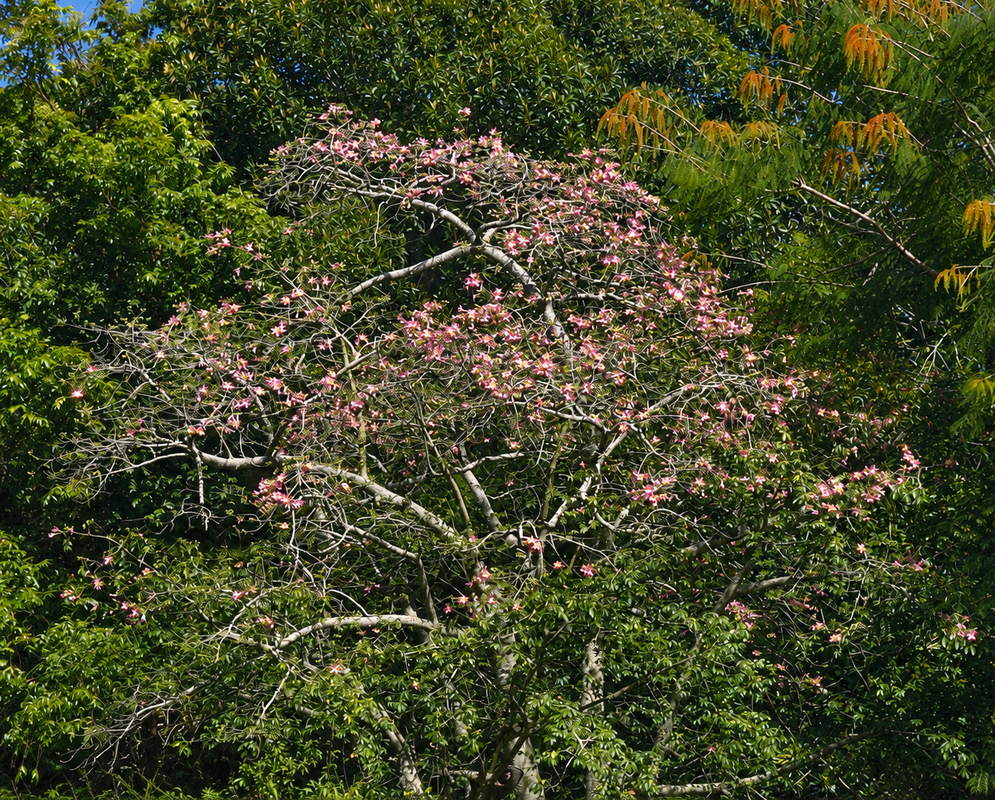
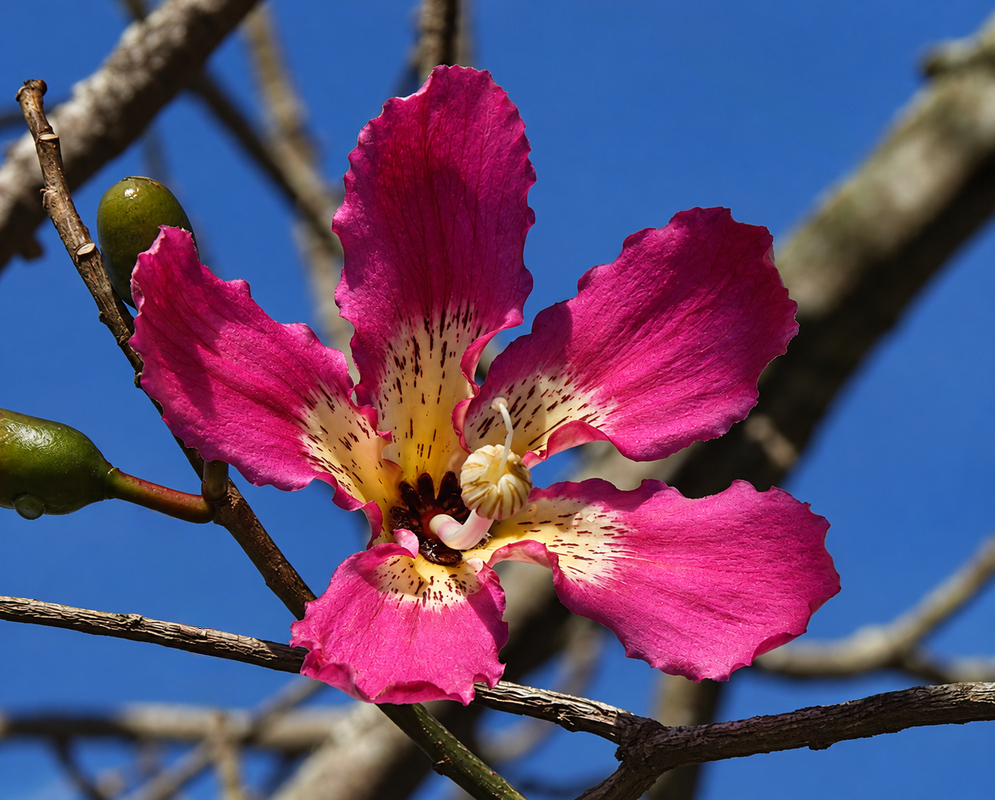
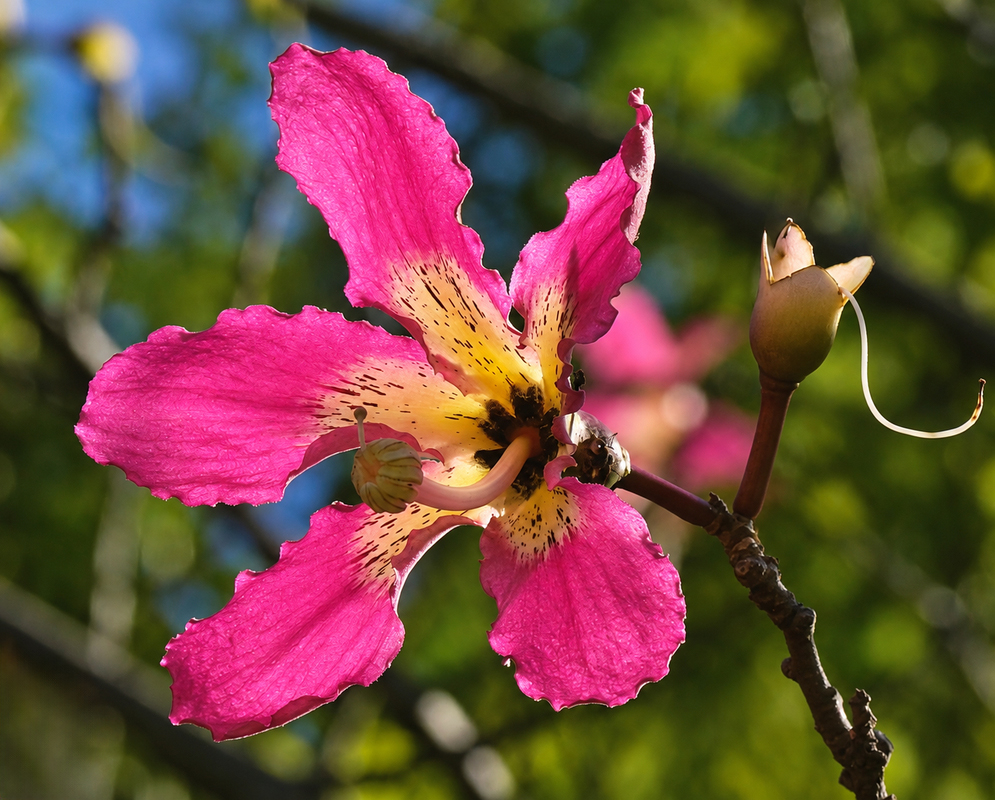
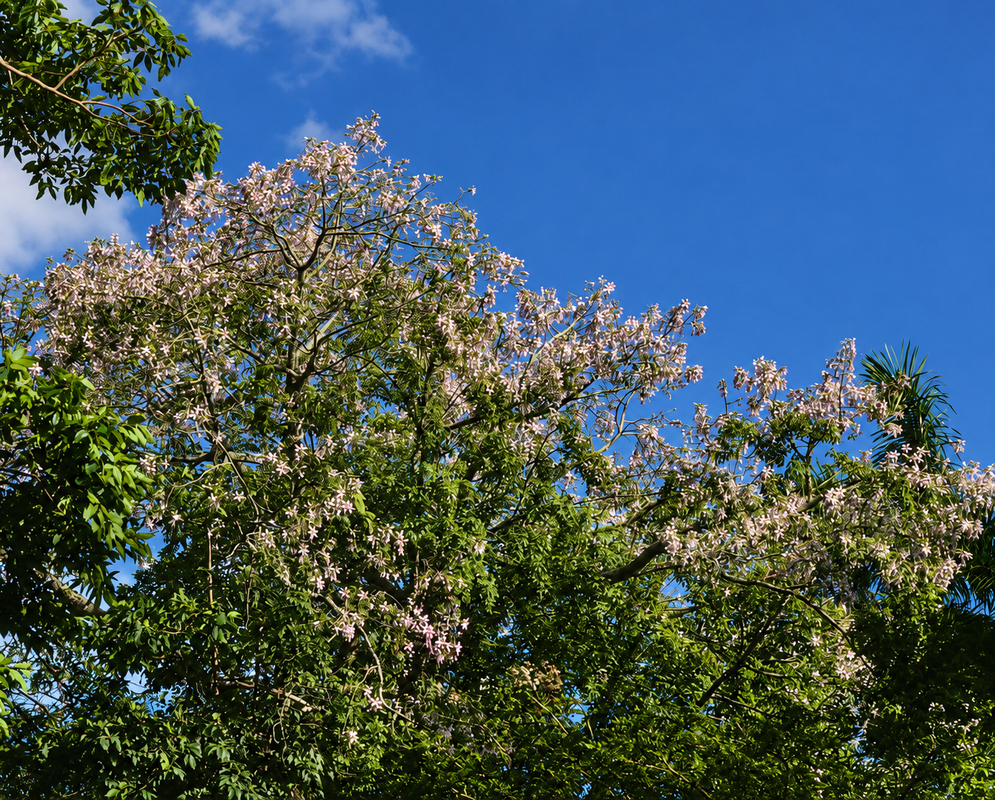
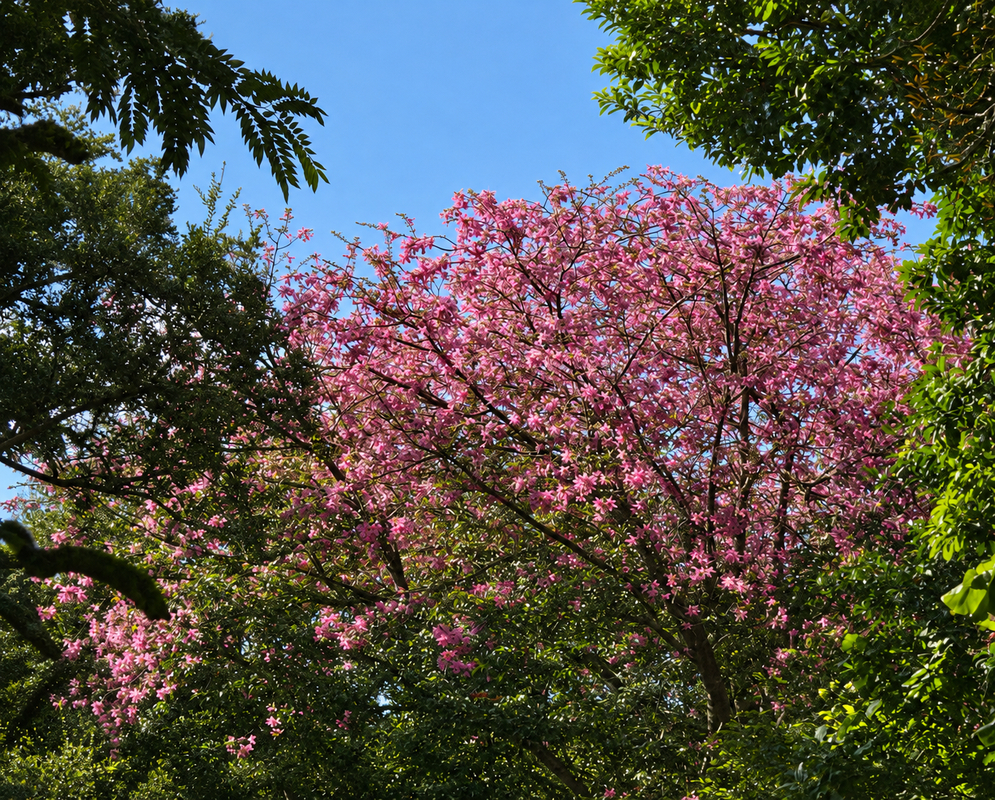
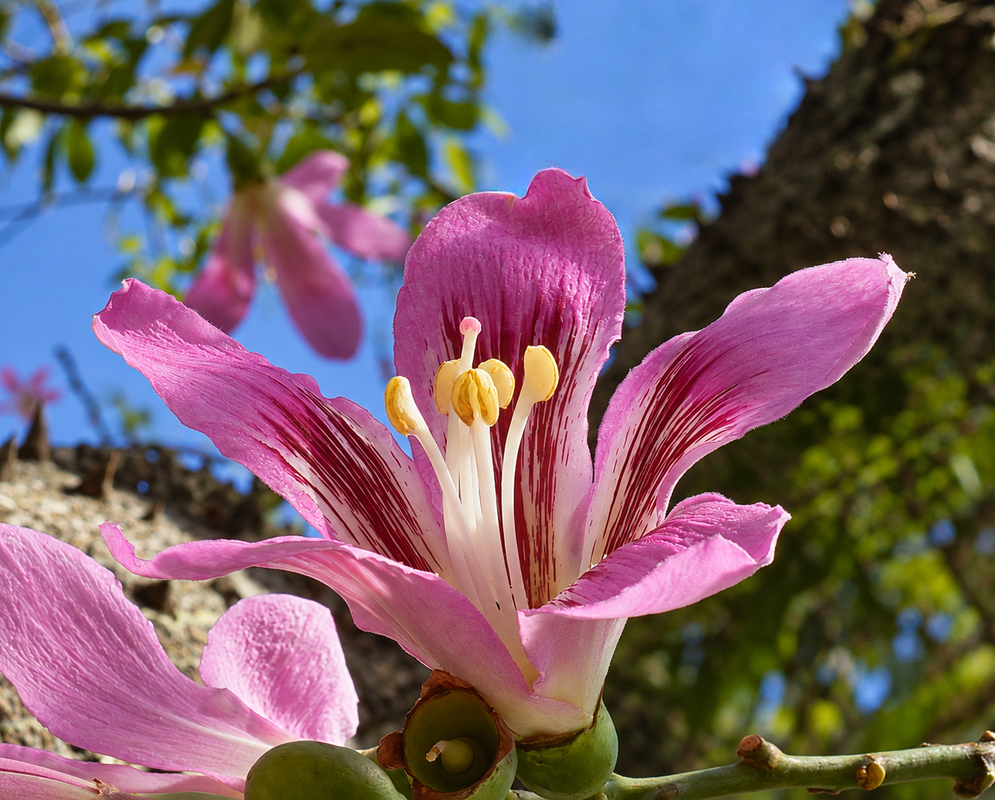
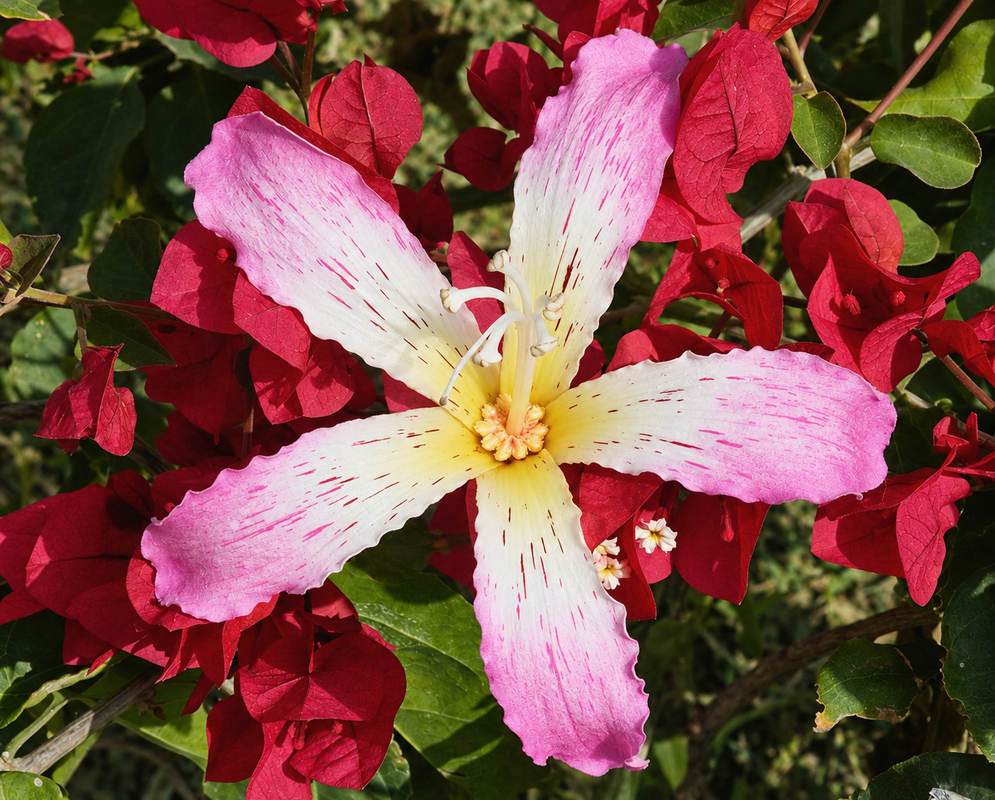
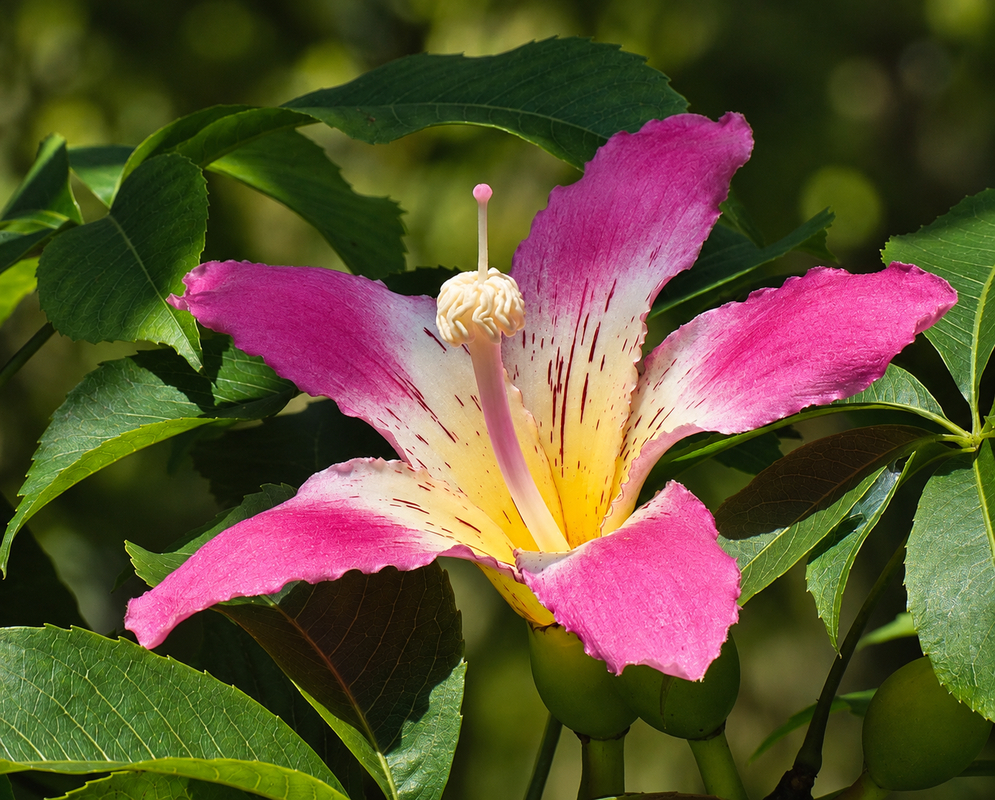
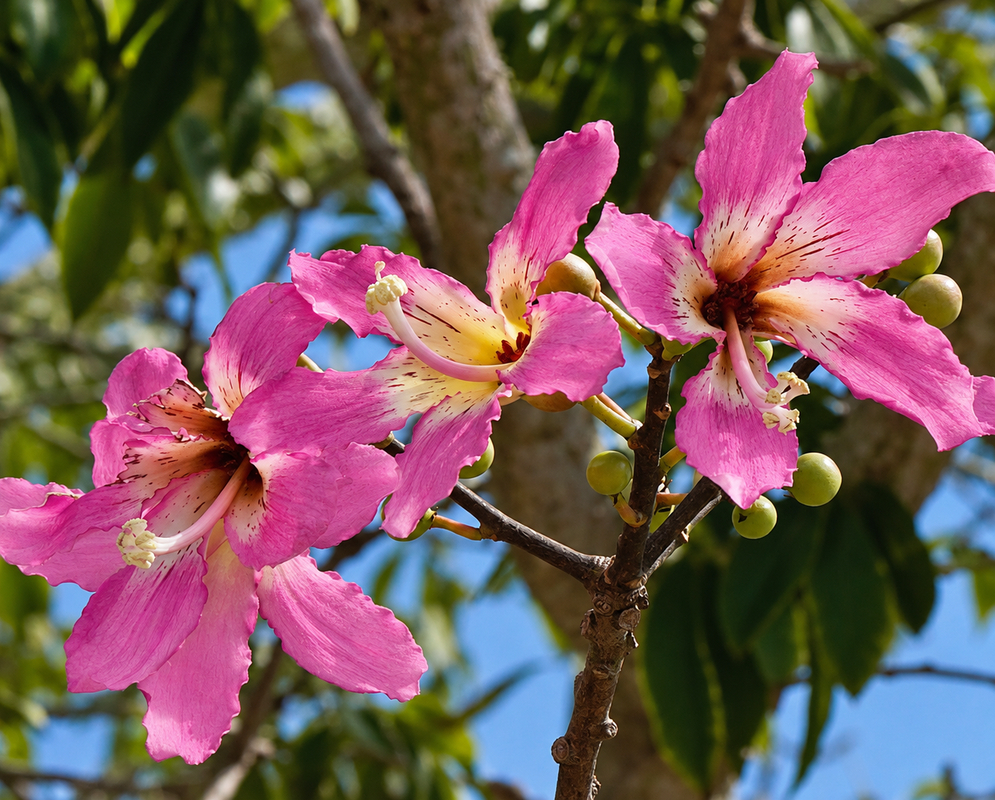
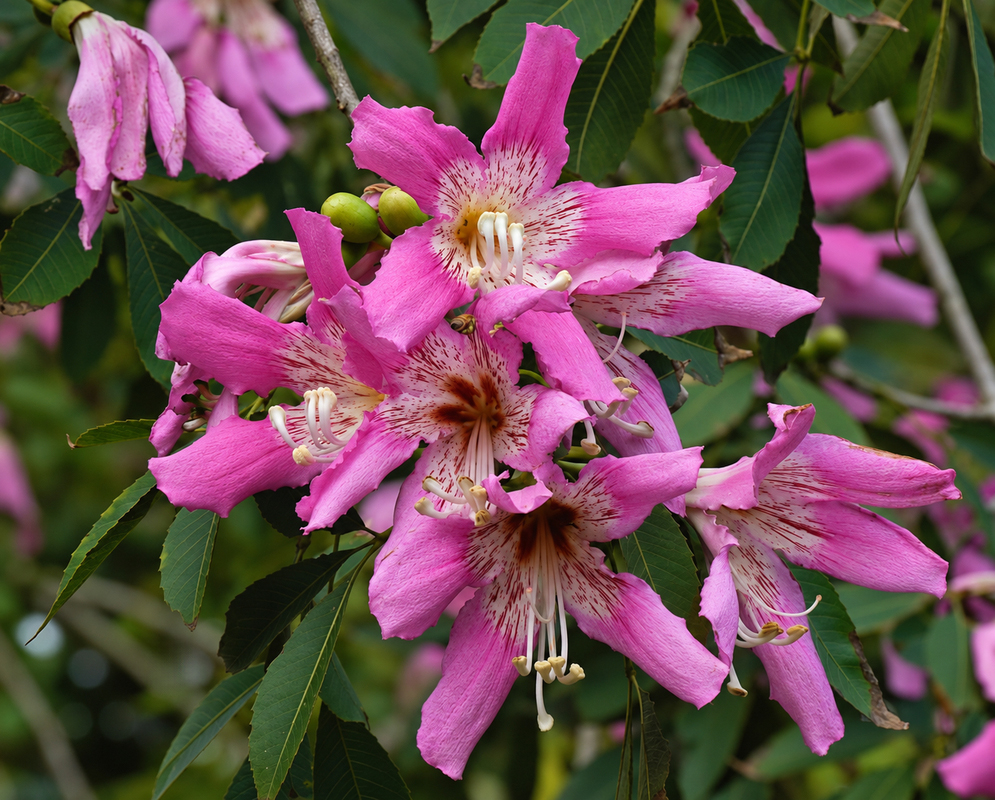
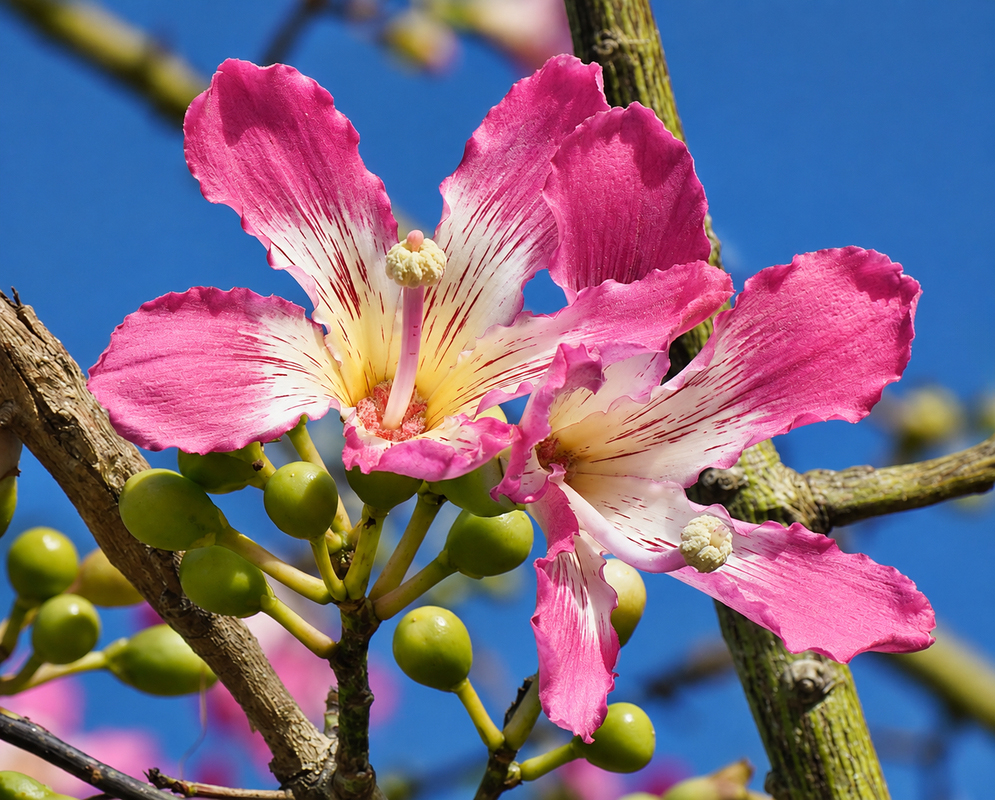
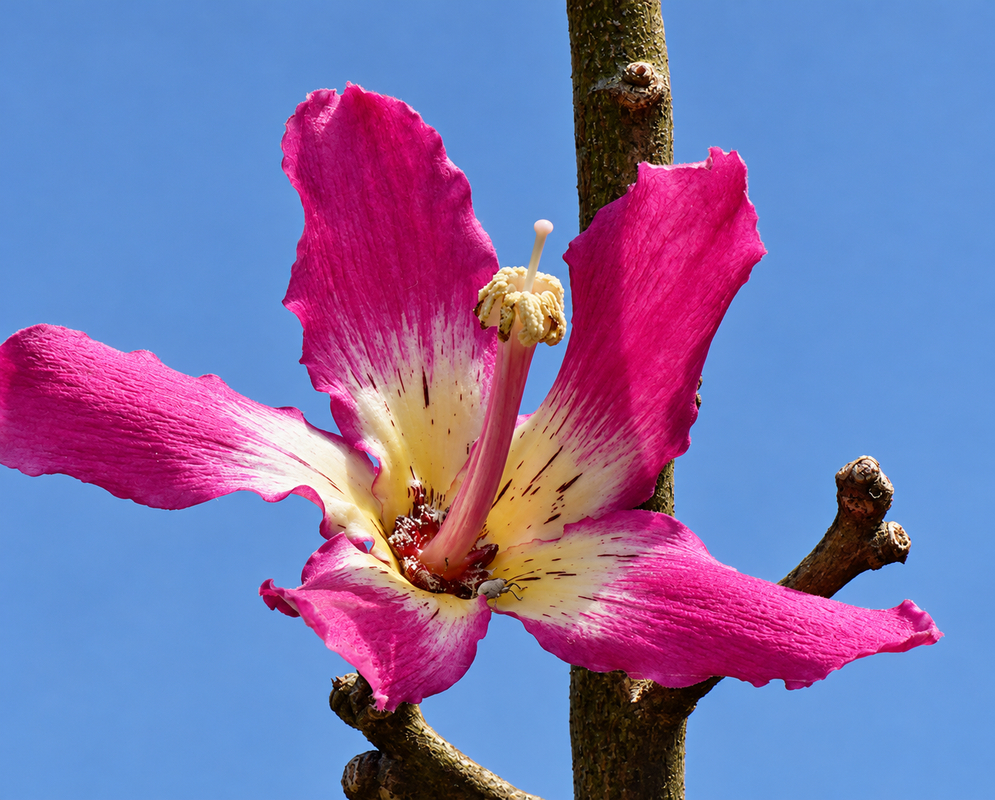
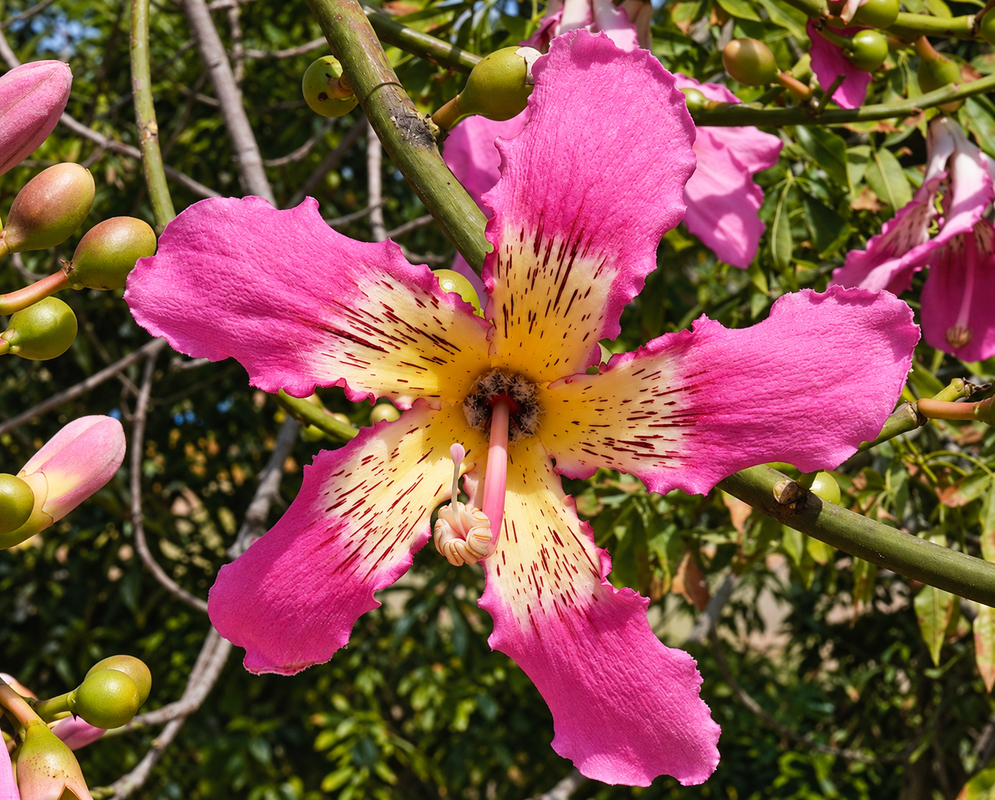
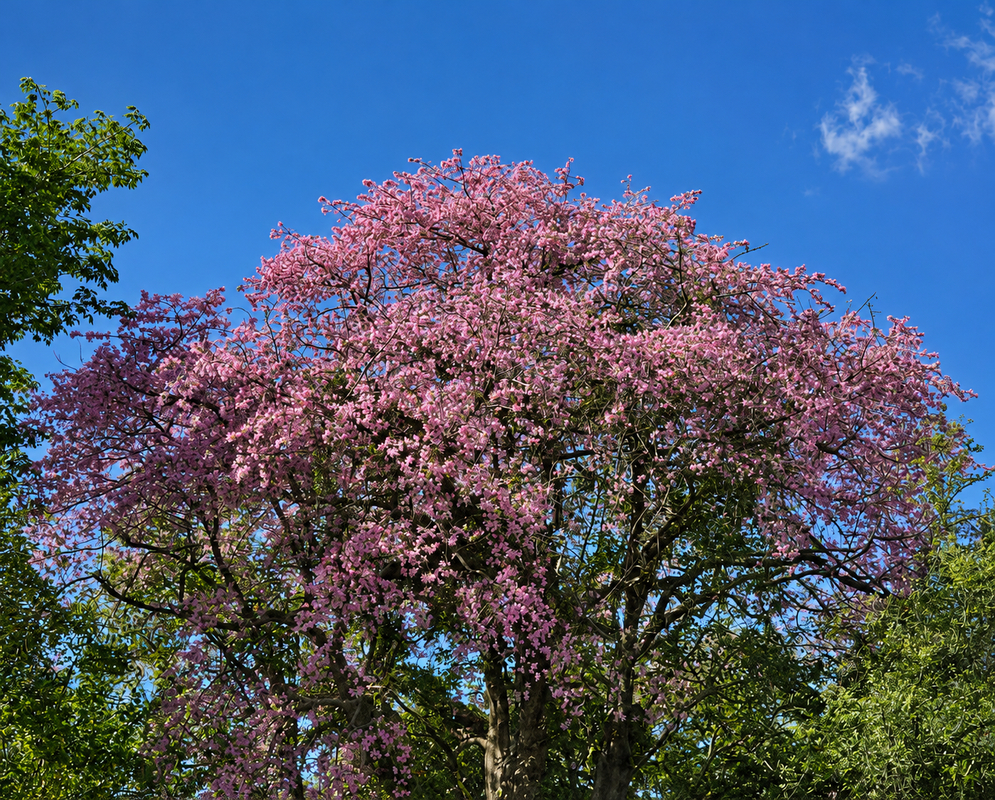
Native from Brazil to Peru and northeastern Argentina, this deciduous tree is known as the silk floss tree or palo borracho. Its swollen, bottle-shaped trunk bears stout conical prickles. The five-petaled flowers are pink toward their tips, with pale centers marked by dark red spots. In Florida, flowering occurs in fall and winter, often on nearly leafless branches. Mature capsules split open to expose a mass of silky fibers surrounding the seeds, the feature behind its English name.
The floss has been used for cushion filling, insulation and buoyant padding in life jackets. Its light wood provides material for dugout boats and paper pulp, bark fibers have been made into rope, and the seeds yield oil. In southern Brazil, the bark has traditional medicinal uses for stomach complaints and diabetes. Experimental bark extracts reduced chemically induced stomach injury in rats, but this is animal evidence rather than a demonstrated treatment for human ulcers. The species has naturalized on Madeira, Portugal, and escaped cultivation in Palermo, Sicily. Photographed in Florida and Lima, Peru.