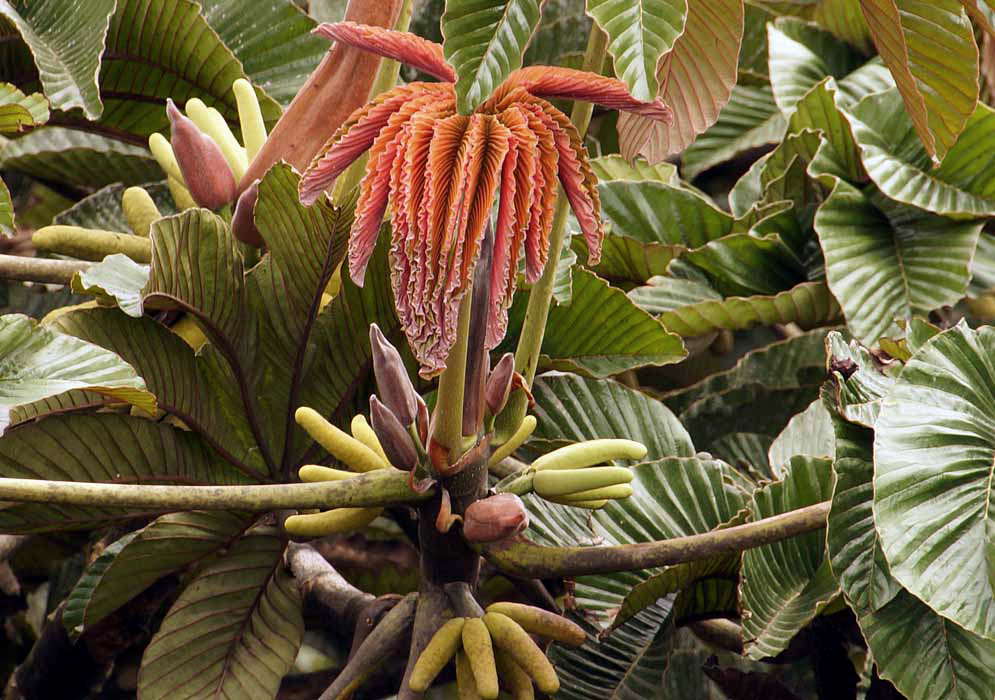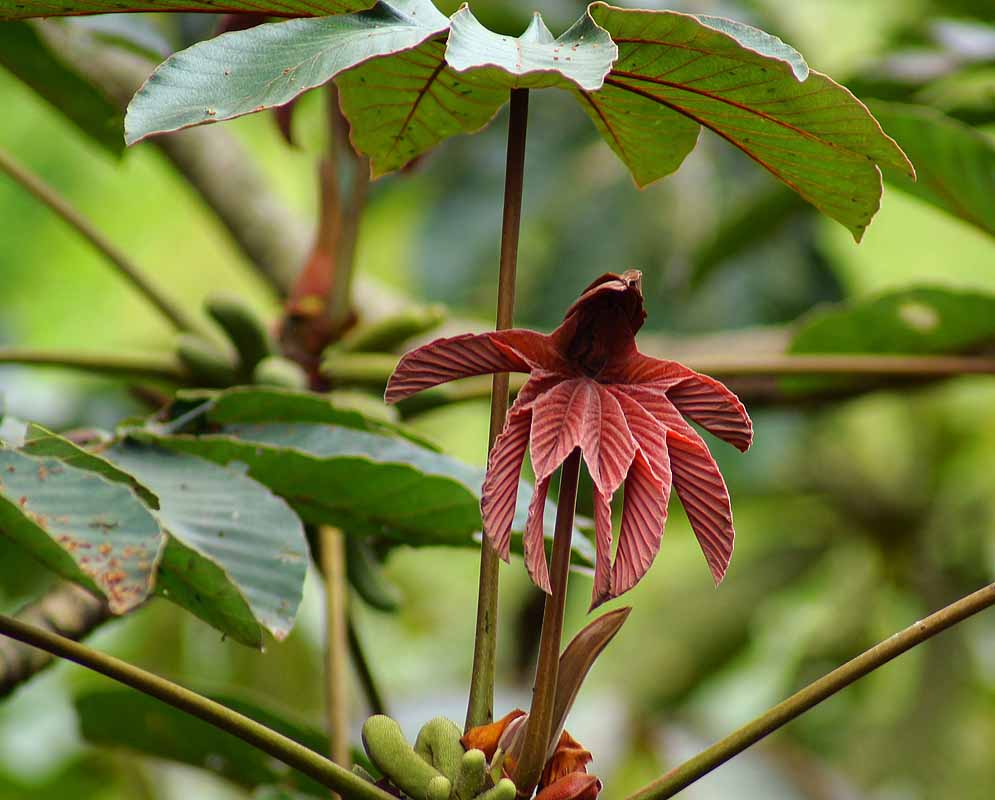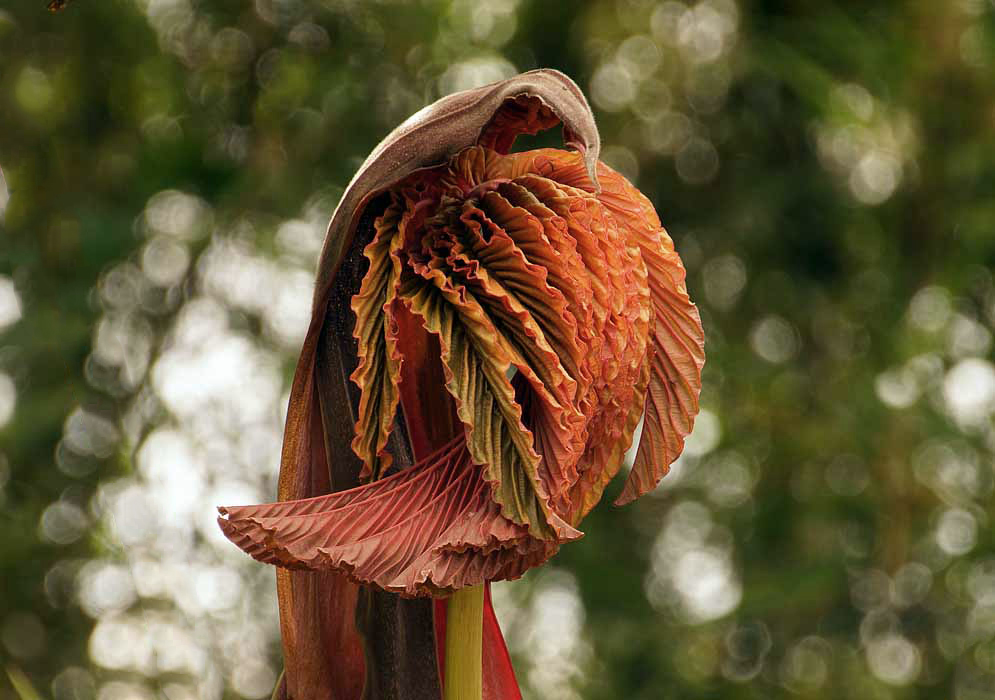


Cecropia (species unidentified)
Native to the tropical Americas from Mexico to northeastern Argentina, Cecropia comprises about sixty species of fast-growing trees. Their leaves have lobes radiating from the point where the stalk joins the blade, giving the crown an umbrella-like outline. Many species are among the first trees to occupy forest clearings, abandoned fields and river margins. Male and female flowers grow on separate trees, packed into cylindrical spikes that occur in finger-like groups.
Many species have hollow stem chambers that house Azteca ant colonies. Specialized patches at the leaf-stalk bases produce glycogen-rich food bodies, and the resident ants defend their host tree against leaf-eating insects and climbing plants. Uses differ among species: Cecropia peltata supplies light wood for boxes, paper pulp and local musical instruments, and its fruiting clusters are edible. Its leaves have traditional uses for coughs and asthma. Cecropia obtusifolia leaves are used in traditional medicine for diabetes and inflammation. Photographed in Colombia.