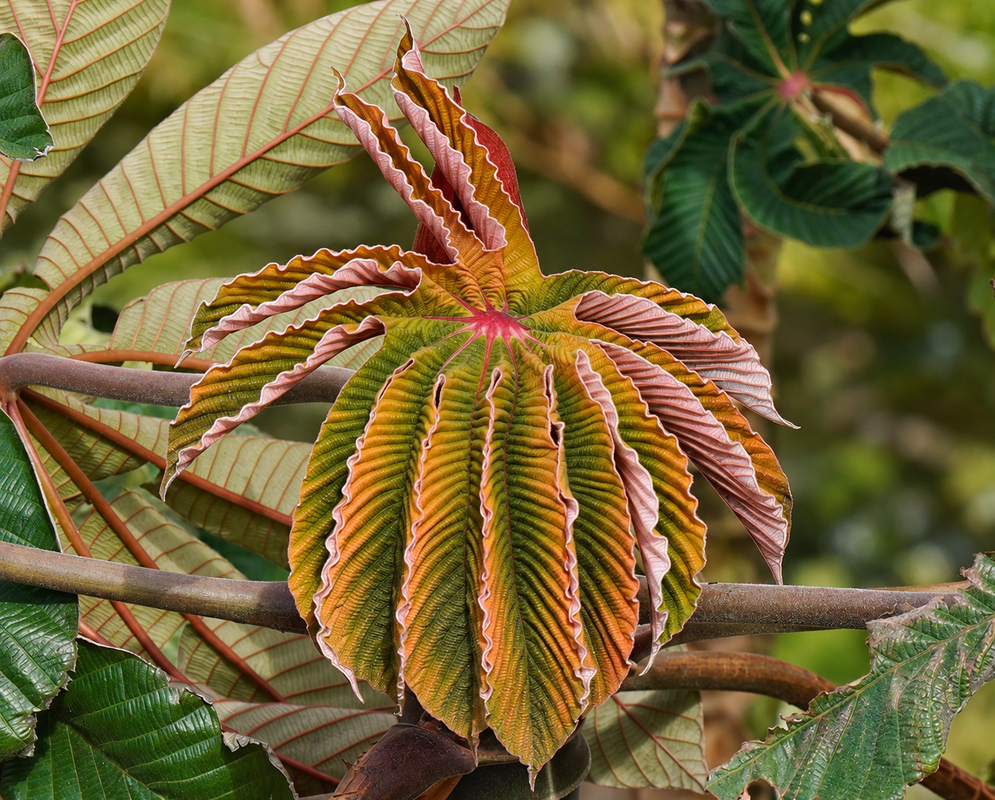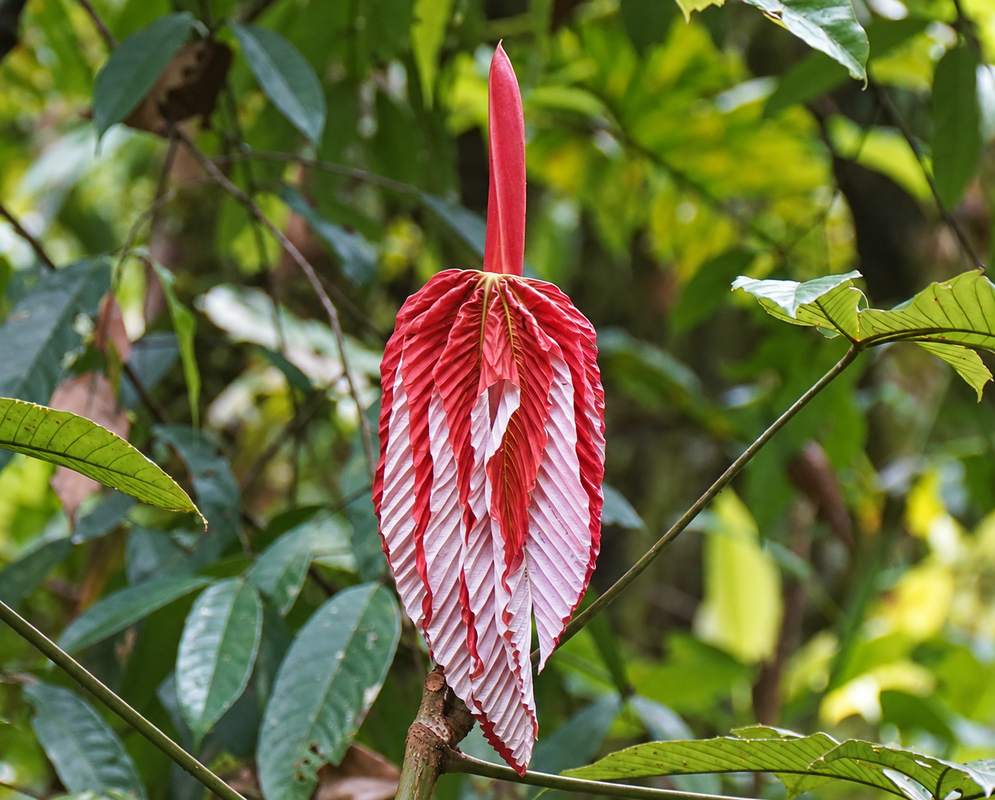

Cecropia obtusifolia
Native from Mexico through Central America to Ecuador, this fast-growing evergreen tree, known as guarumbo or yarumo, colonizes clearings in humid forests. In Colombia, it grows from sea level to about 6,200 feet. Male and female flowers occur on separate trees in fingerlike clusters. Its hollow stems provide nesting chambers for Azteca ants, while specialized structures at the leaf bases supply food bodies. In return, resident ants defend the tree against herbivores and encroaching vegetation. The fleshy fruit clusters are edible and have a figlike flavor. Stem fibers provide cordage, and the lightweight wood has been used for rafts, floats, boxes and rustic buildings.
In Mexican traditional medicine, the leaves are used for diabetes. Small human studies found reductions in blood glucose with leaf preparations: one involved 22 people continuing their usual medication for 21 days, while another followed 12 people for 32 weeks. These preliminary findings come from small studies without a placebo comparison. Introduced for reforestation in Hawaii, the species has become invasive on Kauai, Oahu and Hawaii Island. Photographed in Villeta, Colombia.