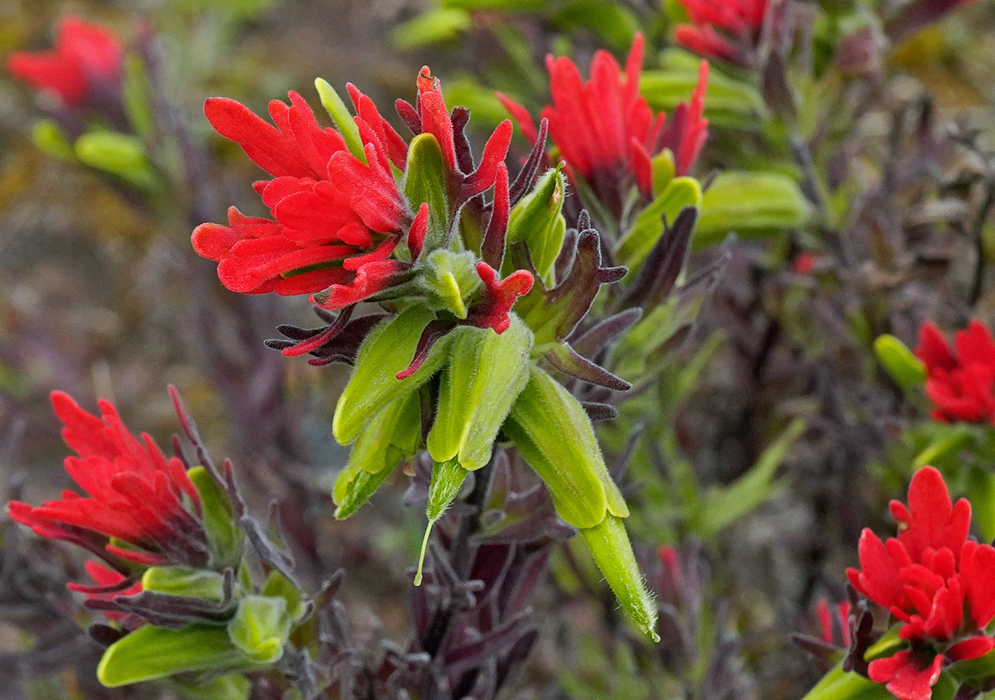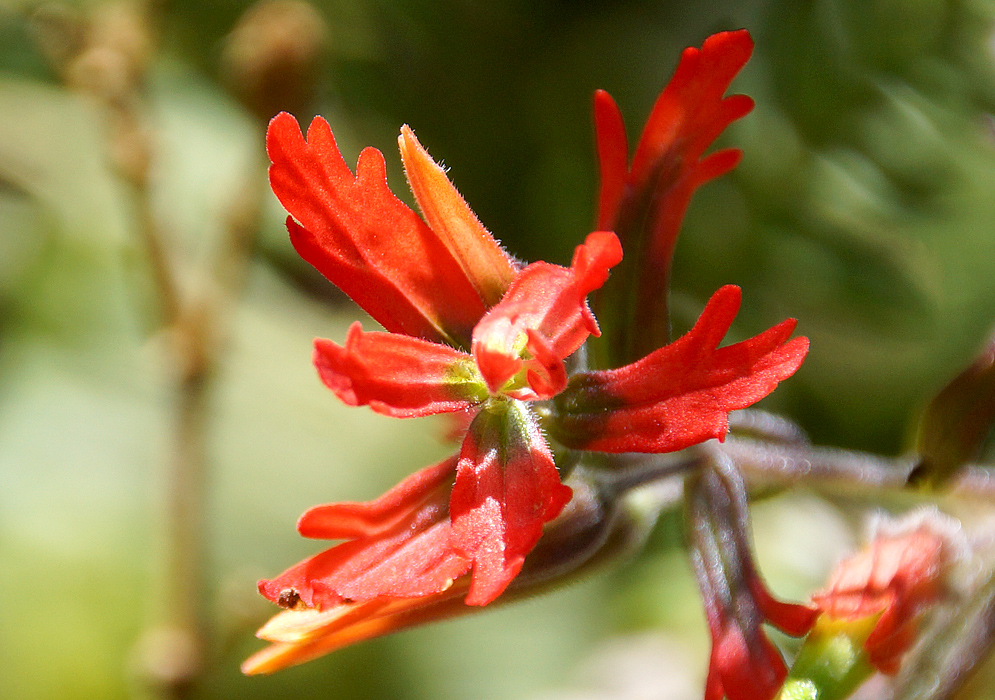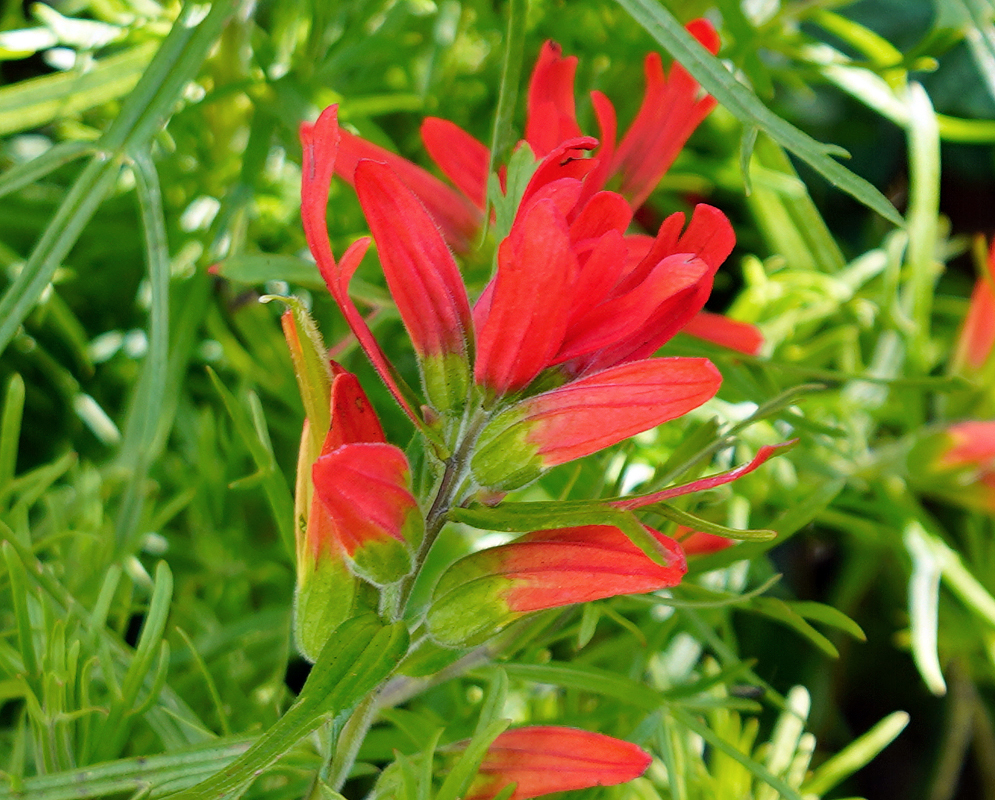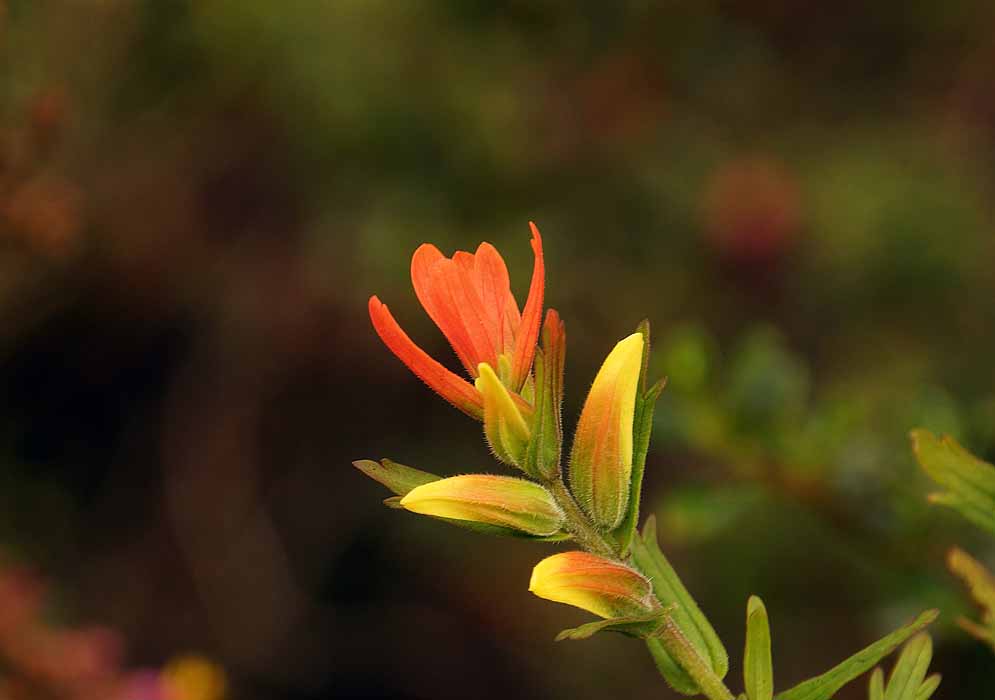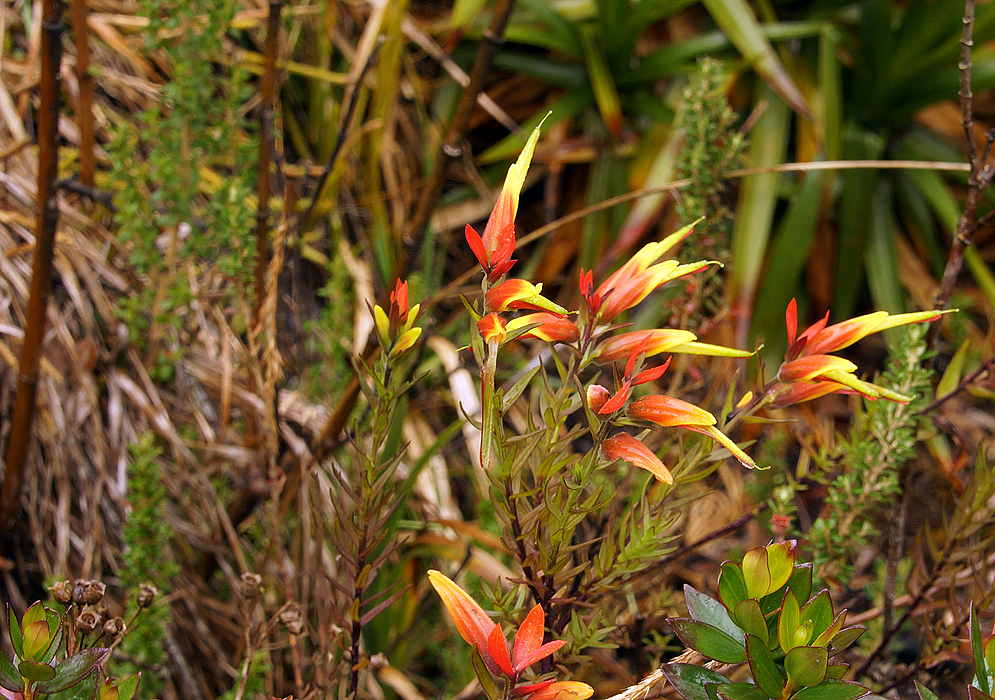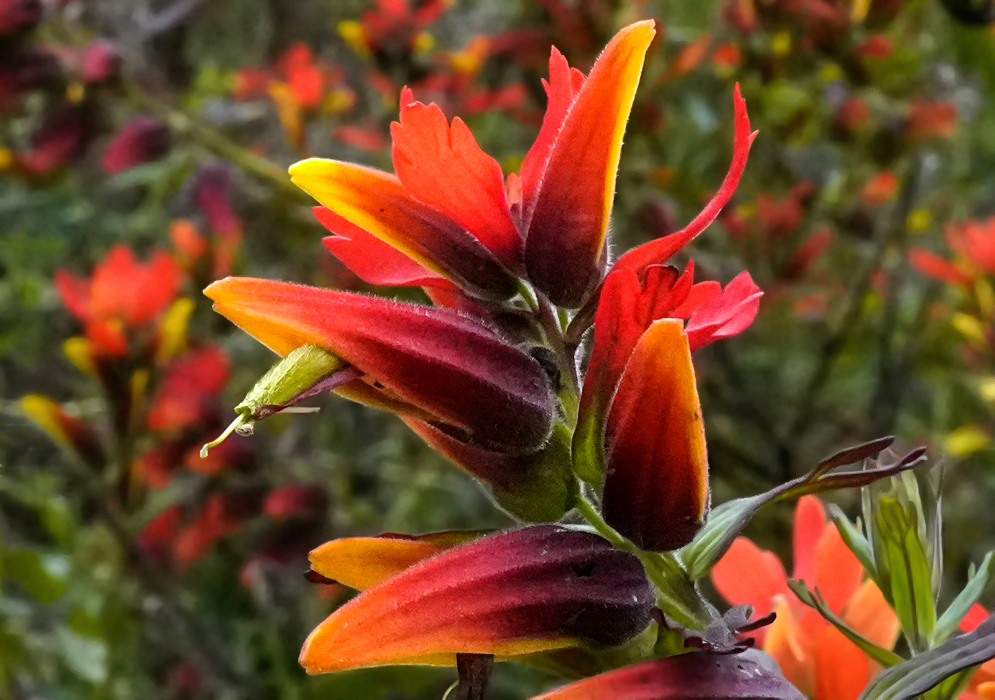


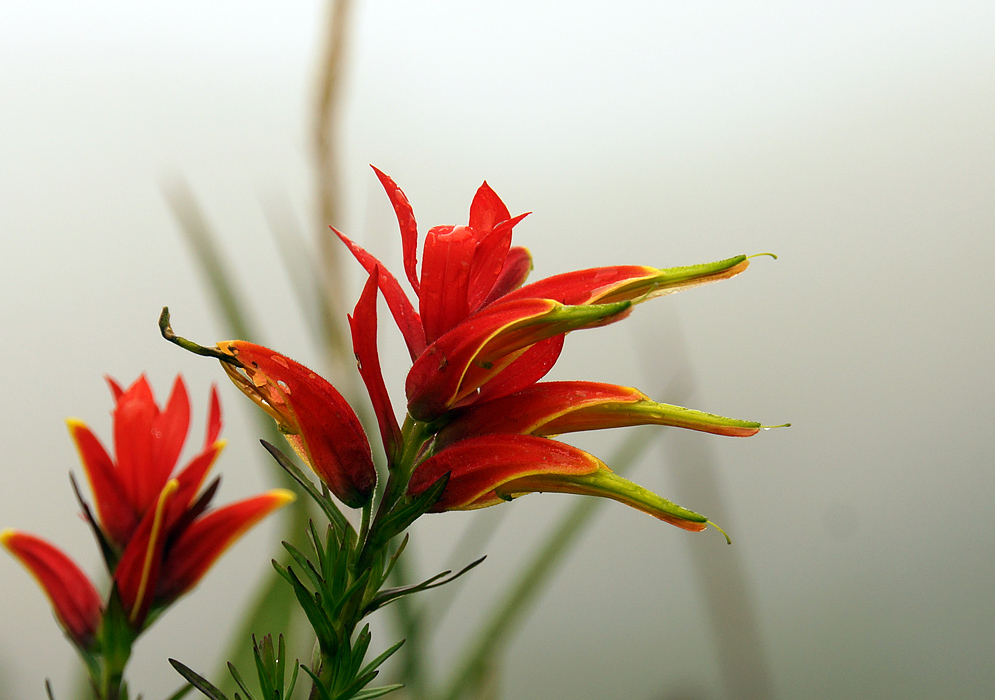
Castilleja fissifolia bears red bracts and orange floral tubes with yellow margins, from which a green flower projects

Castilleja fissifolia


Native to Colombia, Ecuador, Peru, and Venezuela, this erect herb or small shrub in the broomrape family grows in high Andean pƔramo grasslands. In Colombia, it is recorded between about 7,300 and 14,800 feet. Its narrow leaves are often divided into three main lobes. Bright red or orange bracts accompany less conspicuous green, tubular flowers. Nectar feeds bees, hummingbirds, and flies. The plant photosynthesizes but also draws water and nutrients through connections to neighboring roots. In the Venezuelan Andes, it parasitizes at least 44 other plant species, showing an unusually broad host range. Photographed in Colombia and Ecuador.
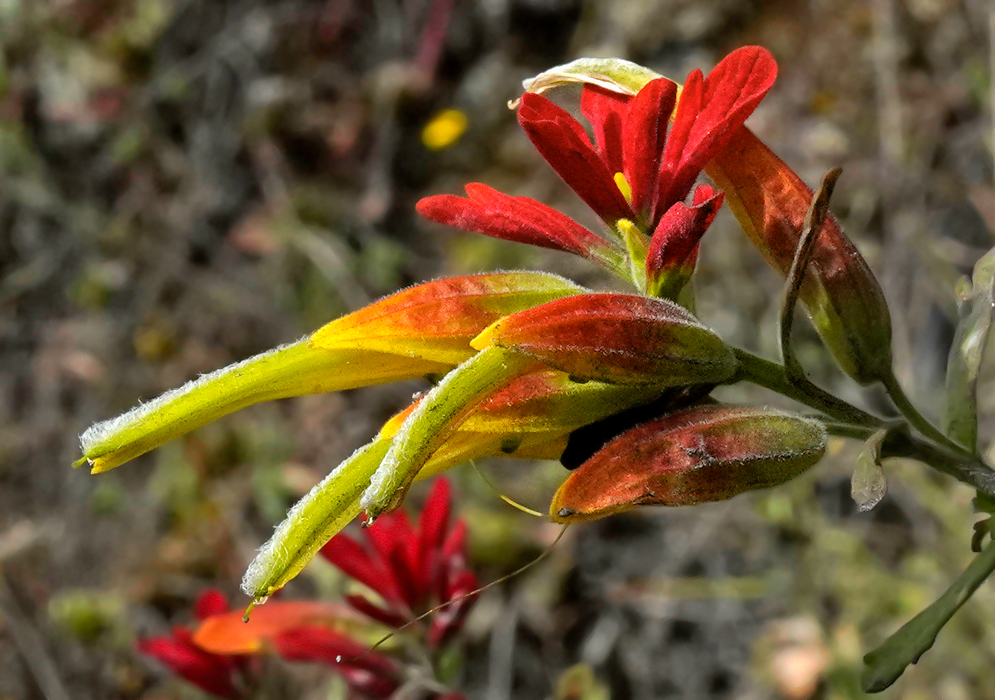
Long green Castilleja fissifolia flowers project from orange and yellow floral tubes beneath bright red bracts
Castilleja fissifolia carries red bracts and slender green flowers extending from orange tubes against a pale background
Green Castilleja fissifolia flowers and red lobed bracts rise among dark purple divided leaves
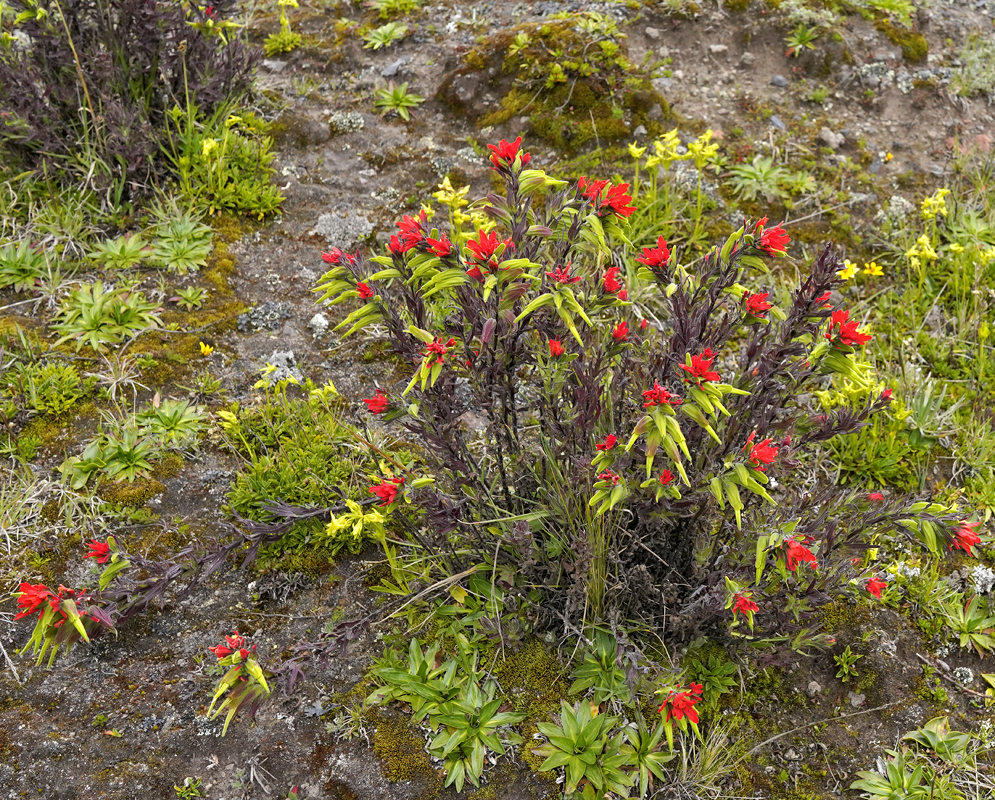
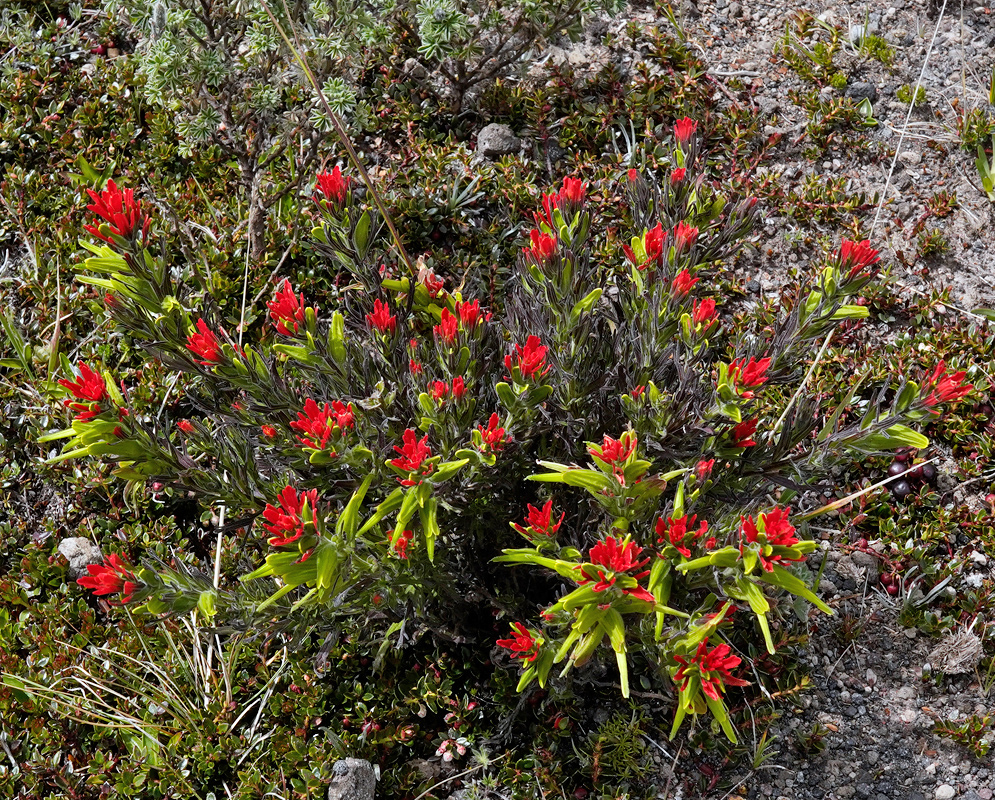
A branching Castilleja fissifolia plant bears red bracts and green flowers on stony ground among low plants
Castilleja fissifolia branches carry red bracts and green flowers amid low vegetation and loose stones
Deeply lobed red Castilleja fissifolia bracts surround narrow orange floral structures on a purple stem
Castilleja fissifolia stems carry orange and yellow floral tubes beneath red lobed bracts
Orange-tipped Castilleja fissifolia bracts stand above hairy yellow and orange floral tubes
Slender Castilleja fissifolia stems carry red bracts and long yellow-green flowers among grasses

Privacy Policy, Legal Notices and Copyright 2016-2026. Engage the Exotic TM, All Rights Reserved.