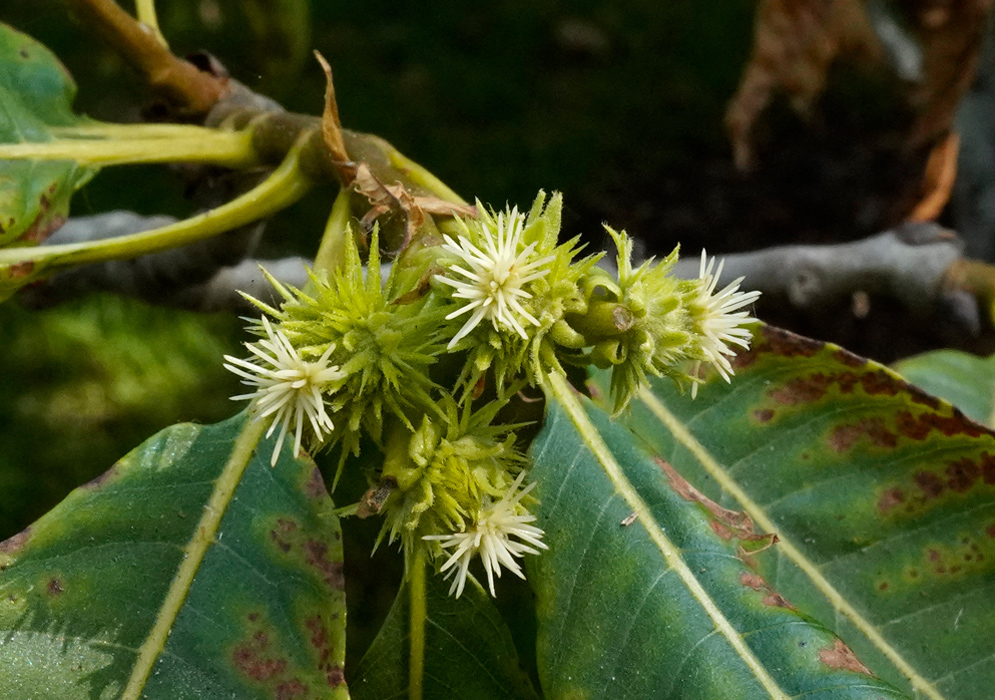


Castanea sativa (Sweet Chestnut)
Native from the Balkan Peninsula through Turkey and the Caucasus to northern Iran, this long-lived deciduous tree in the beech family can reach about 80 to 100 feet tall. Long, sharply toothed leaves turn yellow in fall. Male and female flowers occur on the same tree, with mostly male flowers in catkins and female flowers near their bases. Edible chestnuts develop inside spiny husks and are roasted or ground into flour. The nuts also feed birds and other wildlife. Durable timber supplies furniture, barrels, fencing, and roof beams. It is susceptible to chestnut blight. It is naturalized in Britain. Photographed in Peru.