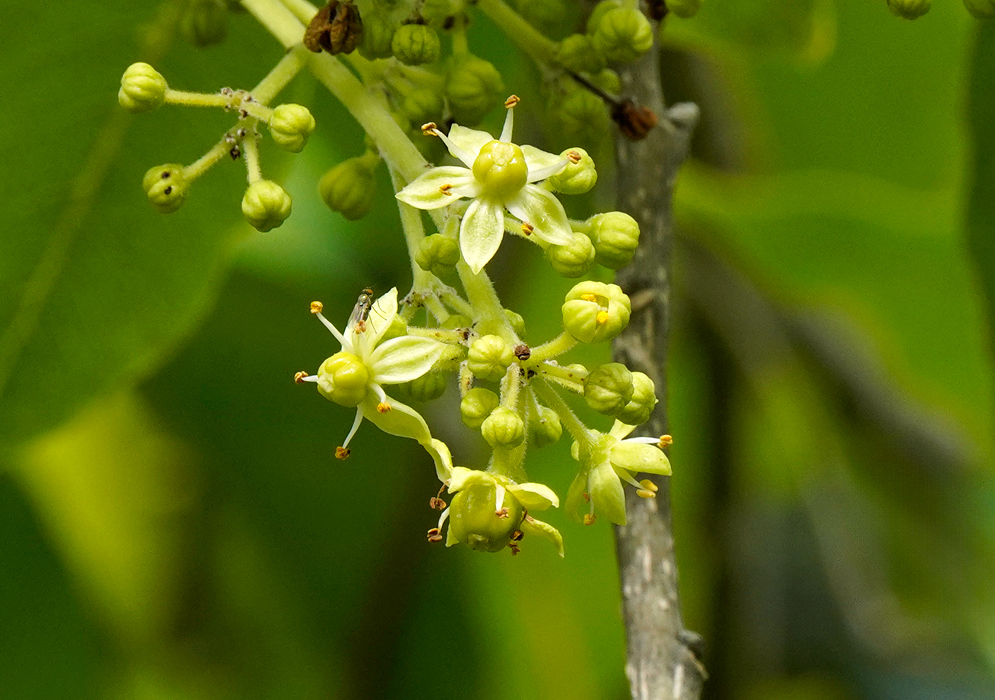


Casimiroa edulis
Native to Costa Rica, El Salvador, Guatemala, Honduras, central Mexico, and Mexico Gulf and nearby regions, this is a tree in the Rutaceae family. It grows in highland habitats as an evergreen to semi-deciduous fruit tree, typically 20–50 feet tall, with a broad, rounded crown, and is now cultivated in subtropical regions. The tree belongs to the citrus lineage and is unusual within that group for producing a soft-fleshed, custardy berry; its primary common name is white sapote (zapote blanco). Flowers appear on branched panicles near shoot tips; each bloom is about ¼–⅜ in wide with five pale petals surrounding a green ovary and short anthers, opening in waves before the main fruit set. Fruits are round to slightly flattened, 2½–4 in across, ripening from green to yellow with creamy flesh that tastes like a blend of banana and peach with vanilla notes; ripe fruit is eaten fresh or blended. The species has long traditional use in Mesoamerica—particularly sedative preparations from seeds or leaves—whereas modern horticulture focuses on dessert fruit. Trees tolerate brief cold snaps near 24–26 °F; they fruit on new growth after winter pruning and can bear heavily by their fifth to seventh year. Photographed in Florida.