
Cananga odorata (Ylang-Ylang)
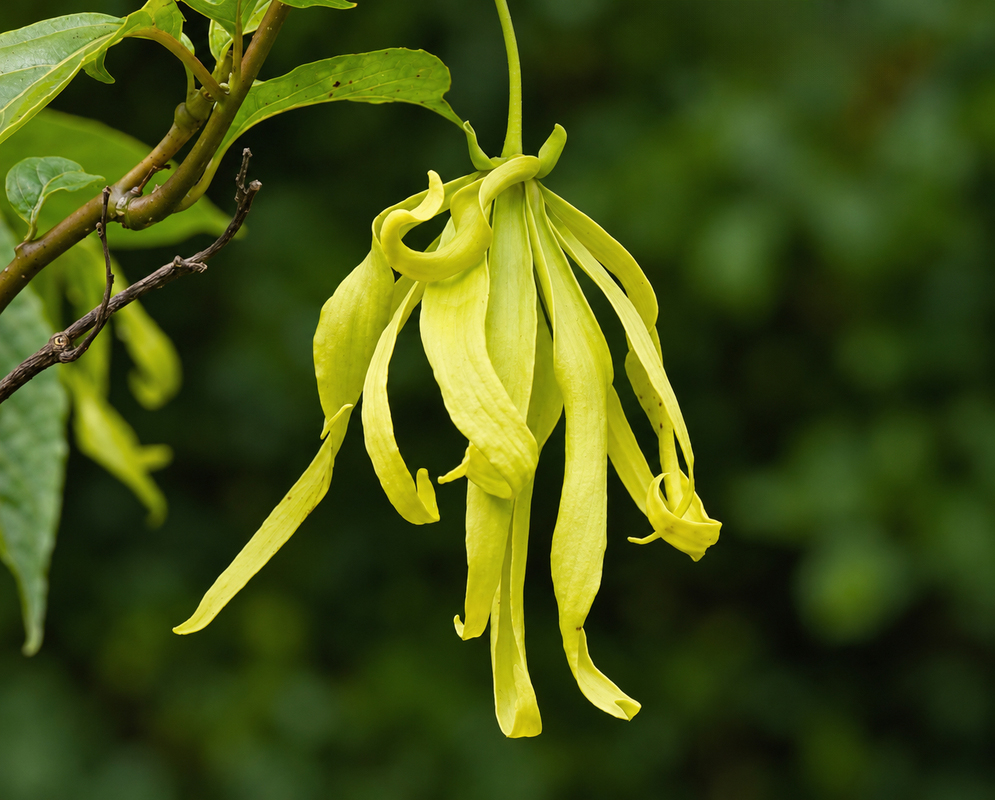
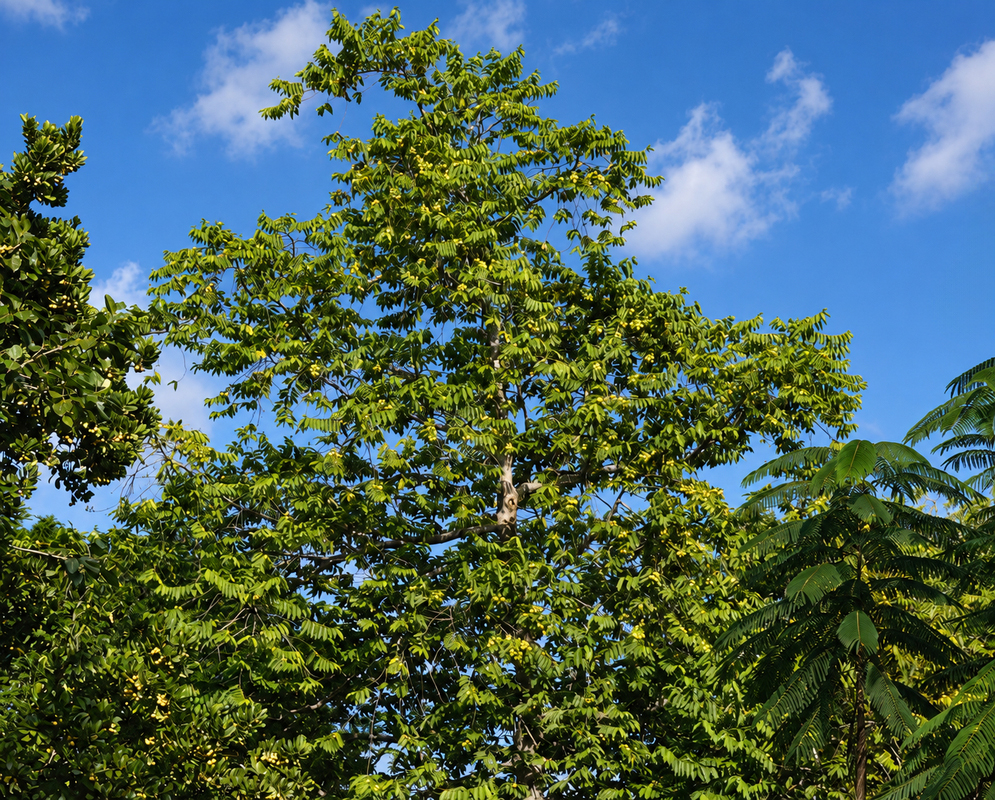
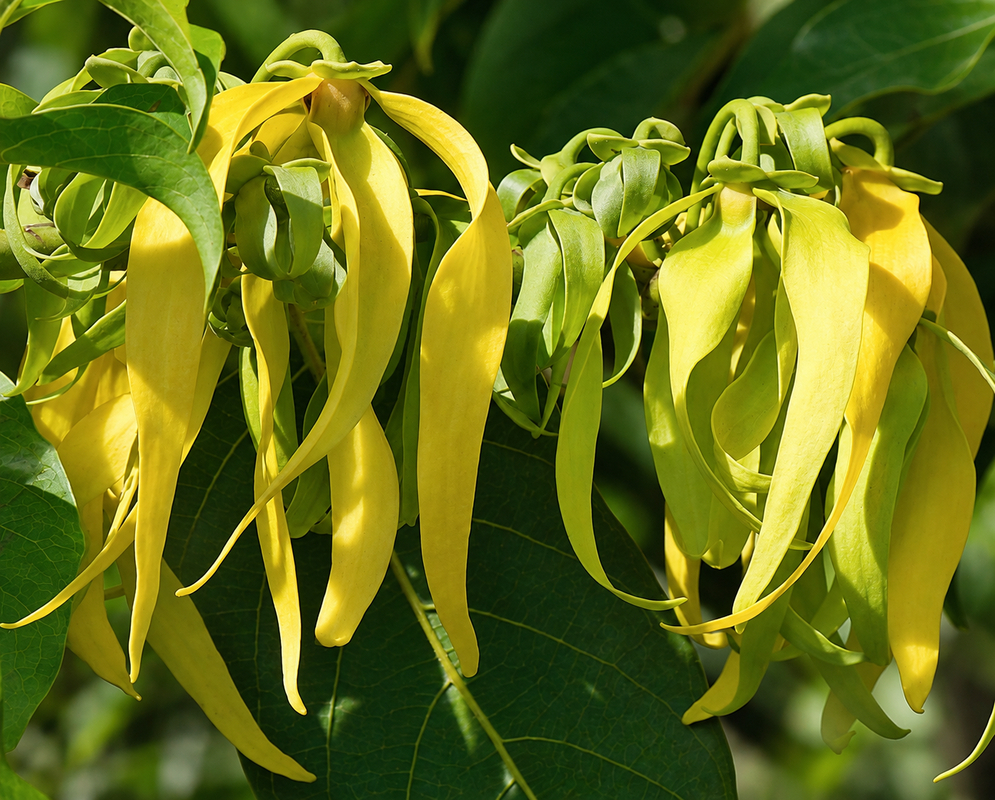
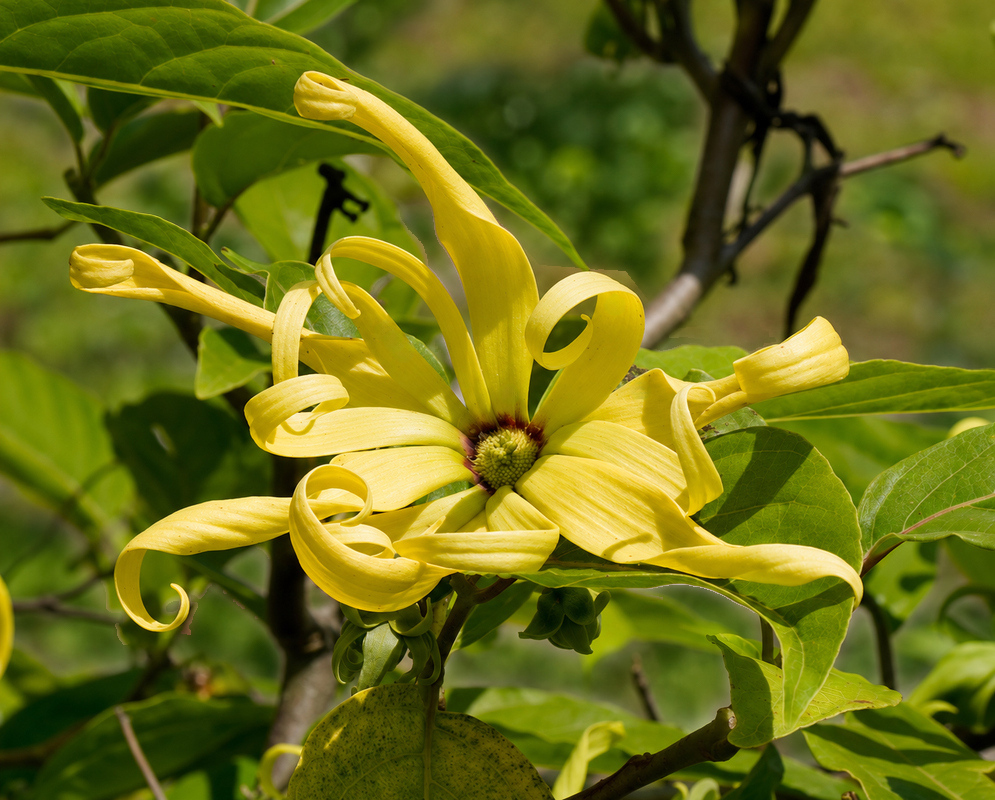
Native from southern Southeast Asia through the Malay Archipelago and New Guinea to Queensland, ylang-ylang is an evergreen tree of tropical forests. Its hanging flowers have six long, ribbon-like petals arranged in two whorls. They change from green to yellow as they mature, and their sweet fragrance is especially strong at night and in the early morning. Mature flowers are distilled for essential oil used in perfumes, soaps, shampoos and hair oils. Different fractions are collected during distillation; the earliest is particularly valued in fine perfumery. Commercial production is concentrated in the Comoros and Madagascar, with additional production in Mayotte. The flowers are also used in garlands and to scent hair and clothing in parts of the Pacific.
In Samoa and Tonga, the bark has been used traditionally for stomach complaints and as a laxative. The flower oil is used in aromatherapy, and small studies in healthy volunteers have measured short-term changes in blood pressure, pulse and feelings of relaxation. Those findings do not establish treatment for hypertension or anxiety disorders. Bark fibers have been made into rope, and the resonant wood has been used for drums. The tree has naturalized on several Pacific islands, including Samoa. Photographed in Florida.