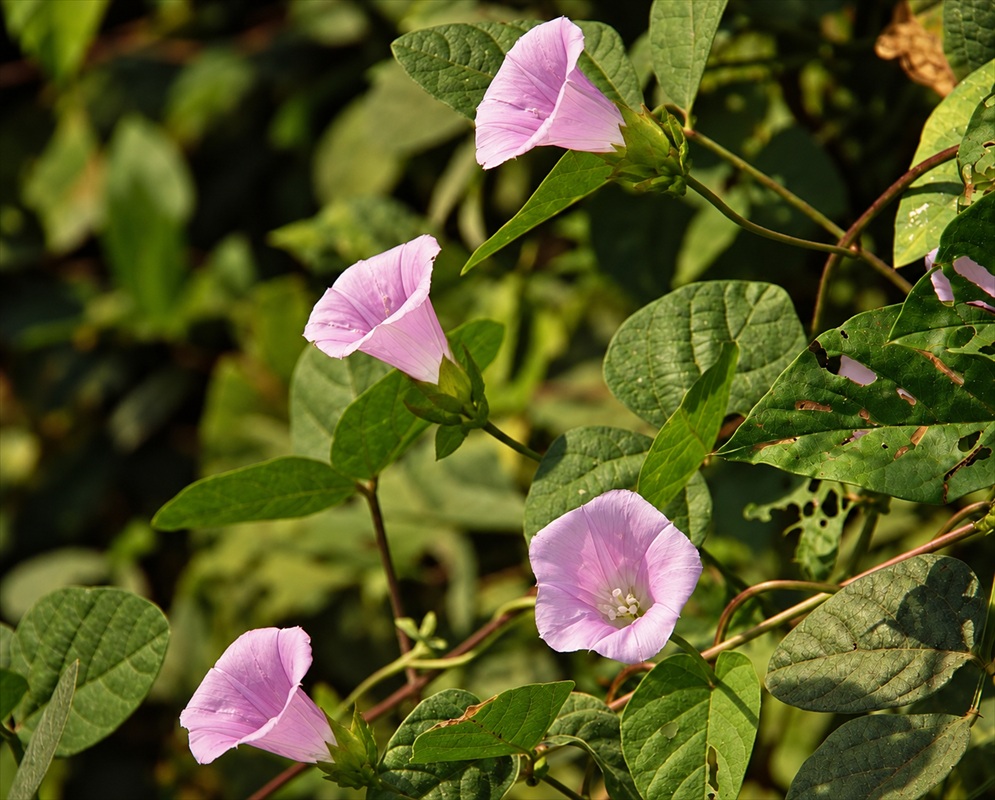


Calystegia sepium (Hedge Bindweed)
Widespread across temperate and subtropical regions, hedge bindweed is a perennial herbaceous vine that climbs by twining its stems around supports. It occurs in hedges, stream margins, marshes, fields and other disturbed places. Solitary white to pale pink flowers arise from the leaf axils. Their five fused petals form a pleated trumpet, usually more than two inches long. Two conspicuous, leaf-like bracts enclose the calyx at the flower’s base, distinguishing it from field bindweed, whose bracts sit farther down the flower stalk. Underground rhizomes spread extensively and can regenerate from fragments about an inch long. Seeds can remain viable in the soil for decades, helping it persist as a troublesome agricultural and garden weed.
Historically, the roots have been used as a strong purgative. In Cameroon, the plant has also been used traditionally for urinary complaints. Extracts of the aerial parts have inhibited selected bacteria in laboratory cultures. Resin glycosides isolated from those parts have been investigated for biological activity, with one showing toxicity to cultured lung-cancer cells. Neither laboratory finding establishes a treatment for infections or cancer in people. Photographed in Ecuador.