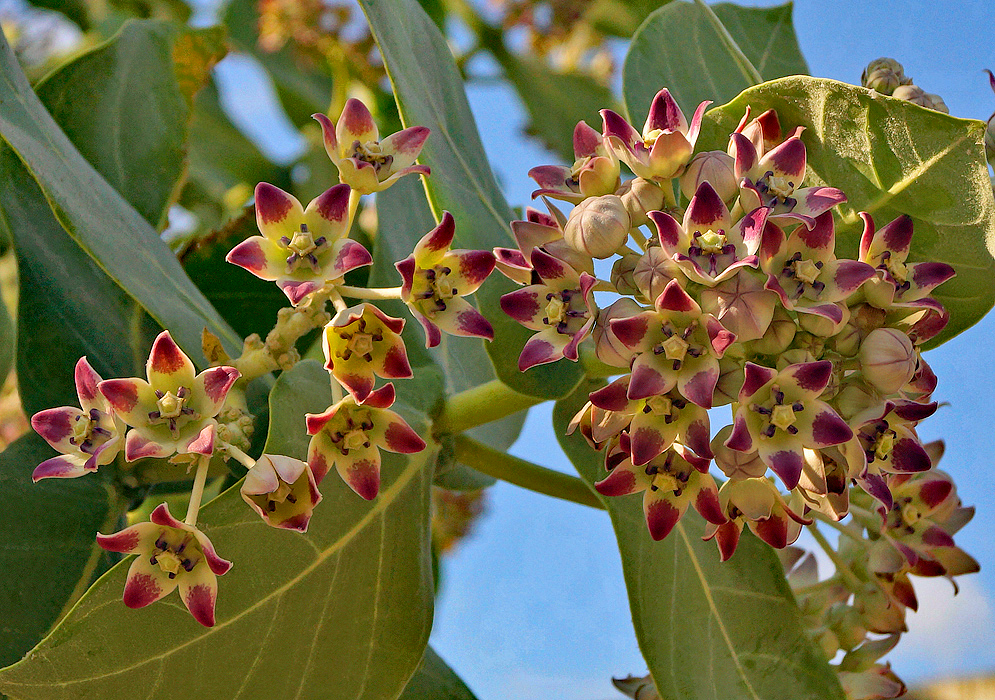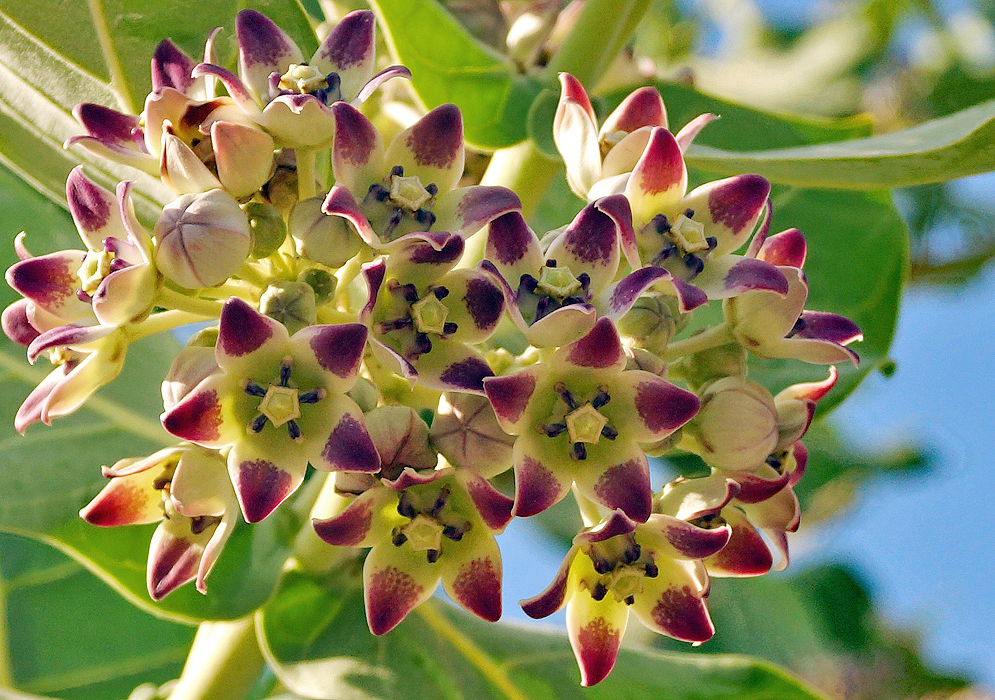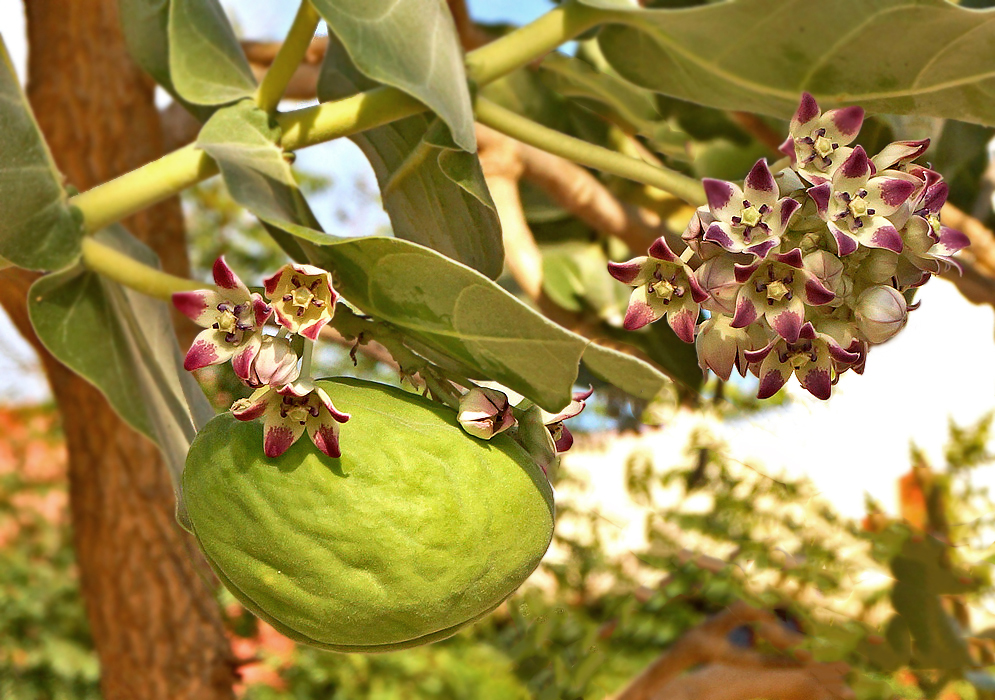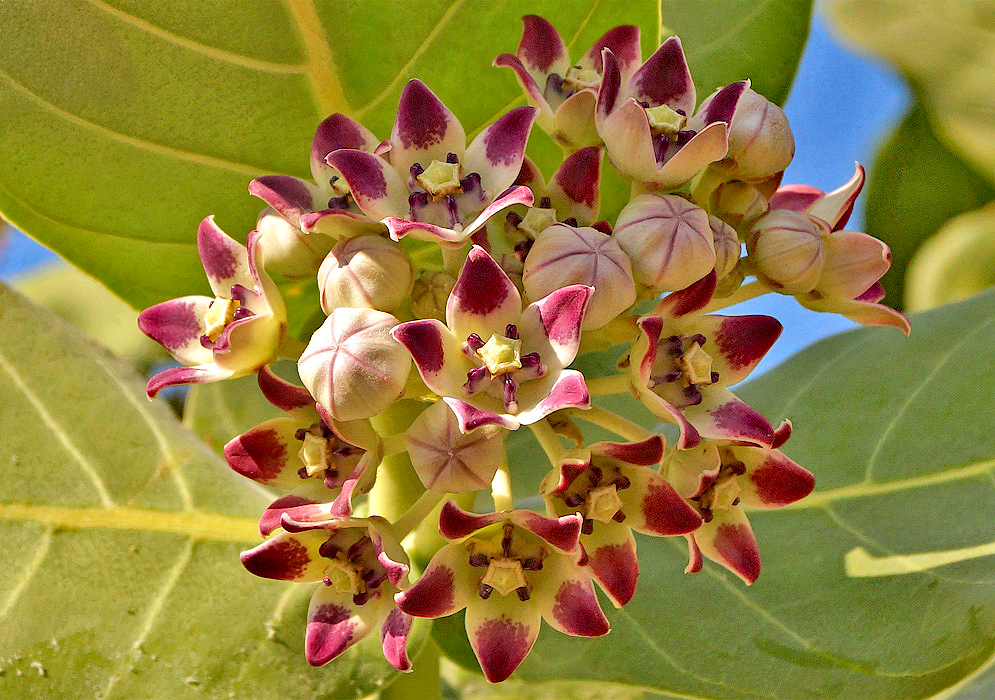


Calotropis procera (Rubber Bush)
Native from the Canary and Cape Verde islands across northern and tropical Africa and into Asia as far as Indochina, rubber bush is a perennial shrub of arid and semi-arid landscapes. Its waxy flowers have five white to cream petals tipped with purple and a raised, crown-like structure in the center. Inflated fruits split open to release seeds bearing silky tufts that carry them on the wind. The seed floss has been used for stuffing and packing, while strong stem fibers supply rope, bowstrings and fishing nets. It has naturalized in Colombia and become invasive across parts of northern Australia, where dense thickets reduce access to grazing and water.
In African and Indian traditional medicine, root and bark preparations have been used for digestive complaints, and roots, leaves and latex for skin conditions and painful swelling. Proteins isolated from the latex have been incorporated into an experimental wound dressing. A small human trial involving leprosy-related foot ulcers found faster healing with this dressing, while a separate diabetic-foot trial found no statistically significant advantage over a conventional dressing. These studies concern a processed protein preparation. The raw plant contains toxic cardiac glycosides, and its milky latex can cause severe skin and eye injury as well as poisoning if swallowed. Photographed in the department of Atlántico, Colombia.