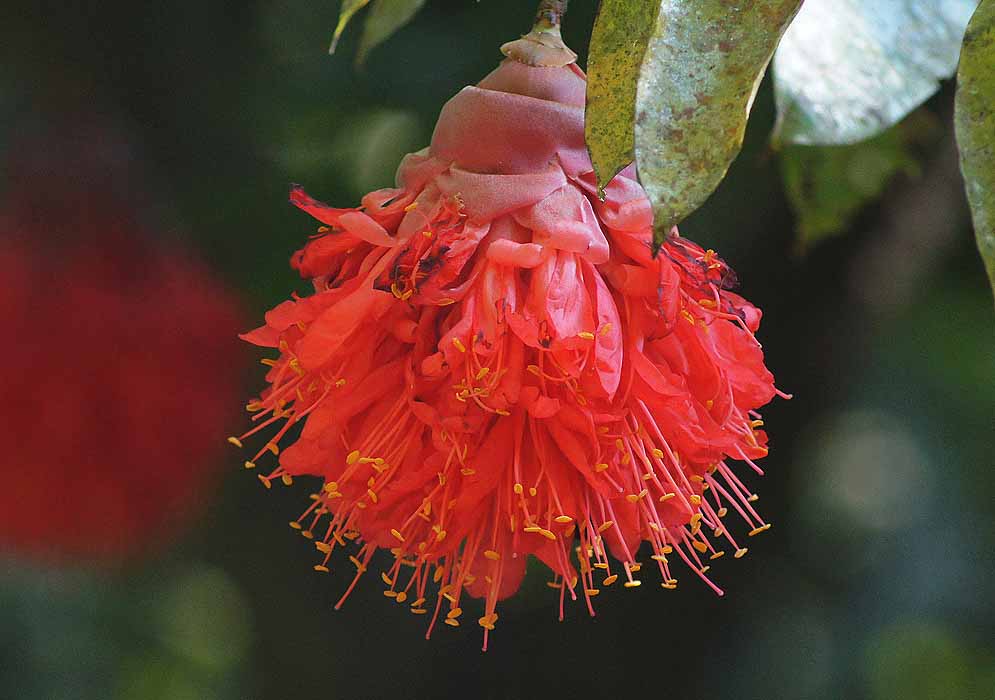


Brownea grandiceps (Rose of Venezuela)
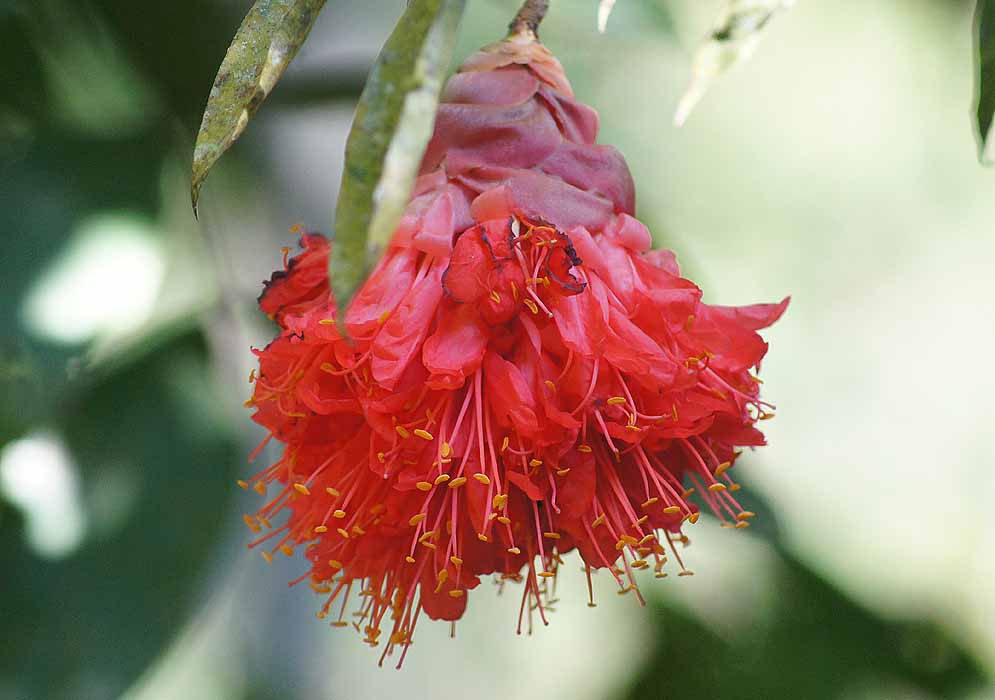
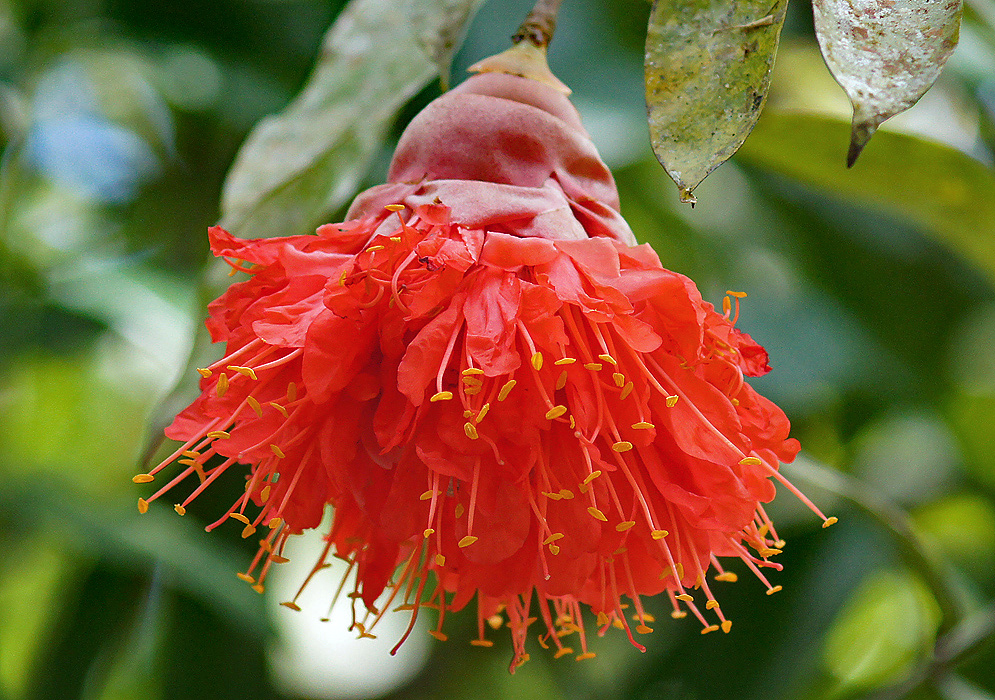
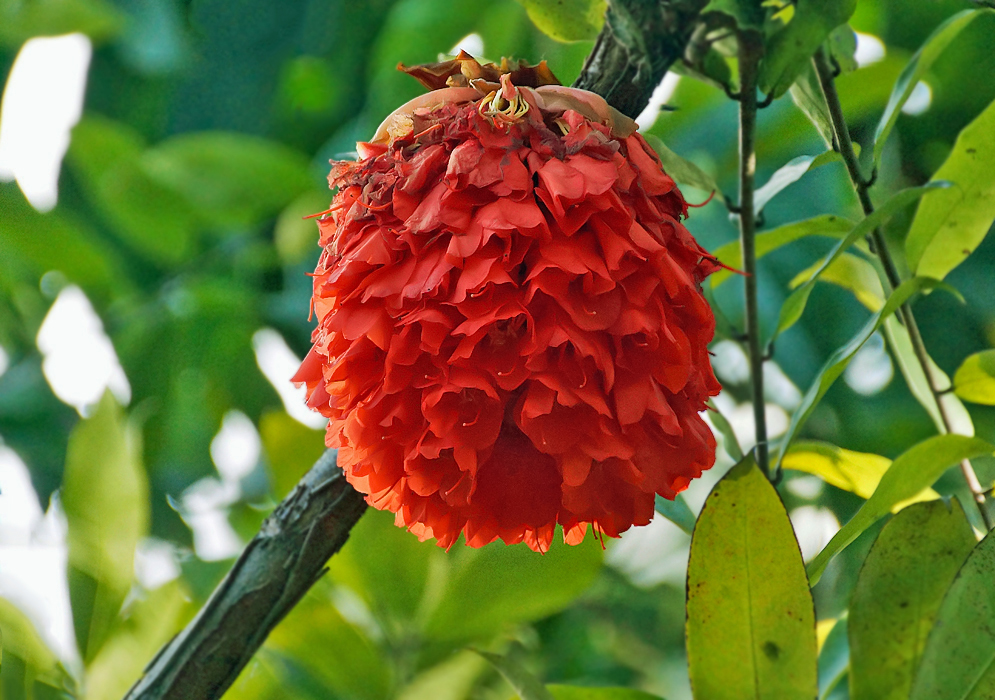
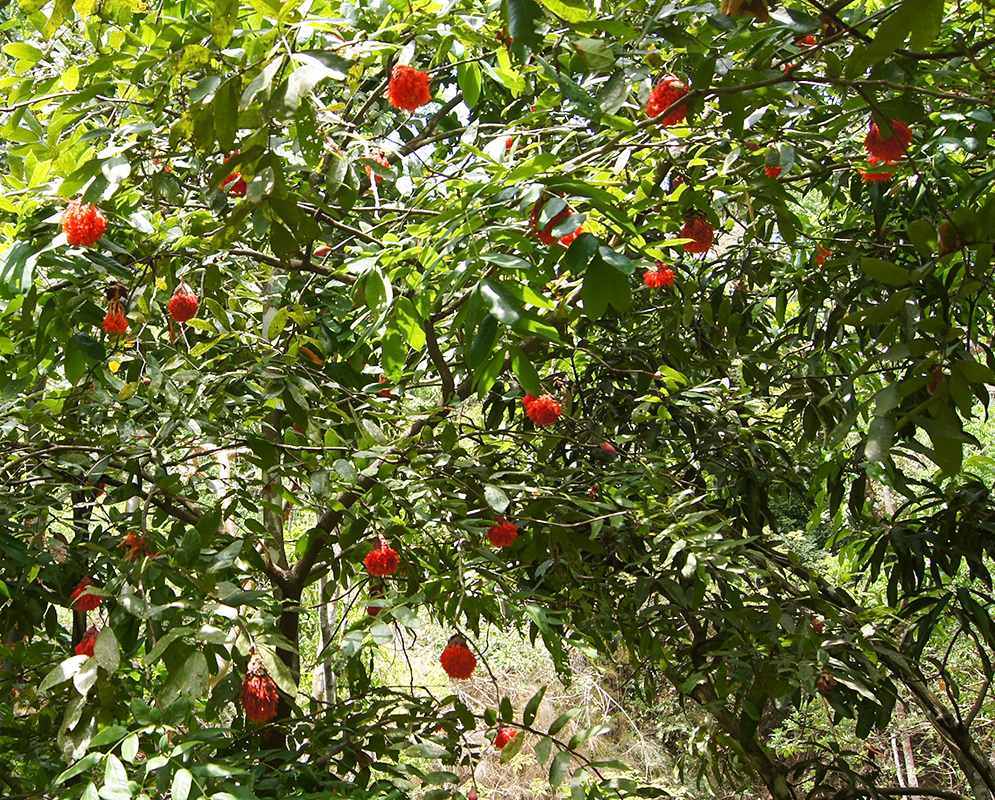
Native to Colombia, Ecuador, Peru, Venezuela and northern Brazil, rose of Venezuela is a rainforest tree cultivated for rounded clusters of scarlet flowers. The cup-shaped blooms have red petals and projecting yellow stamens and develop on older branches beneath the foliage. New compound leaves hang limply in tassel-like flushes, initially brown with green speckles, before expanding and becoming firm. This contrasting flush is a distinctive feature of the tree. In Colombia, it occurs at roughly 100–5,200 feet.
In Ecuador, its wood is used for construction beams, posts, utensils and crafts, and flower nectar is consumed locally. Flowers and inner stem preparations have traditional uses for menstrual complaints, while bark is used for bleeding and cuts. In Venezuela, flowers are used traditionally for heavy menstrual bleeding. Laboratory research found that flower extracts inhibit plasmin, an enzyme that breaks down blood clots, and also influence clot formation in ways that depend on concentration. These are biochemical findings rather than clinical proof of treatment efficacy. Photographed in the Sierra Nevada de Santa Marta, Colombia.