Bomarea multiflora (Trailing Lily)
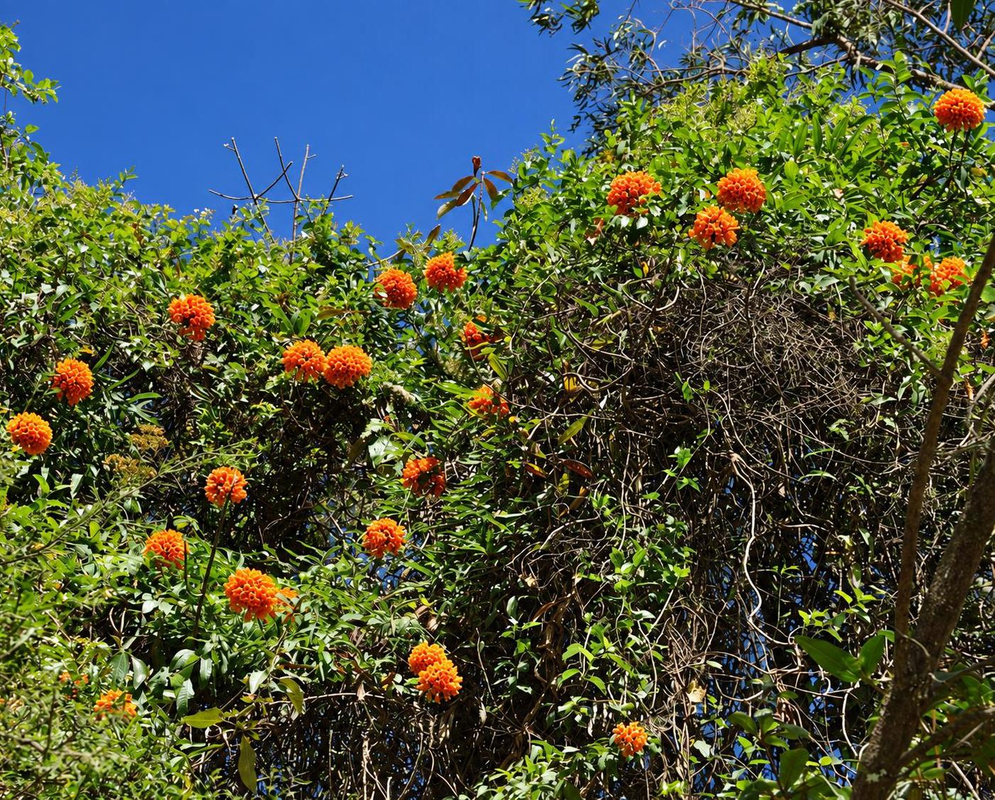
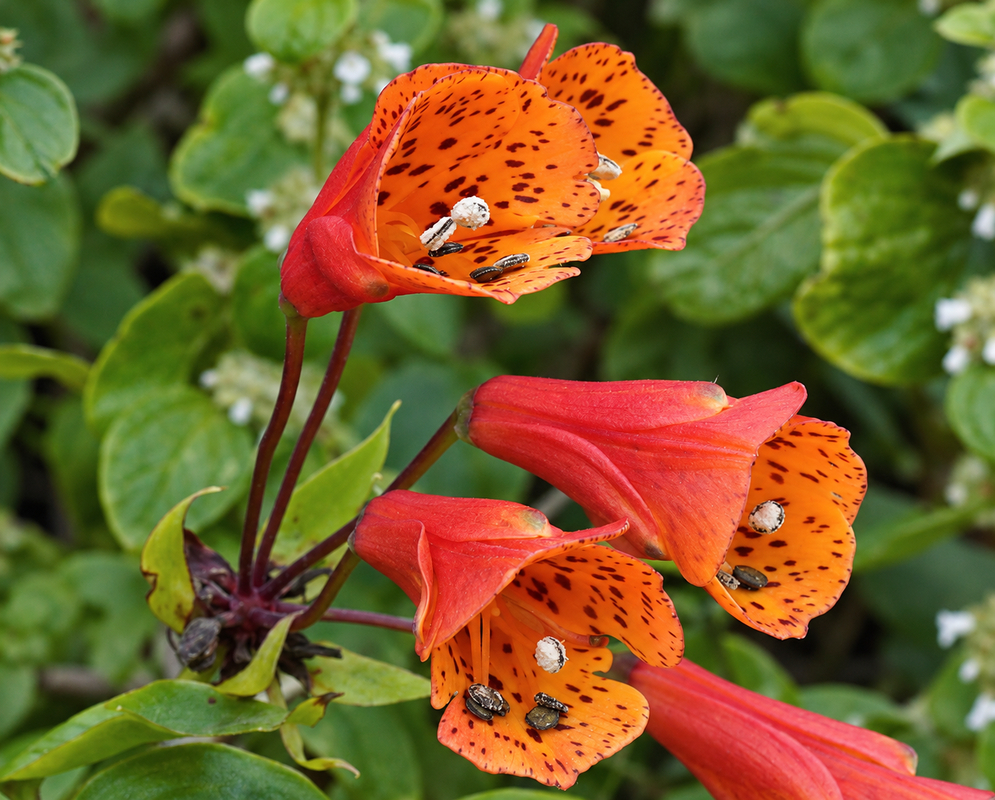
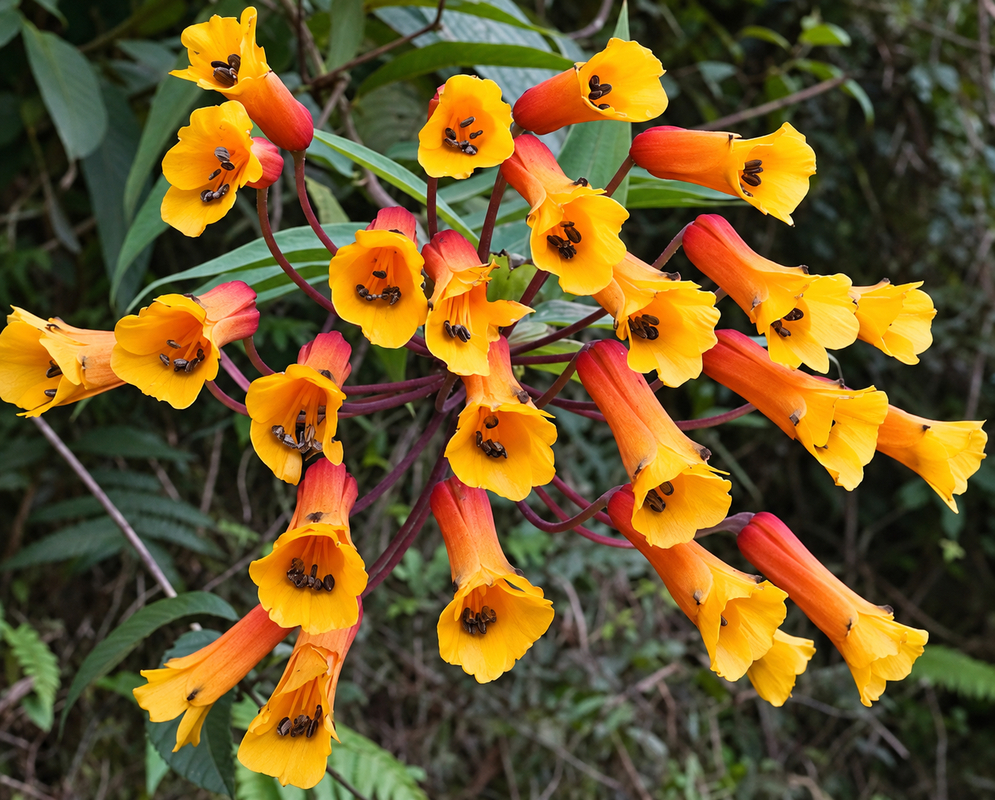
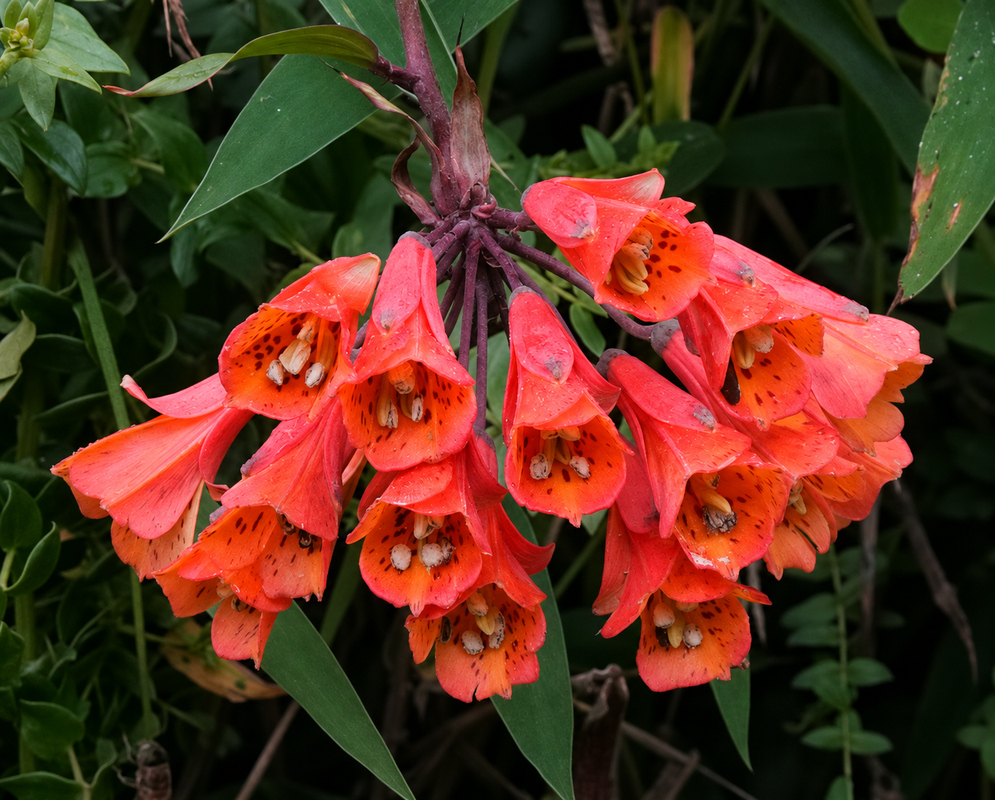
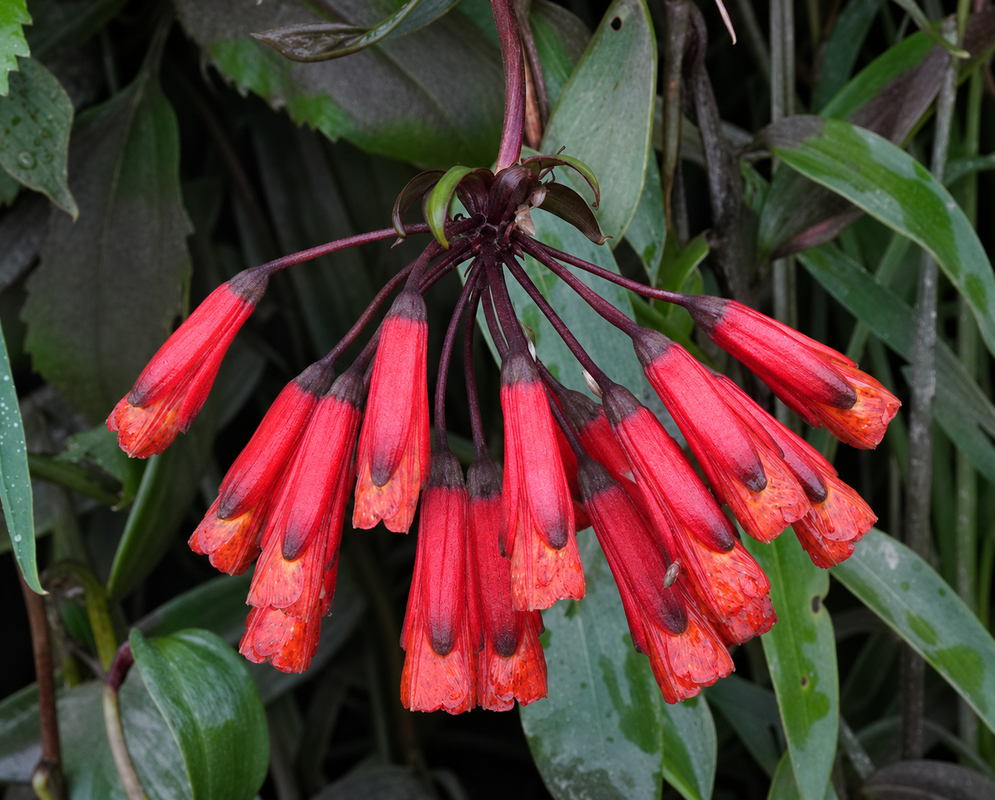
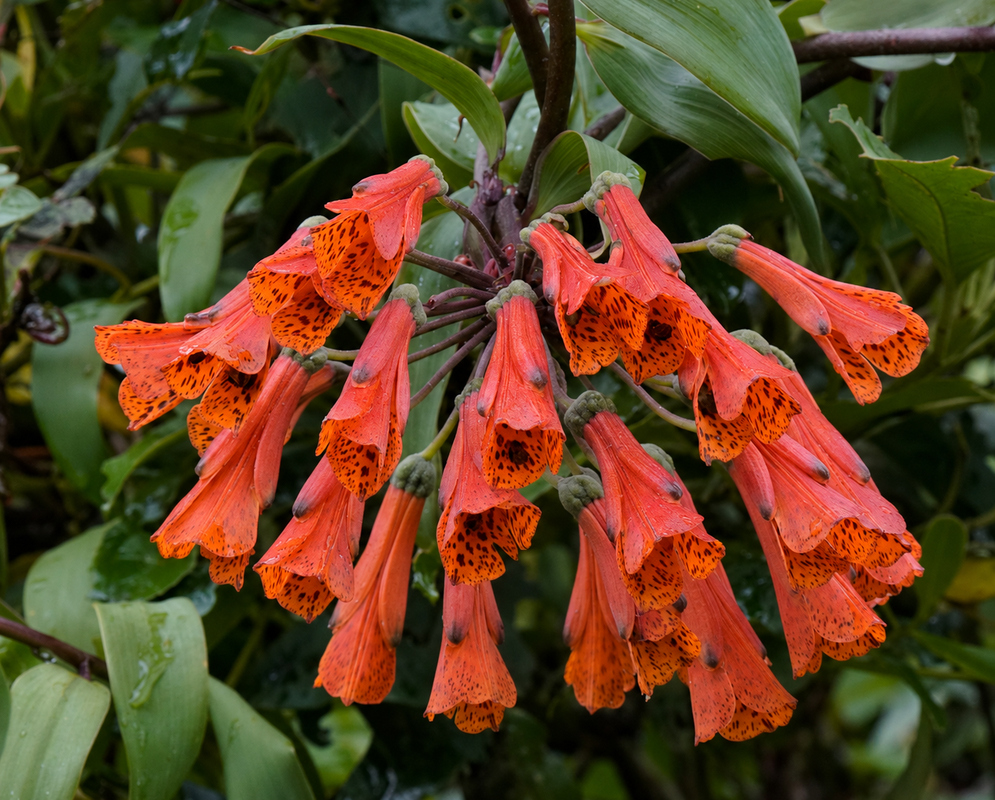
Native to Colombia and Ecuador, trailing lily is a perennial twining vine with underground rhizomes and tuberous roots. In Colombia, it occurs in the Andes and Sierra Nevada de Santa Marta at roughly 5,600–12,500 feet. Hanging clusters carry many tubular flowers, reddish to orange outside and yellow inside, often with dark spots. The inner flower segments broaden toward their tips and contrast with the narrower outer segments. The leaf stalks twist so that the undersides face upward. Capsules split open to expose fleshy orange-red seeds.
In Ecuadorian traditional medicine, it has been used for pustular skin complaints of the breast. Its fruits and seeds are poisonous, reflected in the local name veneno de perro, or dog poison. Introduced to New Zealand as an ornamental, it has become invasive in forest remnants and shrubland. The vines climb into the canopy, smother supporting vegetation and suppress seedling establishment; underground rhizomes and tubers also allow it to spread vegetatively. Photographed in the Andes of Colombia.