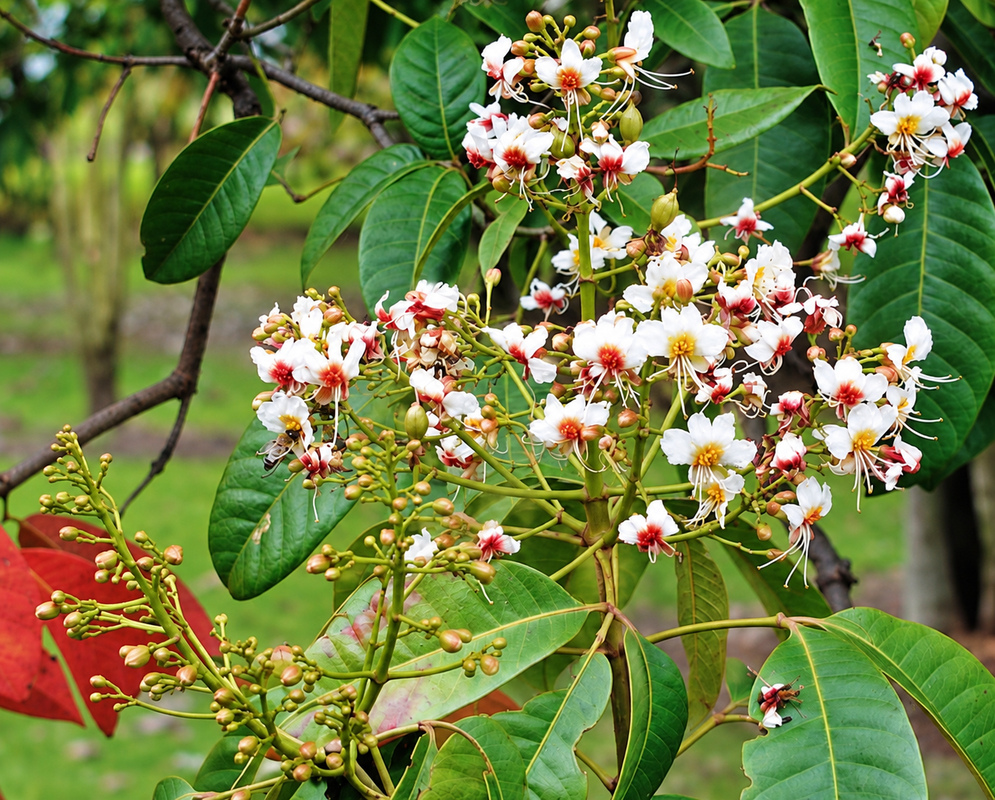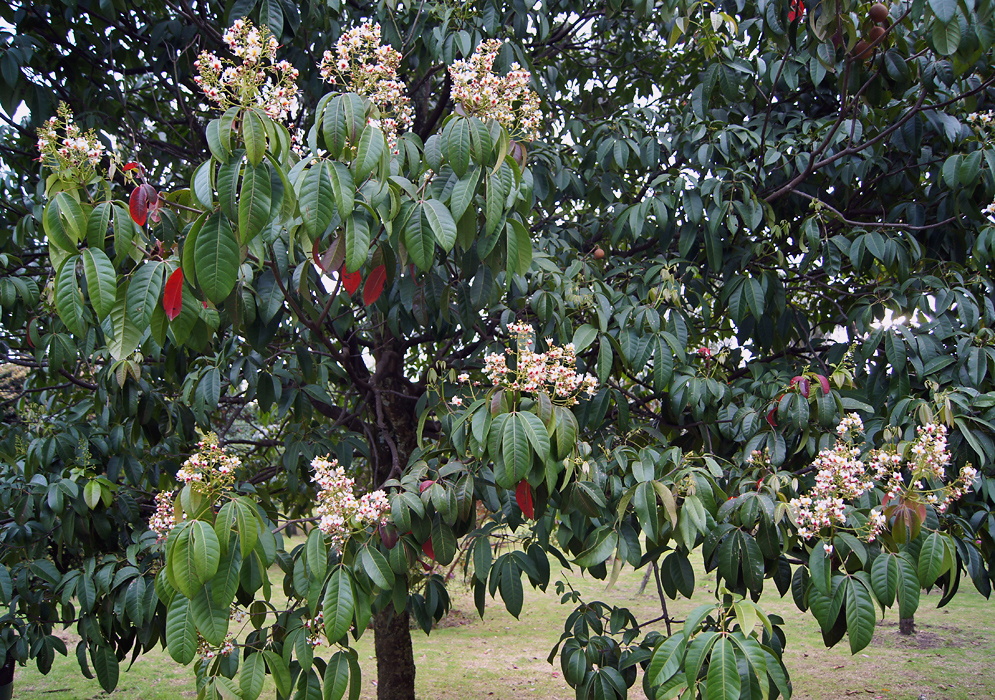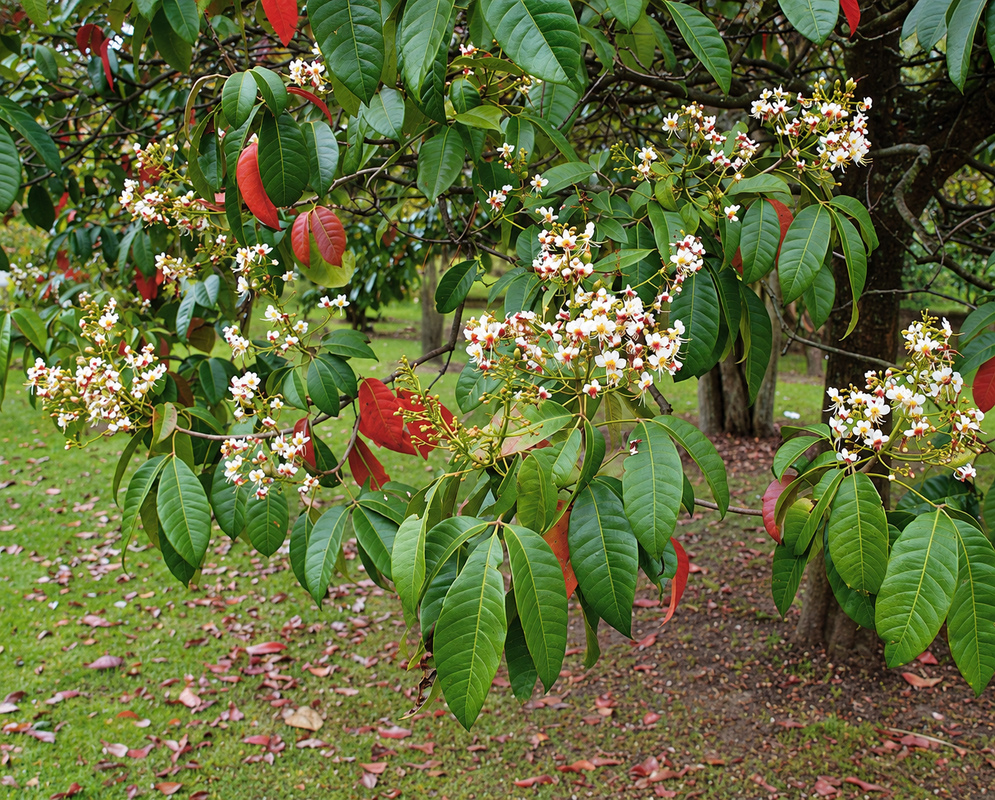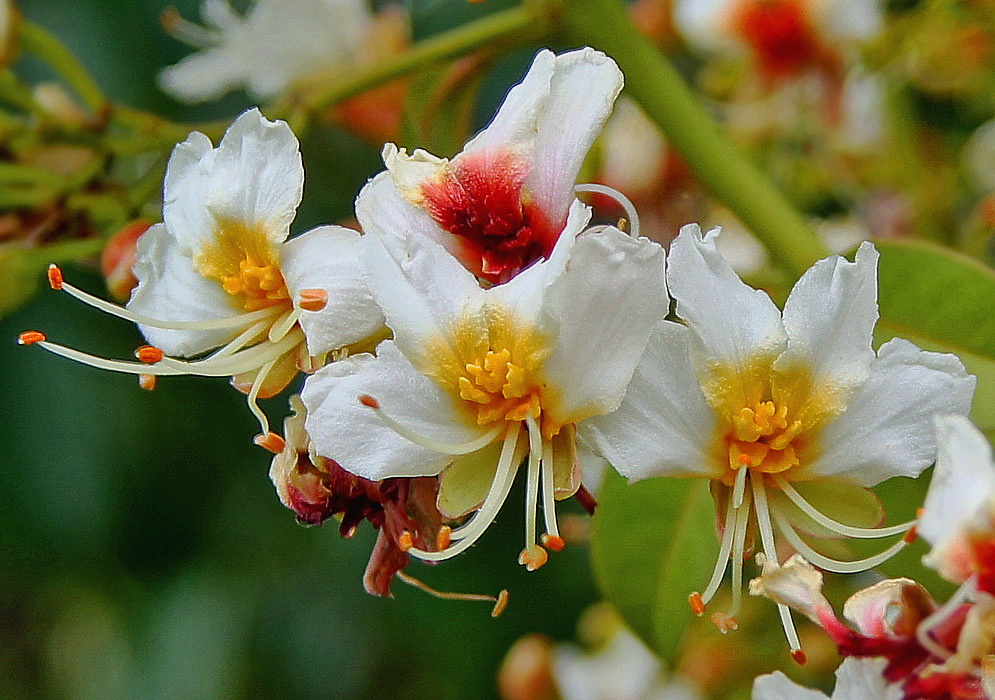


Billia rosea flowers have white petals, yellow or red centers, and long white stamens with orange anthers

Billia rosea


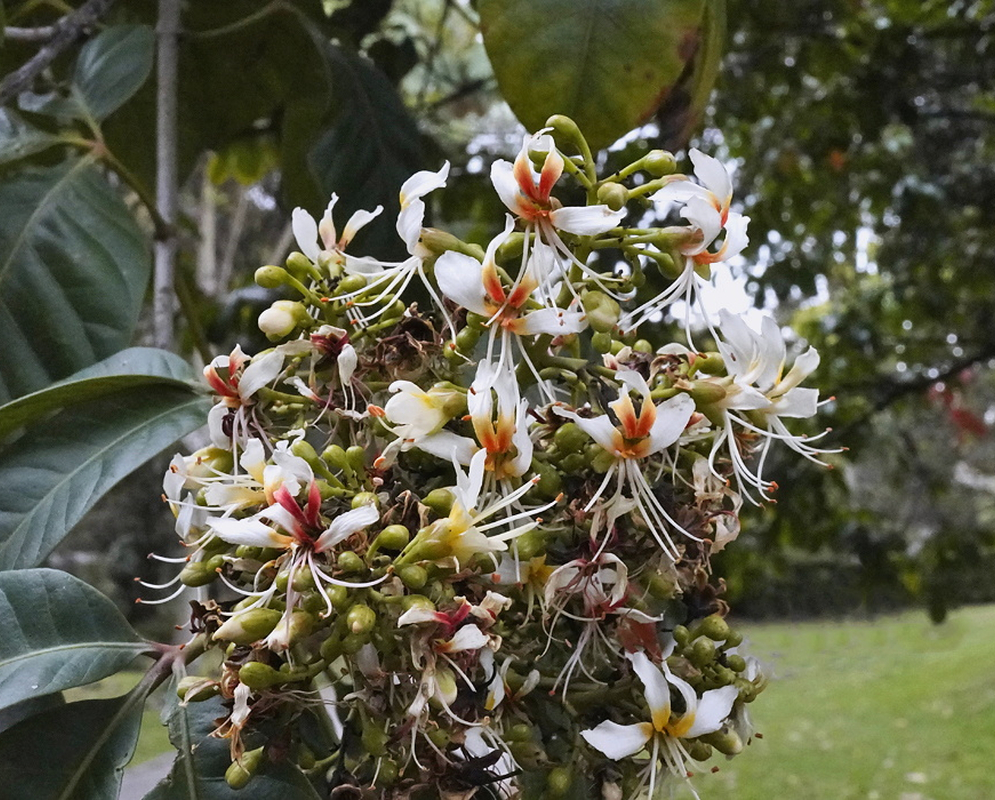
Native from Honduras through Costa Rica and Panama to Colombia, Ecuador and Venezuela, this forest tree grows in humid lowland and mountain habitats. In Colombia, it occurs at roughly 2,000–10,300 feet. The common name tres hojas refers to leaves divided into three leaflets. Flowers form branching clusters at the ends of the shoots. White to pinkish petals carry yellow markings in young flowers; the centers become pink or red as the flowers age. Long, curved stamens project beyond the petals, with orange-yellow anthers at their tips.

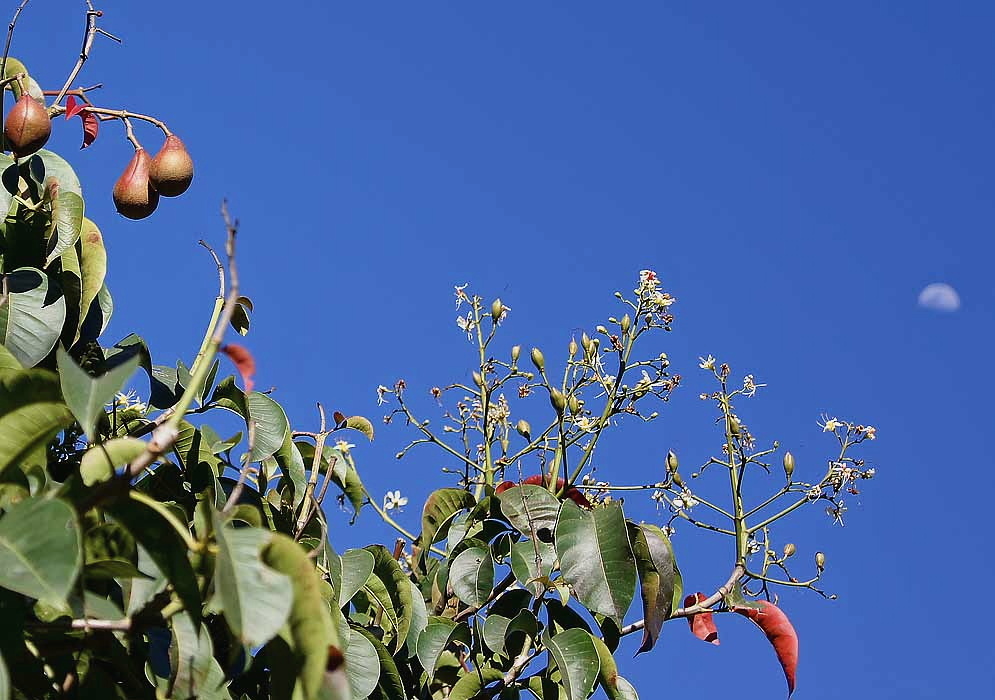
Its wood is used for cabinetry, flooring, vehicle bodies and turned objects, as well as local house construction and fuel. It is planted for ornament in Colombian parks and squares and used as a shade tree in coffee agroforestry. The fruit is a capsule that splits open to release its seeds. Photographed in Bogotá, Colombia.

A Billia rosea flower has white petals, a yellow center, and curved white stamens among green and reddish buds
A Billia rosea flower cluster shows white petals, orange-red centers, long curved stamens, and green buds
Branching Billia rosea flower clusters carry white flowers with red or yellow centers among green leaves
A Billia rosea tree carries white flower clusters above green compound leaves and scattered red leaves
Billia rosea branches bear white flower clusters among large green leaflets and scattered red leaves
Billia rosea branches carry green and brownish-red fruits beneath a blue sky with a pale moon
A white Billia rosea flower has an orange center and long curved stamens
White Billia rosea flowers grow along a branching stalk

Privacy Policy, Legal Notices and Copyright 2016-2026. Engage the Exotic TM, All Rights Reserved.