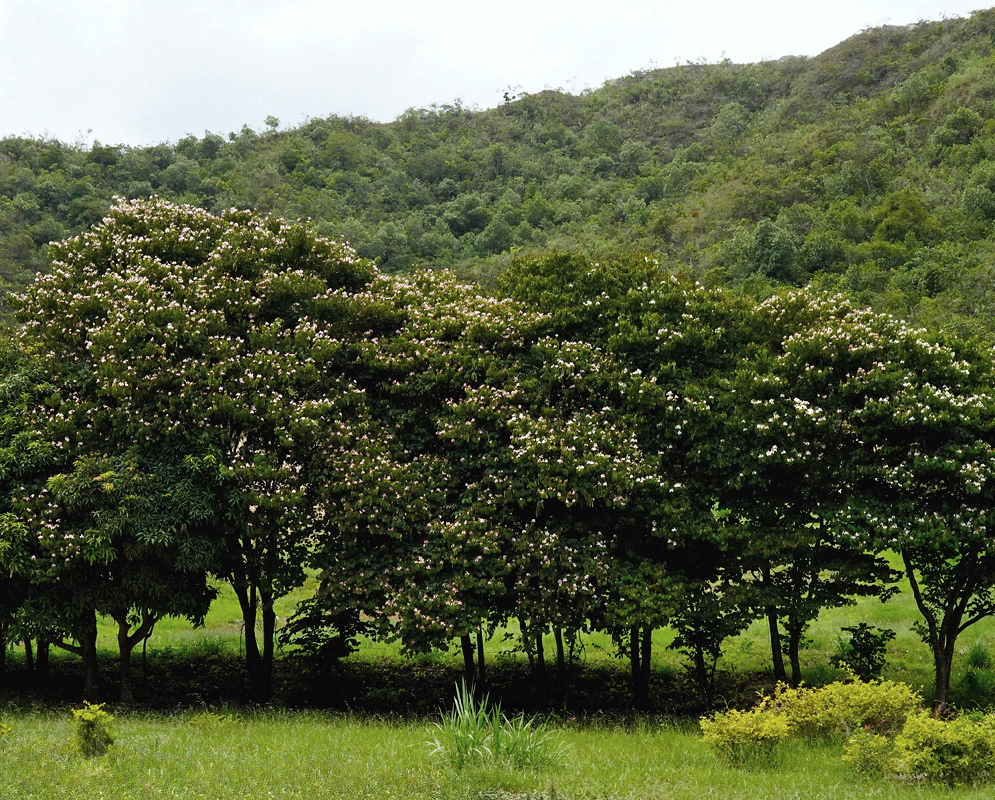

Bauhinia picta
Native to Panama and Colombia, this tree grows in wet tropical vegetation and is cultivated for shade and ornament. Its two-lobed leaves resemble a cow’s hoof, giving rise to names such as casco de vaca. Fragrant pink to lilac flowers form clusters and have ten stamens. The flattened pods split as they ripen, with the valves twisting back to release the seeds. In Colombia, it occurs in the Andes and the Cauca and Magdalena valleys at roughly 300–5,600 feet.
It is planted in living fences, streets and gardens, and its protein-rich seeds have been used in animal feed. In Colombian traditional medicine, the leaves are used for high blood pressure, while other preparations are used for blood-sugar complaints and in bitter-herb baths. Leaf and bark extracts have shown antioxidant activity in laboratory assays. A tested leaf extract did not reduce blood glucose in mice with experimentally induced diabetes, so antioxidant activity alone should not be interpreted as proof of a diabetes treatment. Photographed in the central Andes mountain range of Colombia.