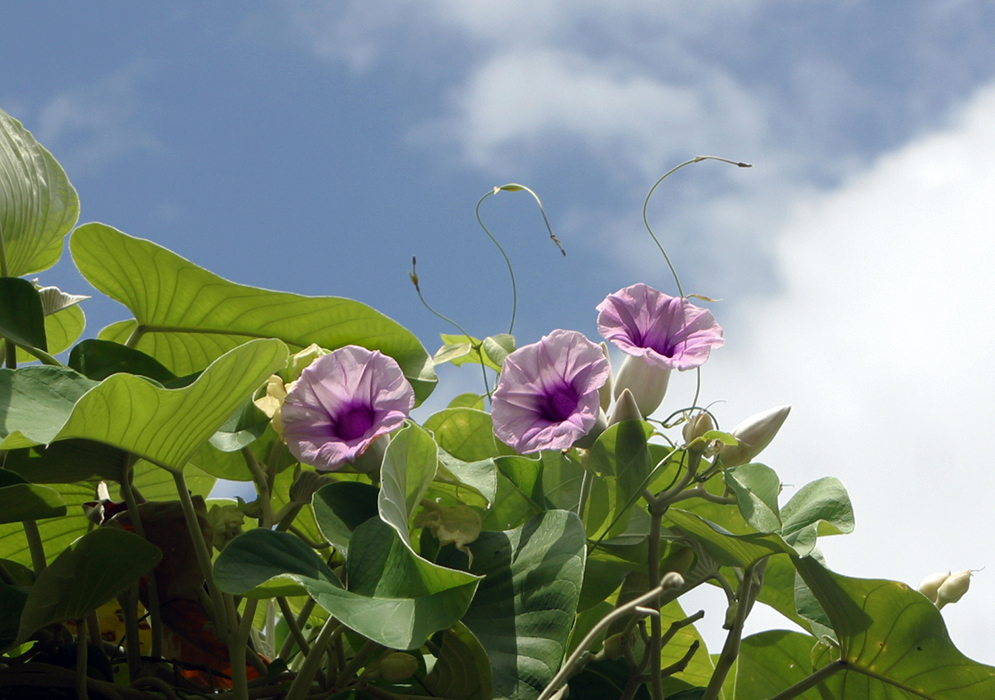


Argyreia nervosa (Hawaiian Baby Woodrose)
Native from the Indian subcontinent to Myanmar, Hawaiian baby woodrose is a perennial woody vine. Dense silvery-white hairs cover the young stems and the undersides of the heart-shaped leaves. Clusters of pink to purple trumpet-shaped flowers emerge from the leaf axils. The persistent sepals surround the fruit with a rose-like outline, giving the vine its woodrose name. Cultivated as an ornamental, it has escaped into tropical vegetation and can smother trees. It is invasive in Hawaii and poses an invasion risk to Queensland rainforests and open woodland.
Its dried root is used in Ayurveda under the name bastantri, traditionally for complaints including poor appetite, abdominal pain and painful urination. These traditional uses concern the root. The seeds contain psychoactive alkaloids, including ergine, and can cause altered perception, nausea, vomiting and cardiovascular disturbances. A human study of seed ingestion was stopped after severe adverse effects in three of four participants. Photographed in Miami, Florida.