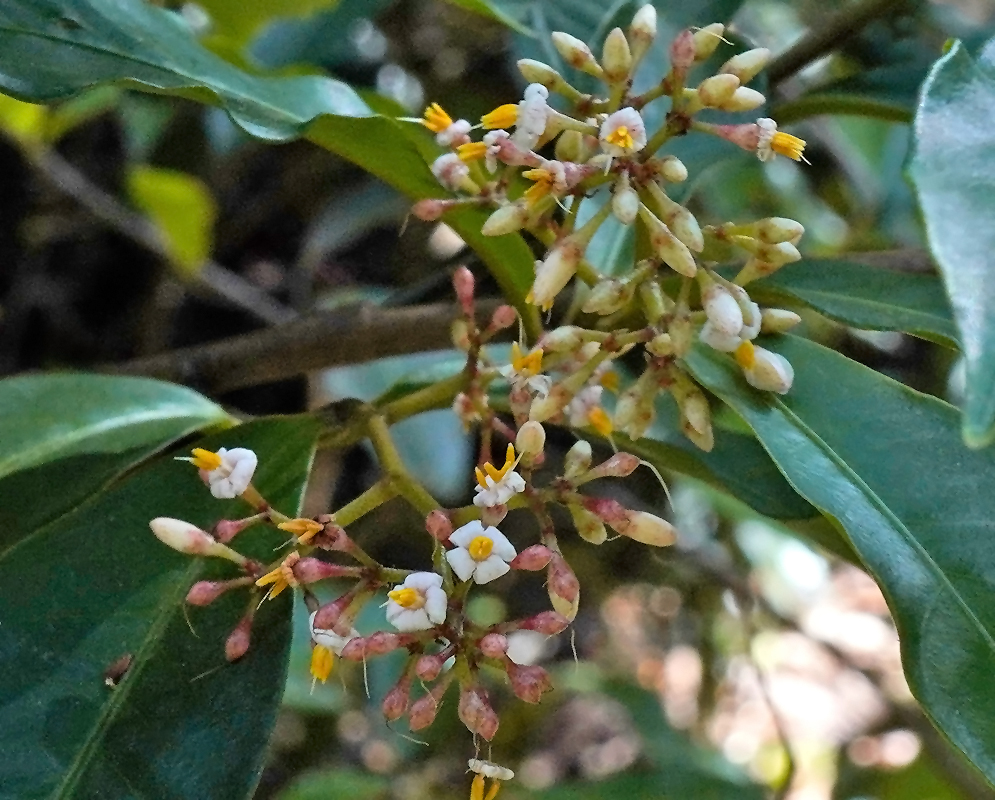


Ardisia guianensis
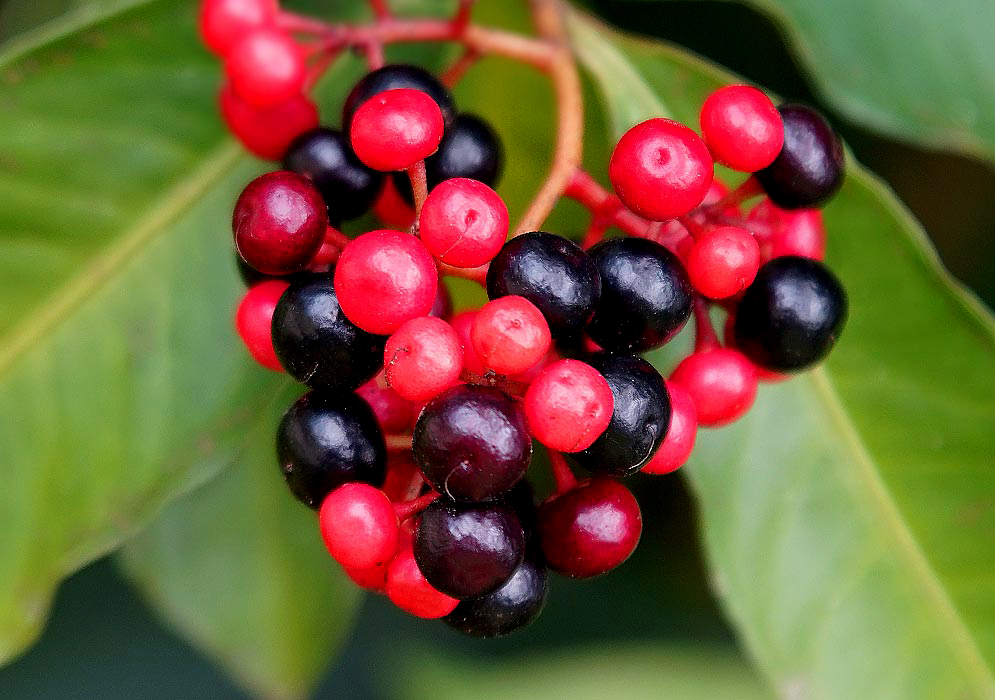
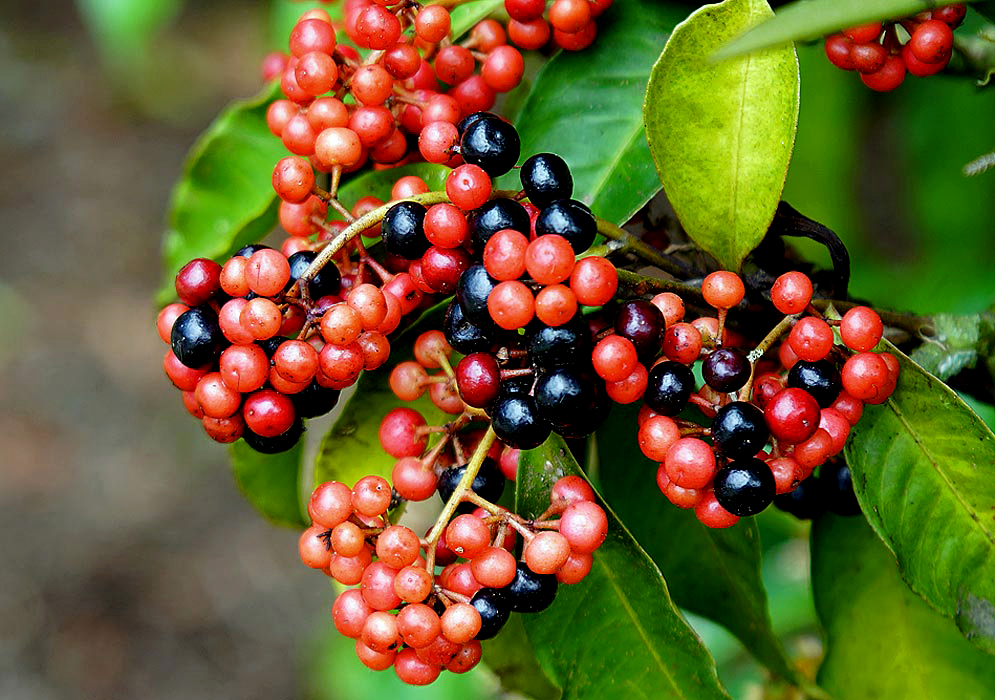
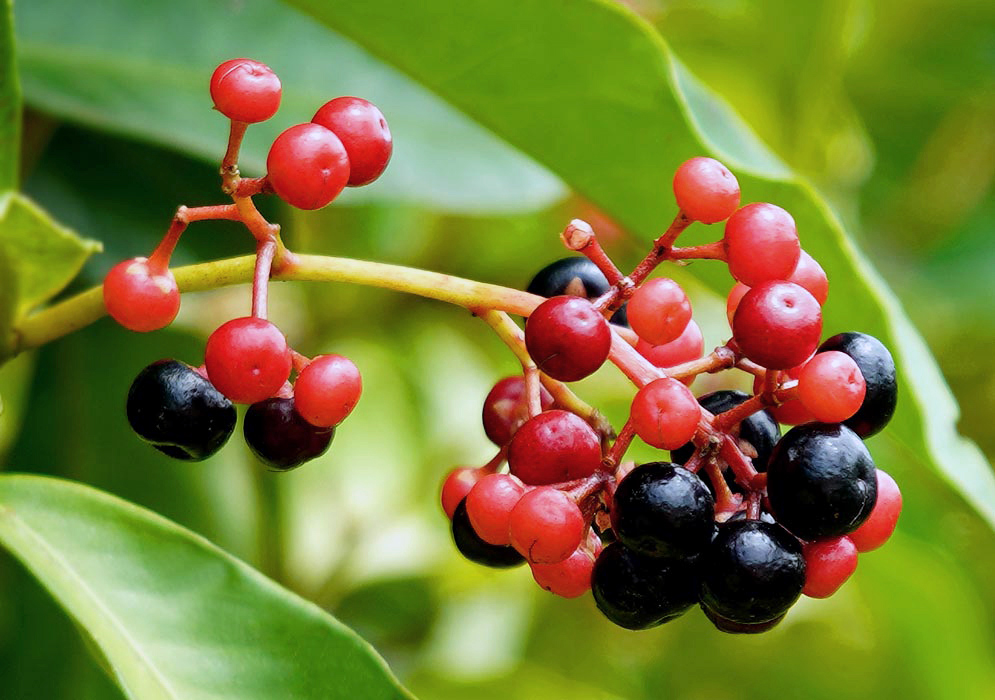
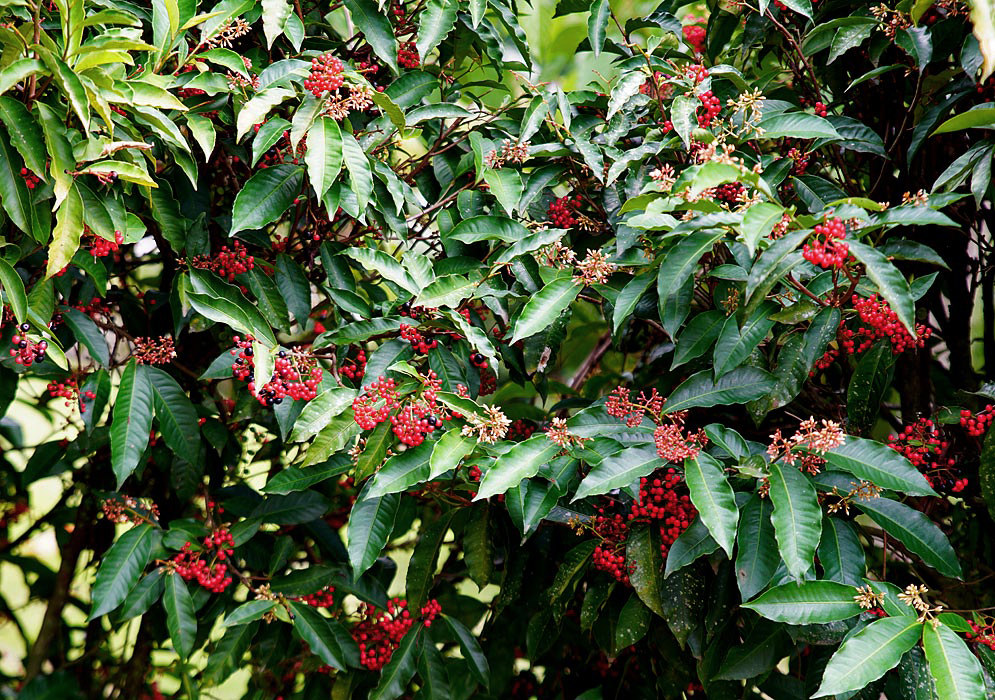
Native to Central America, tropical South America, and Trinidad and Tobago, this shrub or small tree can reach about 23 feet tall. It grows in moist forests and along rivers; in Colombia, it occurs between about 65 and 8,000 feet. Its leaves have small glandular dots and finely toothed edges. Branched clusters carry white to pale pink flowers whose anthers release pollen through small pores at their tips. The fleshy fruits become dark purple or black when ripe. In Panama, it flowers and fruits from January to May. Photographed in the department of Quindio, Colombia.