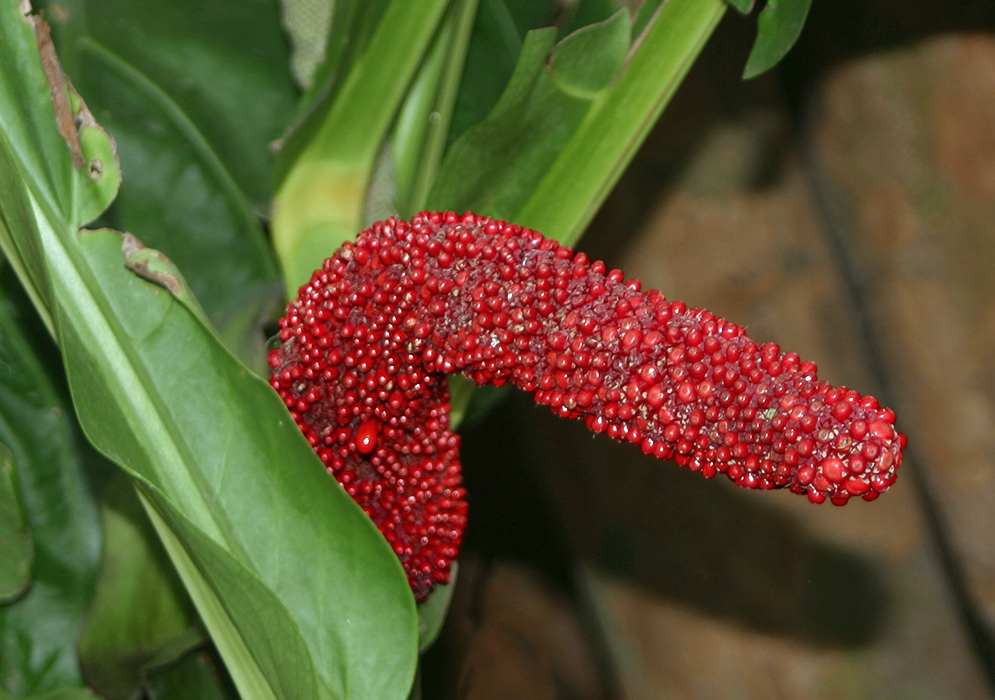


Anthurium bakeri
Native from Chiapas in Mexico through Central America to Guyana and Ecuador, this evergreen perennial herb grows on tree trunks in wet tropical forests. In Colombia, it occurs at about 650–6,200 feet. Its strap-shaped leaves have minute glandular dots on the undersides. The pale yellow-green spathe, sometimes tinged red or purple at the margins, bends back from a cream-to-white spadix. Tiny flowers packed along the spike develop into red berries with pointed tips.
The species can produce seed without pollination, a process called apomixis, allowing conspicuous fruiting spikes to develop in cultivated plants. Its short stems and compact, clustered growth make it an ornamental collection plant. Like other anthuriums, it is harmful if eaten, and its sap can irritate skin and eyes. Photographed in Barranquilla, Colombia.