
Anacardium occidentale (Cashew)
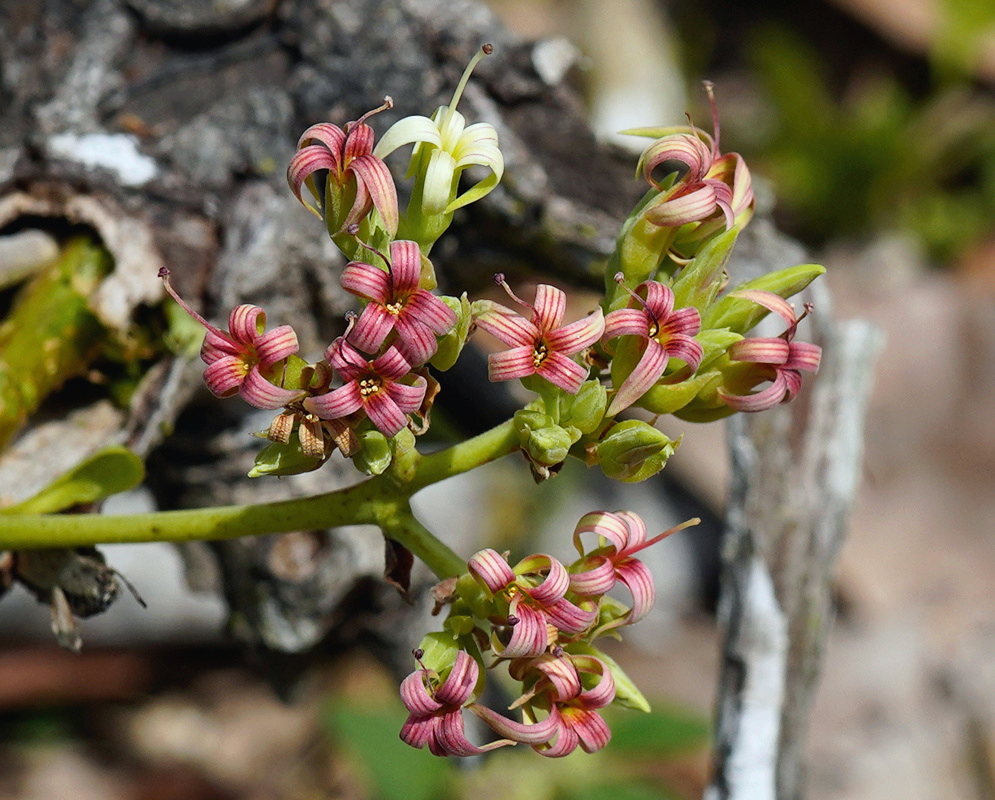
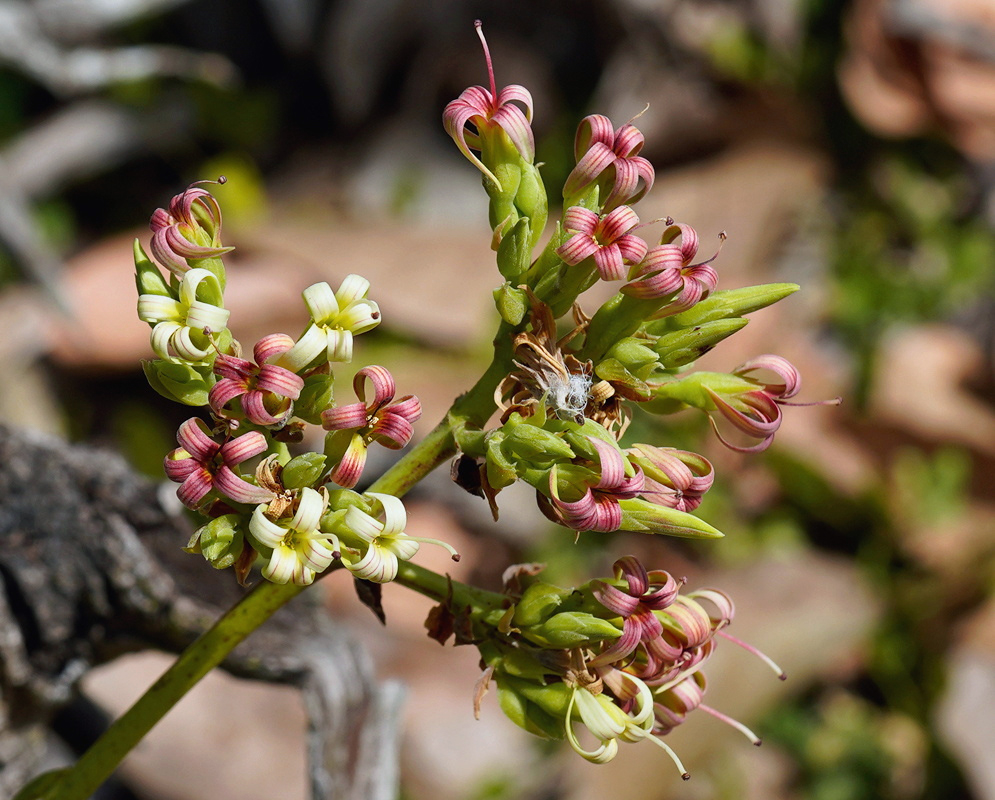
Native to Trinidad and tropical South America, cashew is an evergreen tree cultivated for its edible seeds. Fragrant flower clusters contain both male and bisexual flowers; their narrow petals change from whitish to pinkish red. Each kidney-shaped fruit holds a seed and hangs beneath the fleshy cashew apple, an enlarged flower stalk. The juicy apple can be tart and astringent and is eaten fresh or made into juice, jam and alcoholic drinks. The shell contains a corrosive liquid, so edible kernels require processing.
Cashew-shell liquid is an industrial raw material for paints, plastics and brake linings. Côte d’Ivoire is a major producer of cashew nuts, while Vietnam is a leading processing center. Traditional medicinal uses include bark and flowers for diarrhea and dysentery, and leaves for coughs; these uses do not establish the effectiveness of a clinical treatment. The tree has naturalized in northern Queensland and coastal Northern Territory, Australia, and is invasive on Horn Island in the Torres Strait. Photographed in Panama and Colombia.