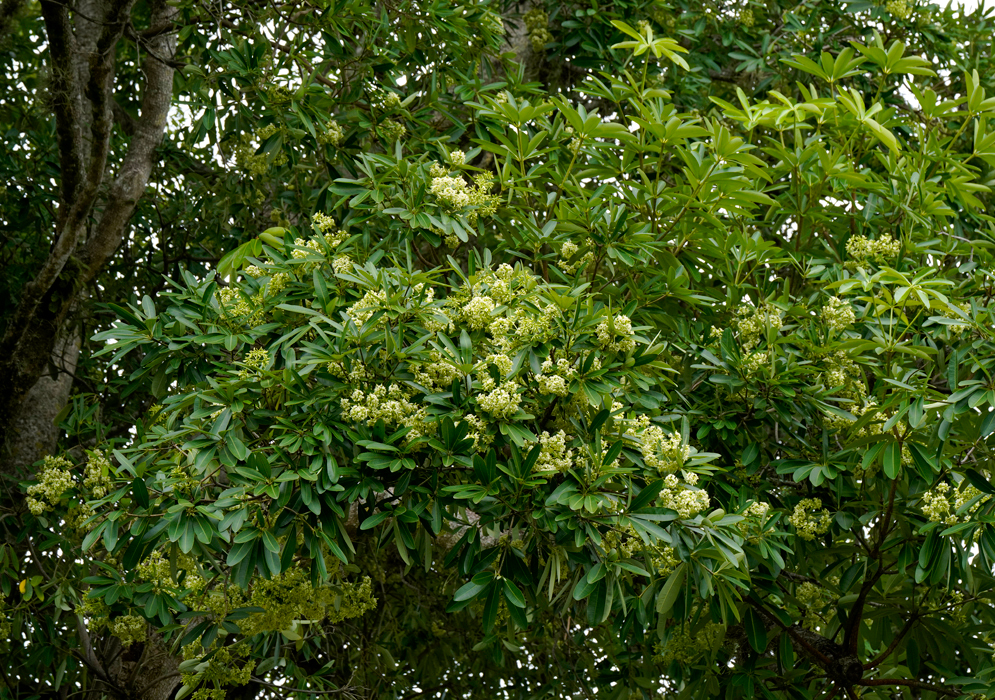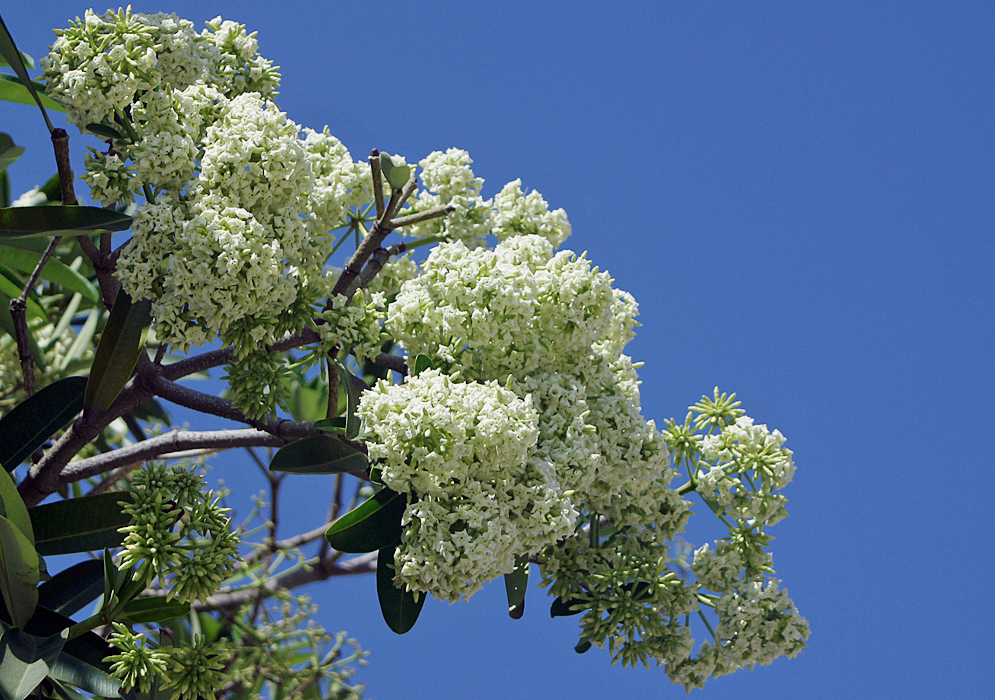


Alstonia scholaris (Indian Devil Tree)
Native to tropical and subtropical Asia, New Guinea, the Solomon Islands, and northern Australia, this evergreen tree is commonly called the Indian devil tree. Cream to greenish-white flowers grow in dense clusters and have a strong fragrance. Paired, slender fruits split to release seeds with silky hairs at both ends, allowing wind dispersal. Its soft, lightweight wood is traded as pulai and used for carvings, plywood, moldings, and paper pulp. Its use for school boards is reflected in the name scholaris.
In Indian traditional medicine, bark has been used for diarrhea and dysentery; Dai medicine in China uses the leaves for respiratory complaints. A standardized leaf-alkaloid preparation has reached human clinical research. A small randomized, placebo-controlled study in fifty-five patients reported relief of acute bronchitis symptoms during a seven-day course. This exploratory result concerns the tested preparation and does not establish the safety or effectiveness of homemade leaf or bark remedies. The species has naturalized in southern Florida; the leaves are considered potentially toxic if eaten. Photographed in Barranquilla, Colombia, where it is planted as a street tree.