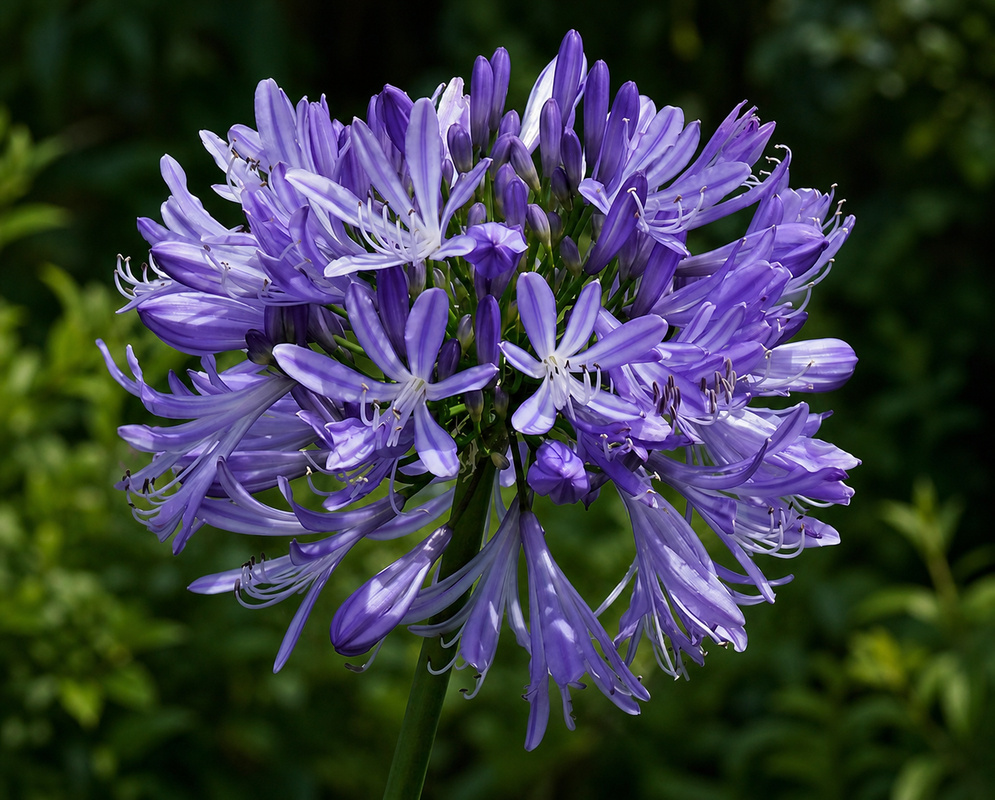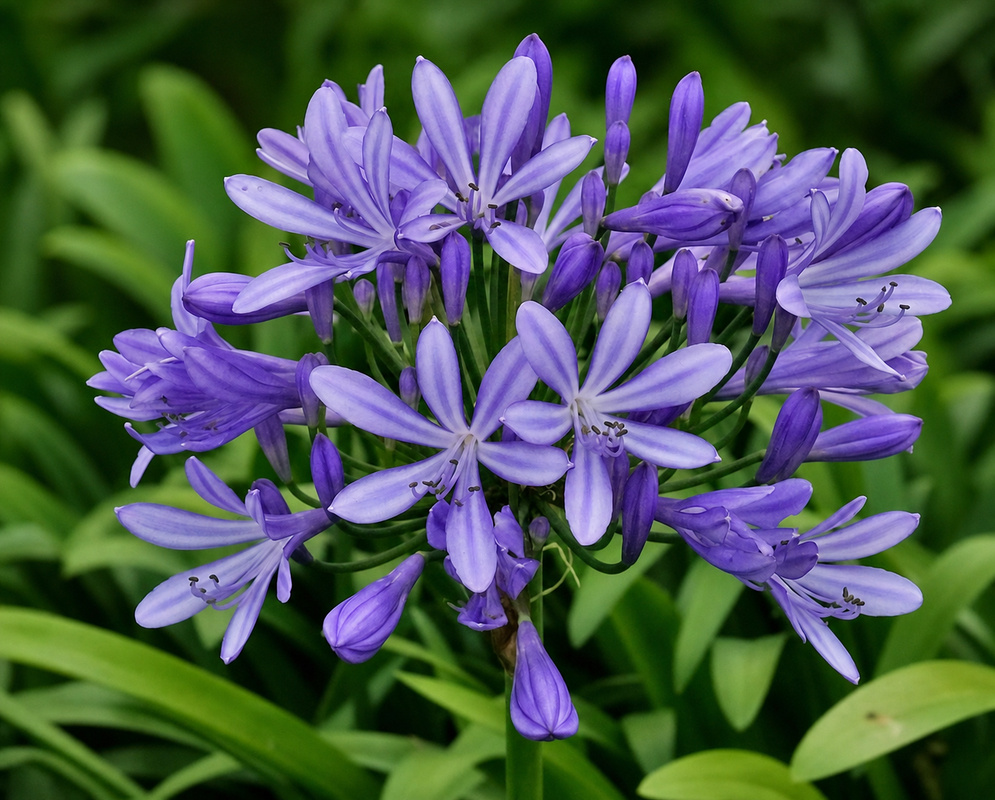

Agapanthus praecox (Lily of the Nile)
Native to the southern Cape and southwestern KwaZulu-Natal in South Africa, this evergreen perennial herb forms clumps from thick underground stems. Rounded flower heads carry numerous blue, violet, or white funnels, each opening into six lobes. Most evergreen agapanthus grown in gardens descend from this species and its hybrids. Three subspecies differ in their flowers and overall form, and they readily cross with one another. The species is widely used in ornamental plantings in Europe, Australia, and the Americas.
Traditional South African uses include remedies associated with childbirth; this does not establish their safety during pregnancy. Swallowing plant material can cause vomiting, diarrhea, and mouth ulceration, while the sap can irritate skin. It has escaped from gardens in New Zealand and southern Australia. Dense clumps can displace native vegetation, and wind-carried seeds and discarded rhizome fragments help it spread. Photographed in Bogotá, Colombia and Quito, Ecuador.