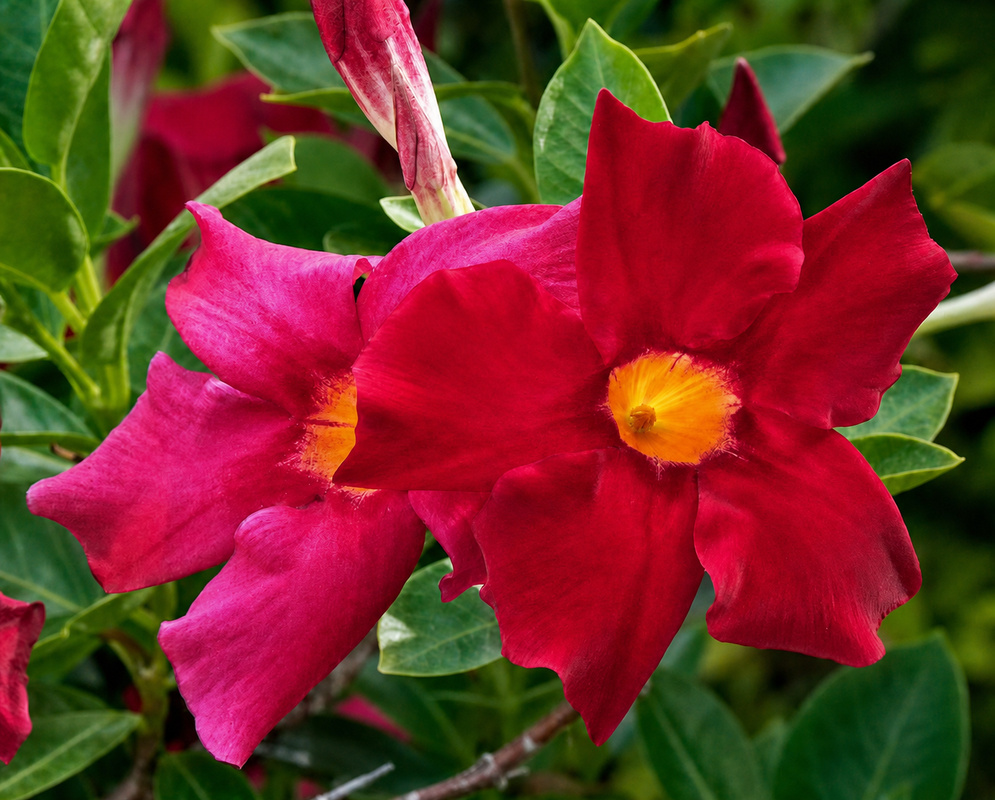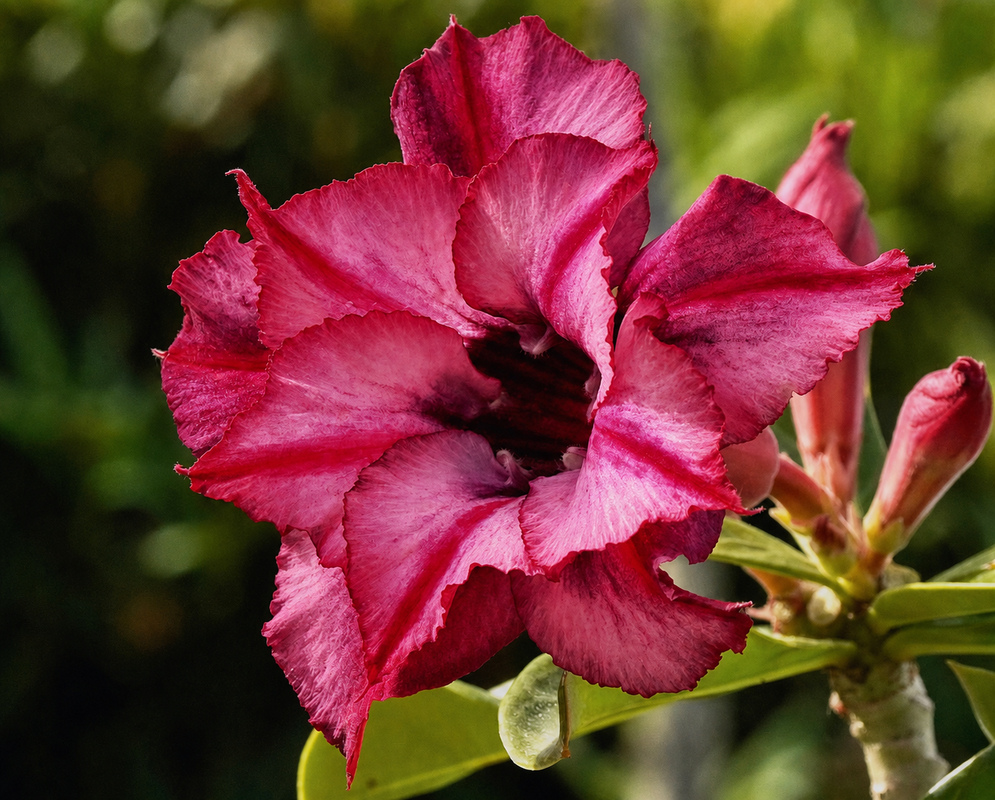

Adenium obesum (Desert Rose)
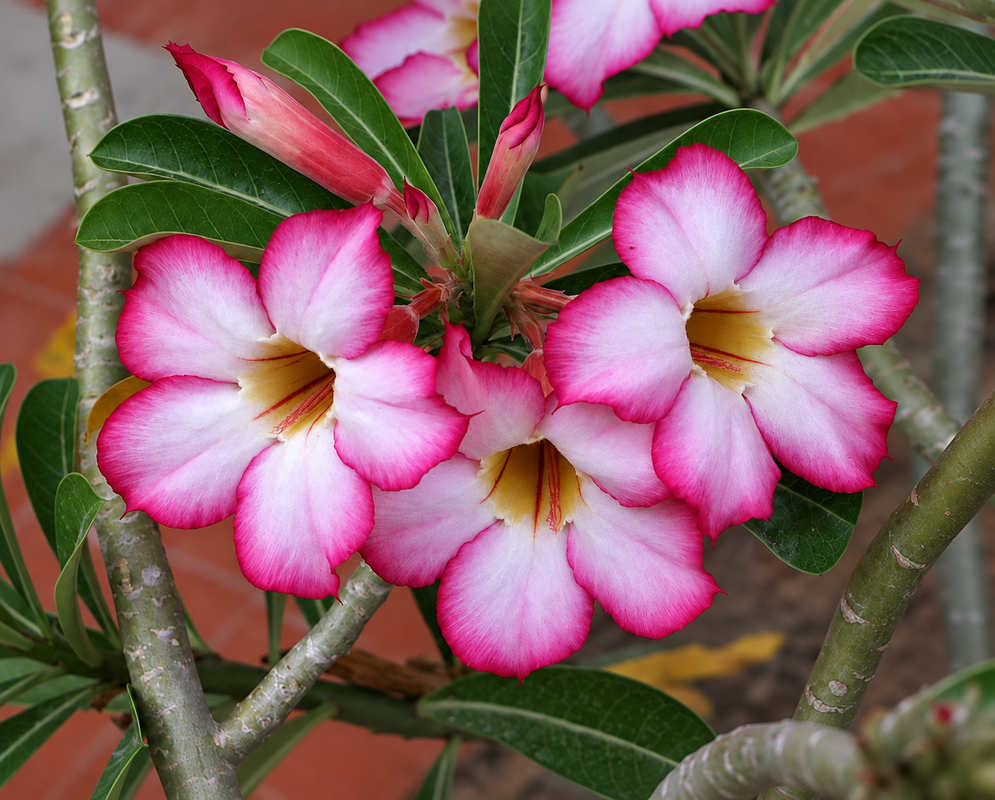
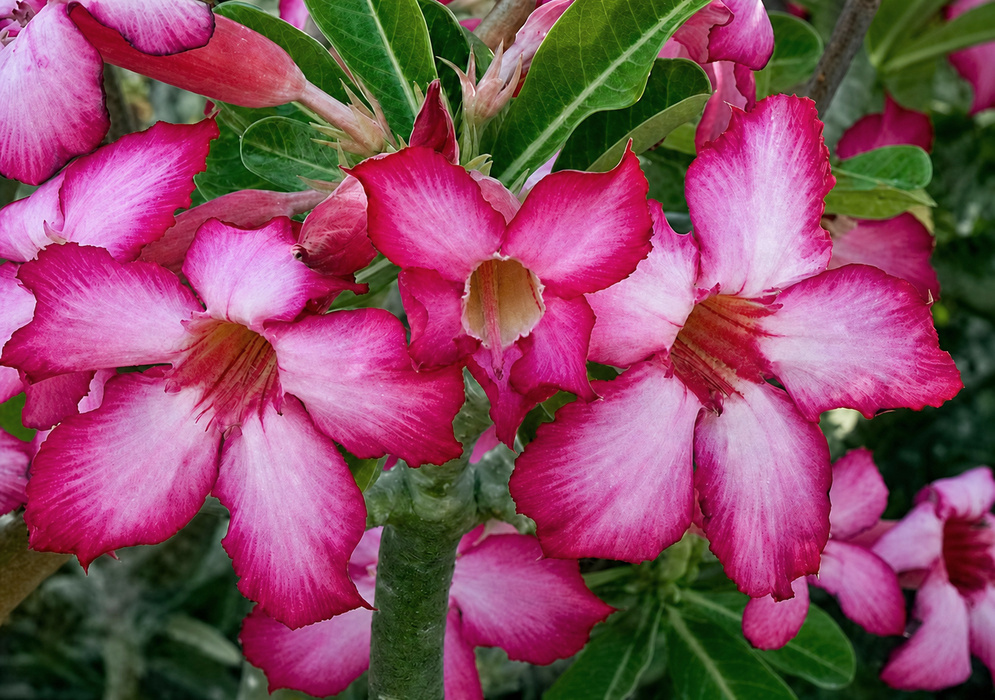
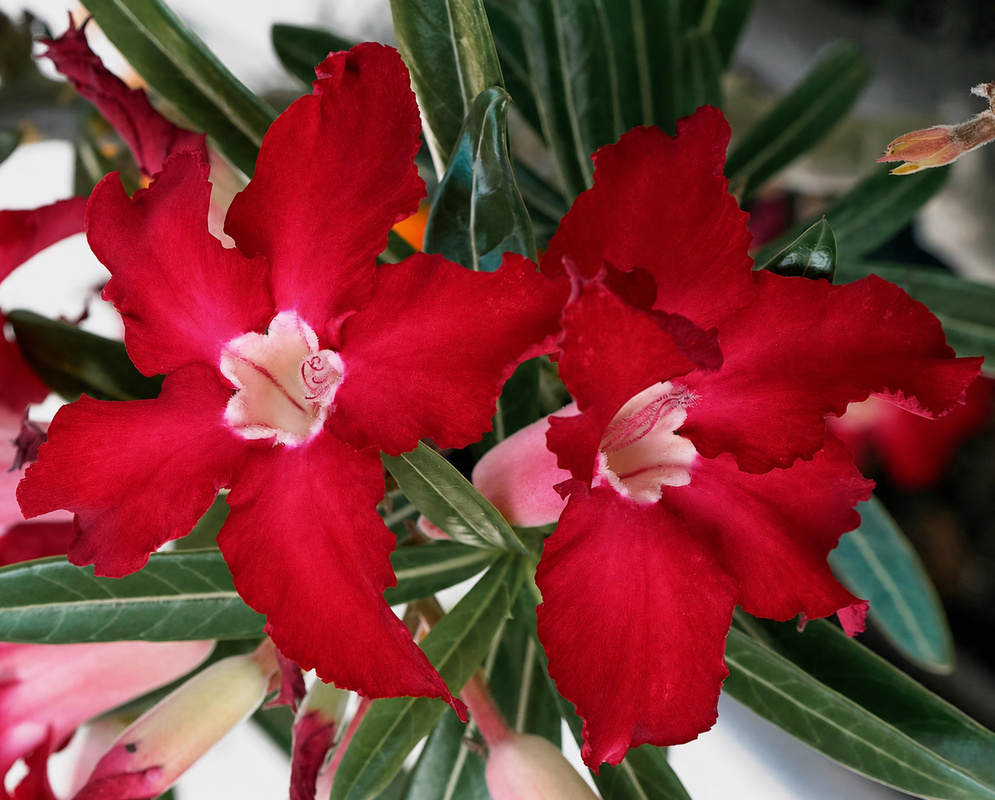
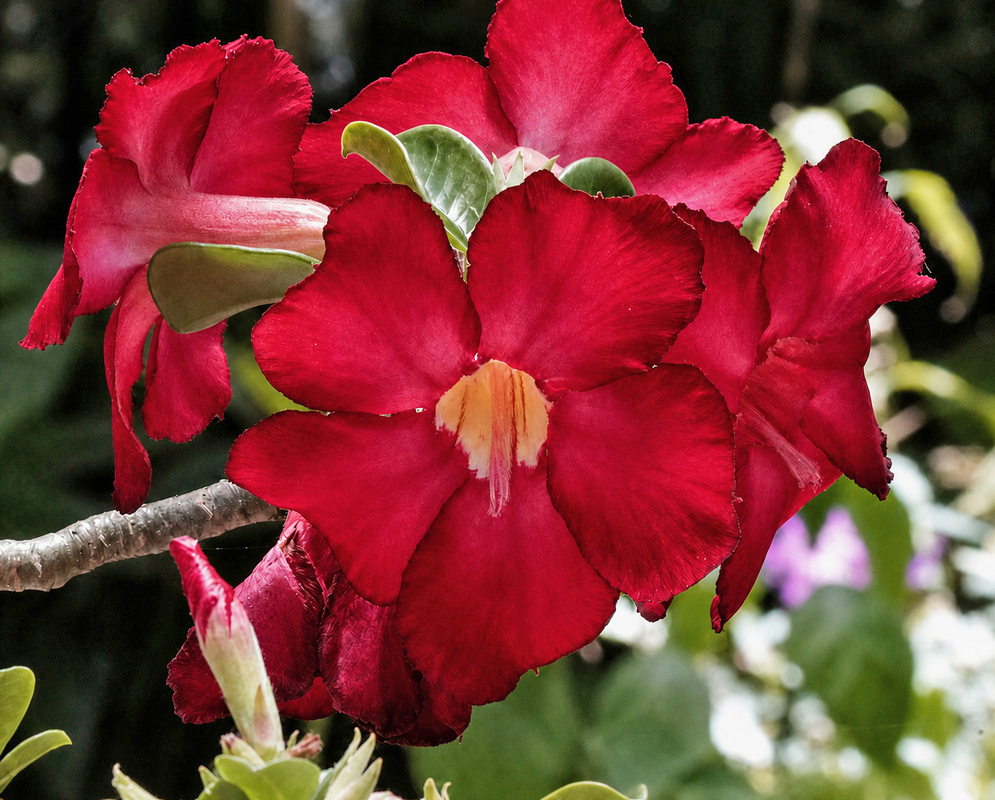
Native from western tropical Africa east to Tanzania and the southern Arabian Peninsula, desert rose is a succulent shrub that stores water in thick stems and a swollen base called a caudex. It can shed its leaves during dry periods. The species’ funnel-shaped flowers have five spreading pink to red lobes, often paling toward the throat. Cultivated hybrids offer additional colors and double flowers. Its sculptural form is used in bonsai displays, and the species has received the Royal Horticultural Society’s Award of Garden Merit. It has naturalized in Sri Lanka.
The sap contains toxic cardiac glycosides, compounds that can disrupt heart function, and has been used in arrow poison in Africa. All parts are poisonous if eaten, and the milky sap can irritate skin. In Oman, traditional medicinal uses include painful joints, wounds and skin infections; these practices do not establish safe or effective home remedies from this poisonous plant. Photographed in Florida and Barranquilla, Colombia.