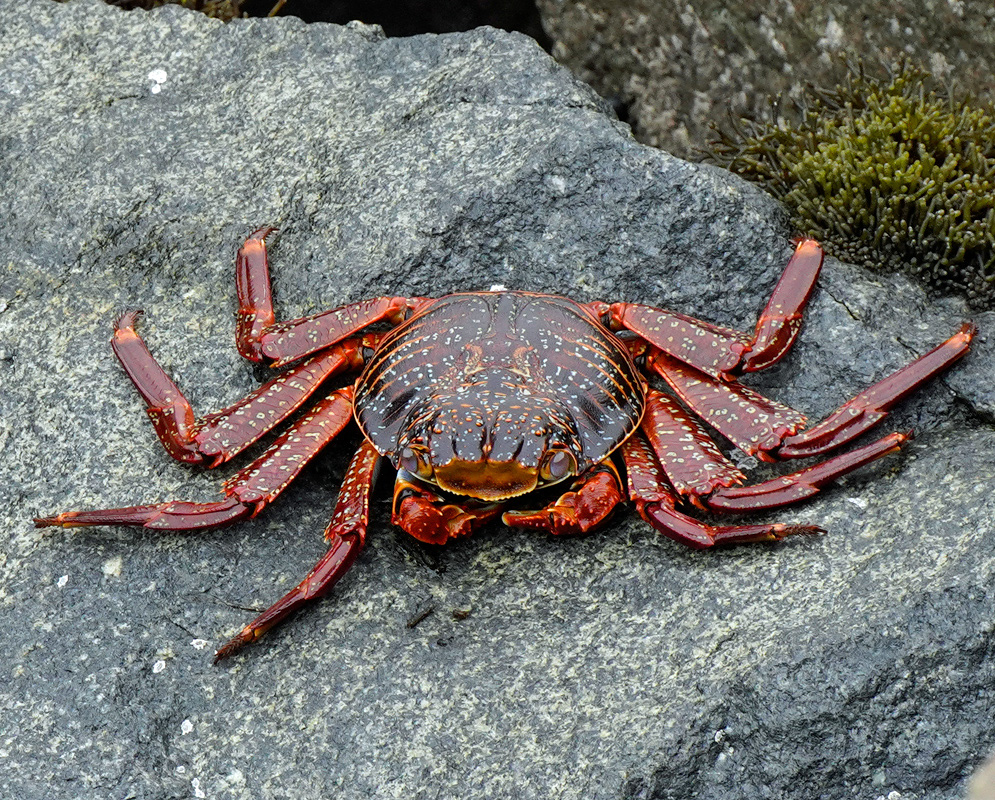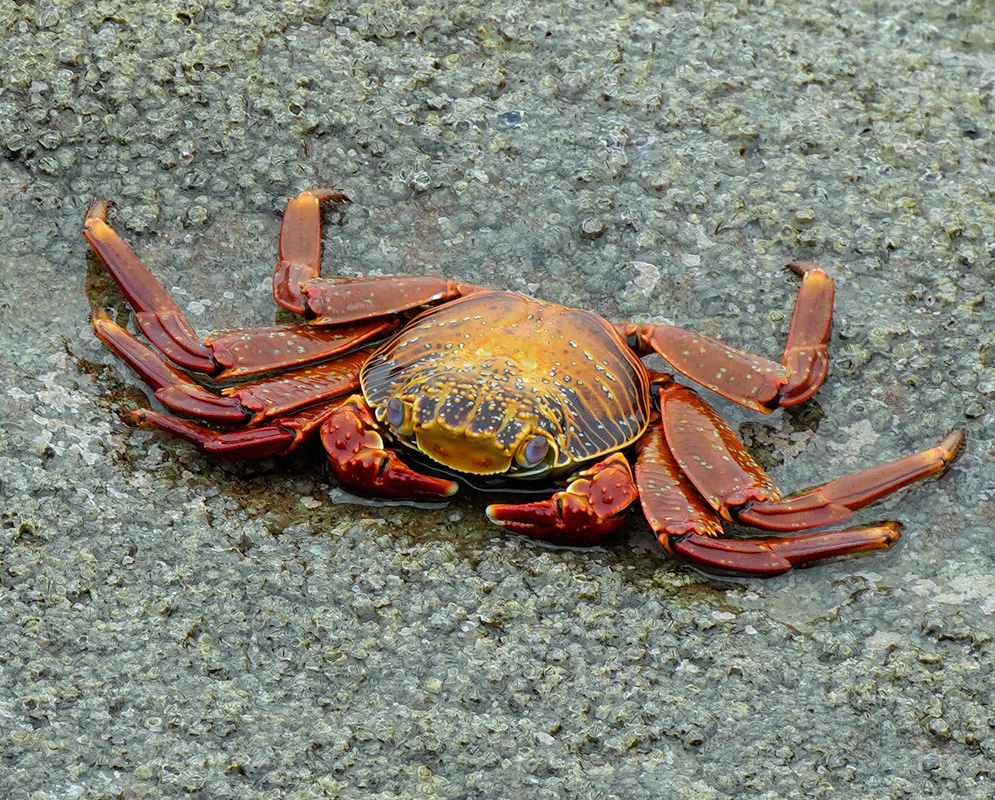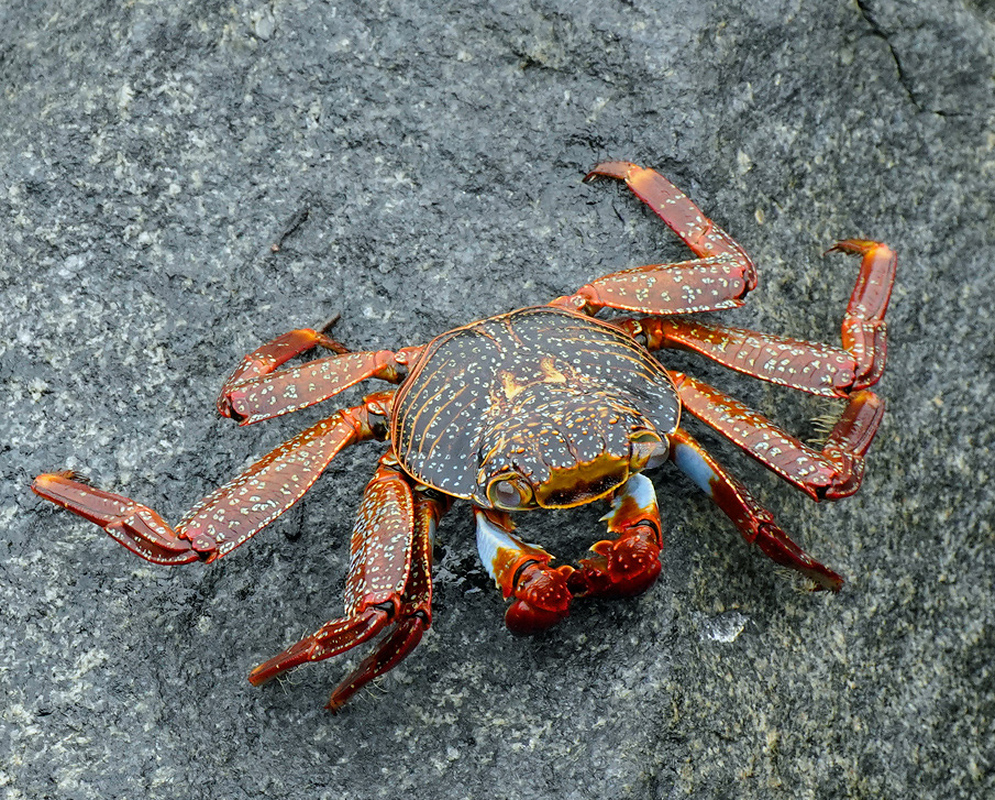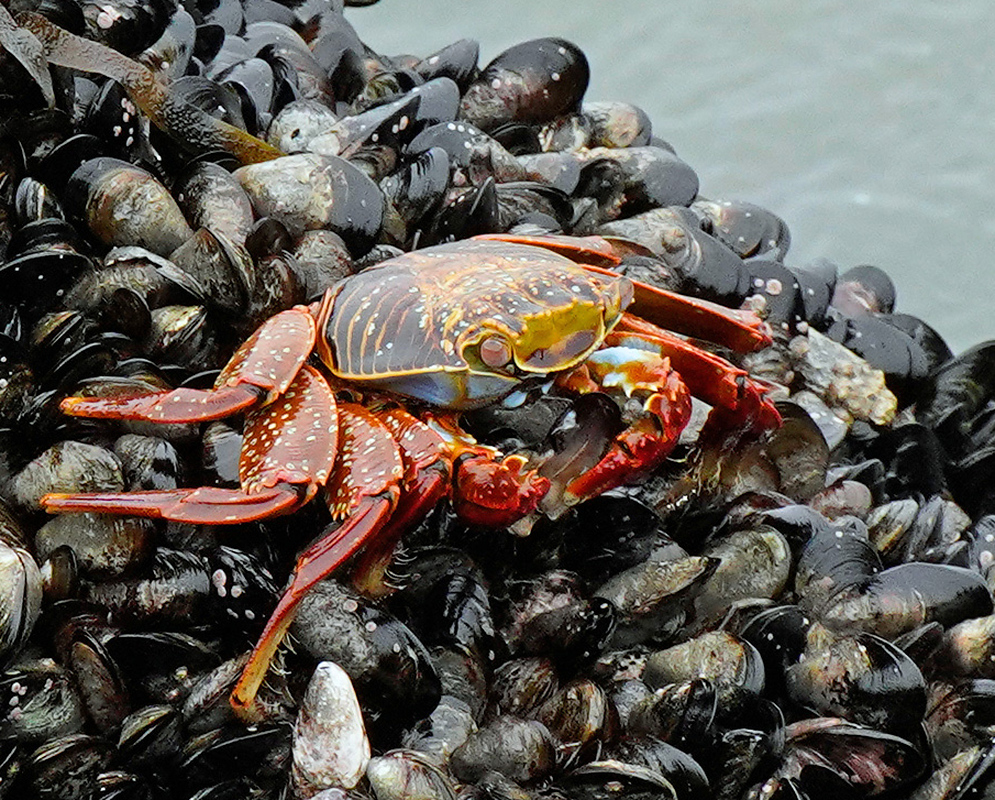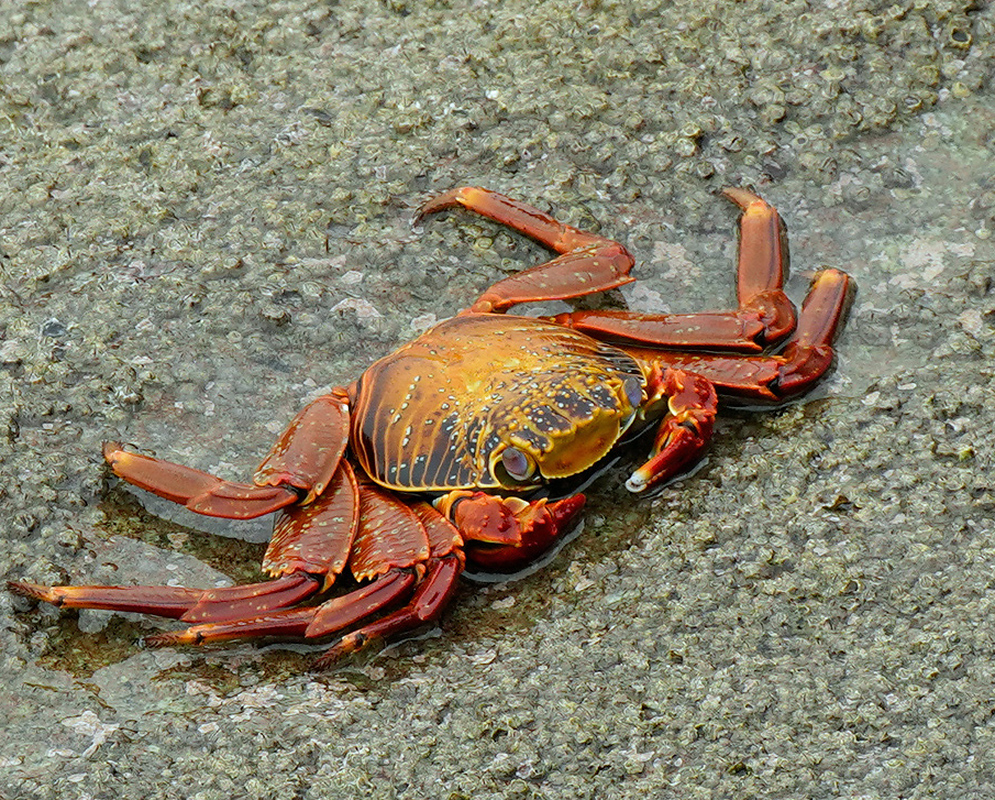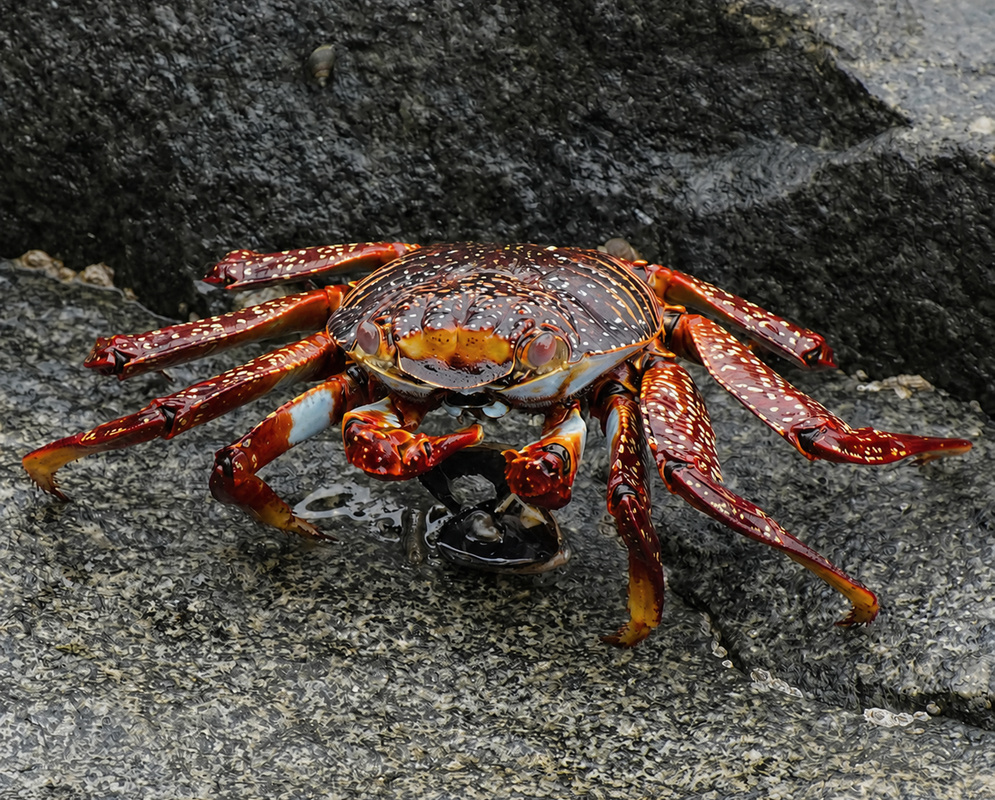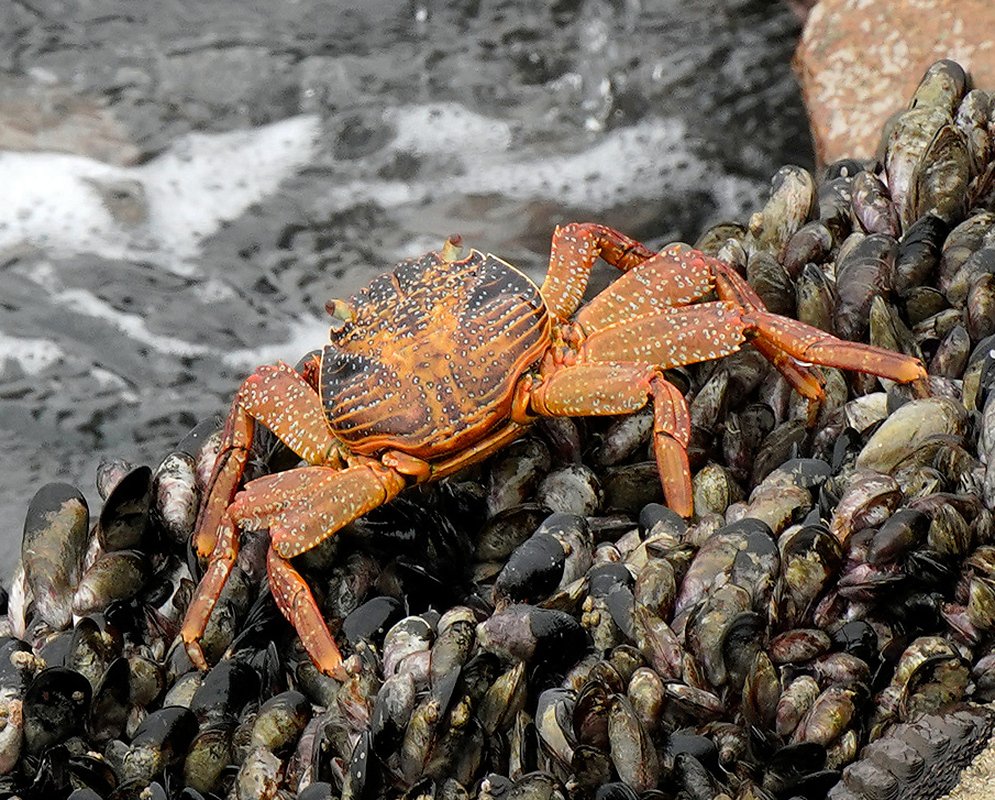


Grapsus grapsus (Sally Lightfoot Crab)
Grapsus grapsus (Sally Lightfoot crab) occupies wave-washed rocky shores along the tropical and subtropical Pacific coast of the Americas, including the Galápagos Islands. Juveniles are dark and blend with lava or wet stone, while mature crabs develop vivid red, orange, yellow, and blue-green patterning. The flattened body, pointed walking legs, and strong claws help the crab cling to uneven rock while waves break around it.
This crab moves rapidly in several directions and can leap across narrow gaps, making it difficult to approach. It grazes algae and also consumes carrion, animal remains, and other organic material available in the intertidal zone. Individuals often forage close to marine iguanas and sea lions, taking discarded tissue, parasites, or other food exposed around them. They retreat into crevices when threatened and time their movement around incoming surf. Photographed in Colombia.