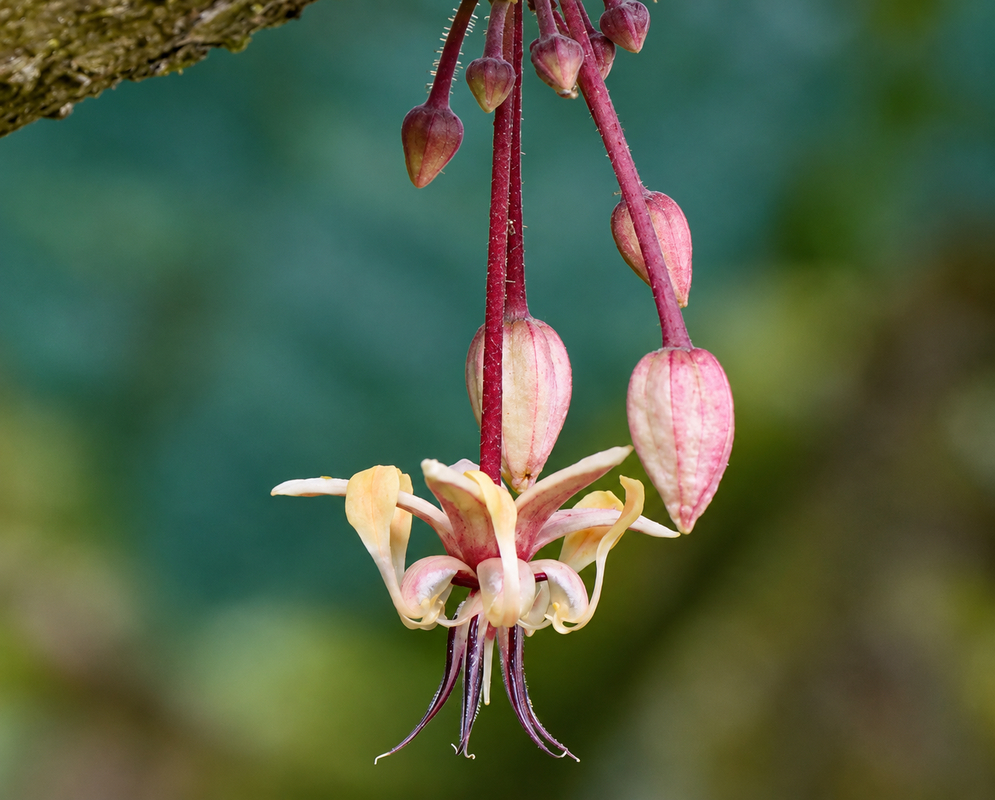

Theobroma cacao (Cacao)
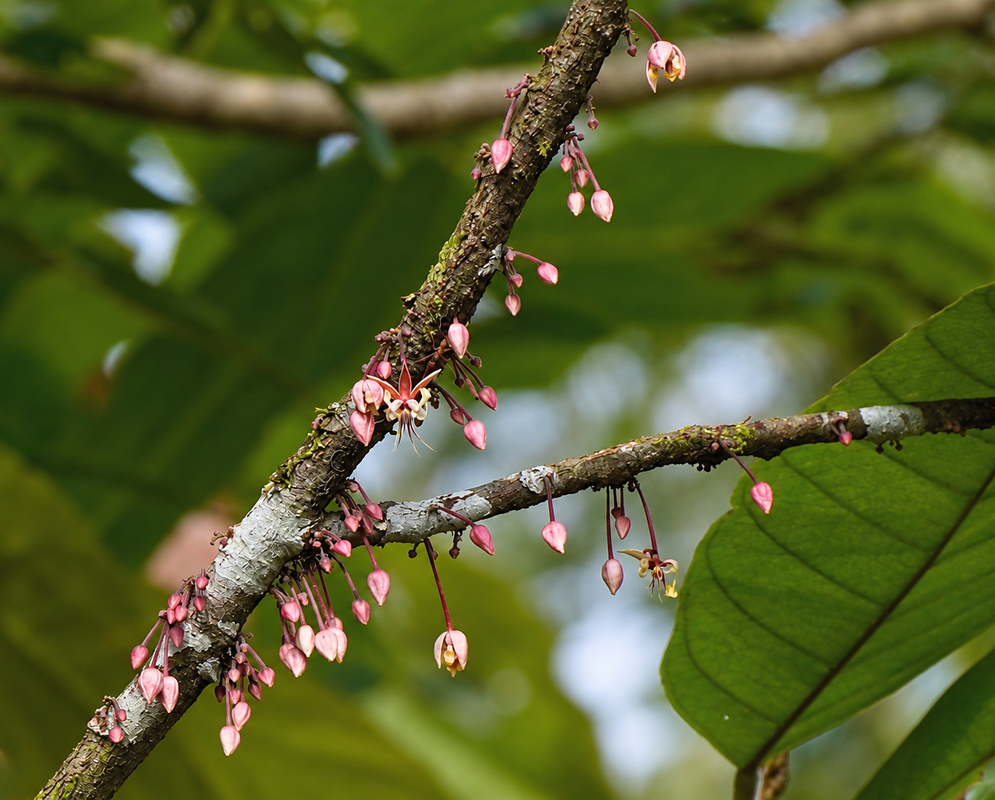
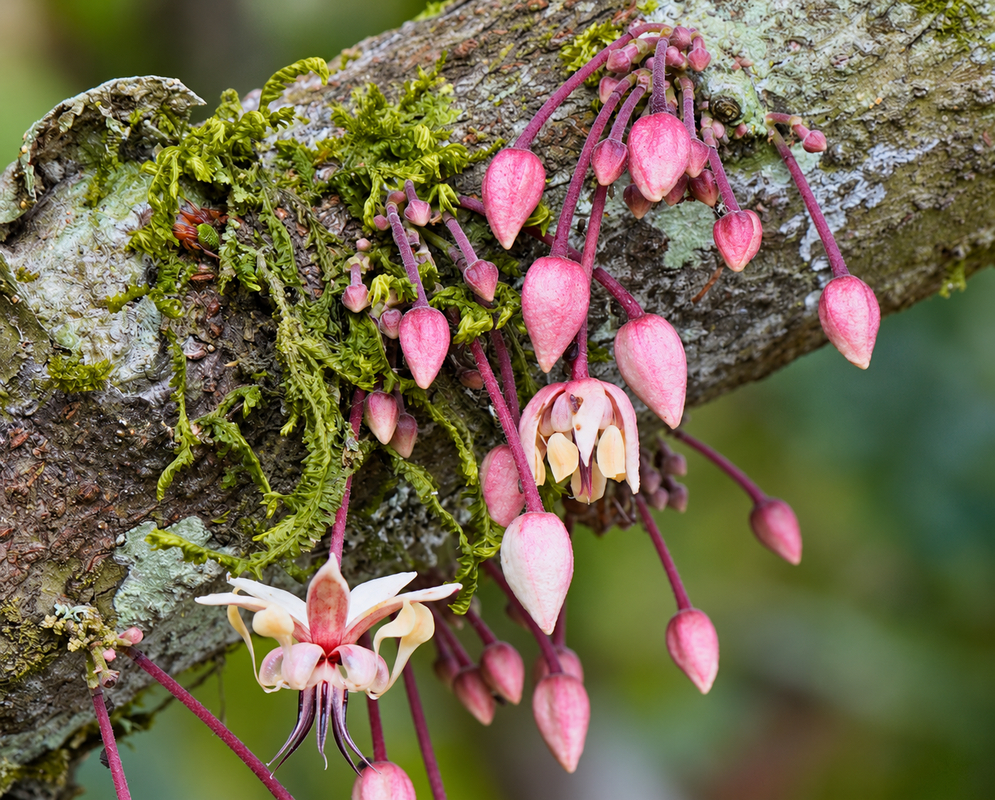
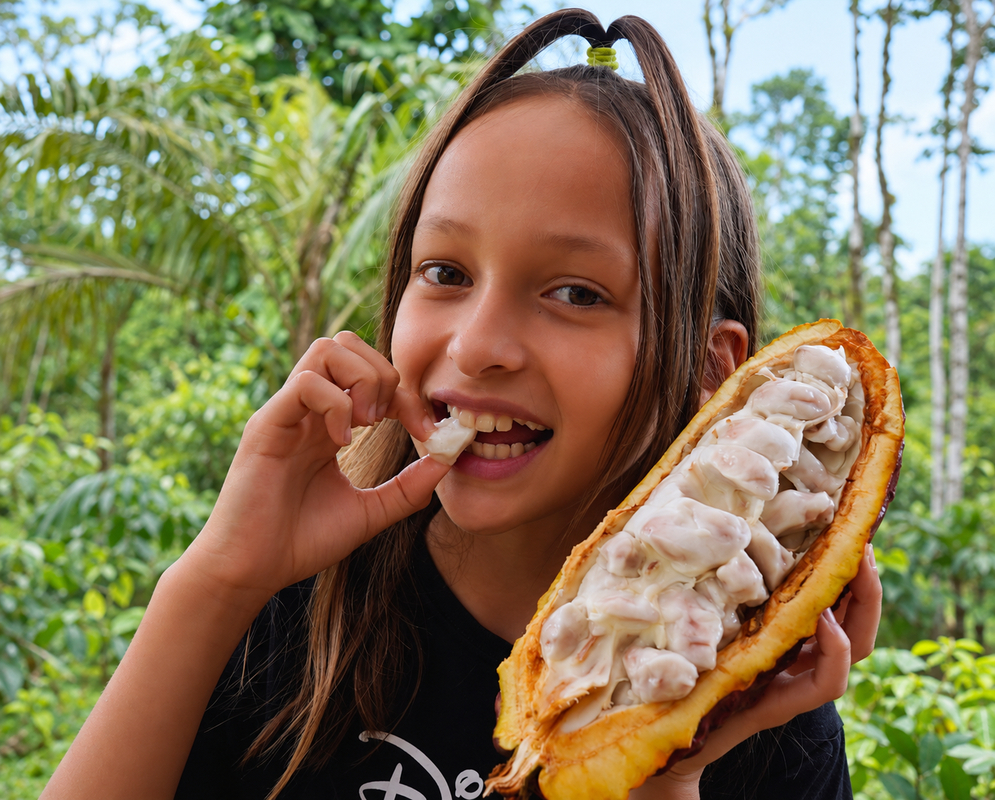
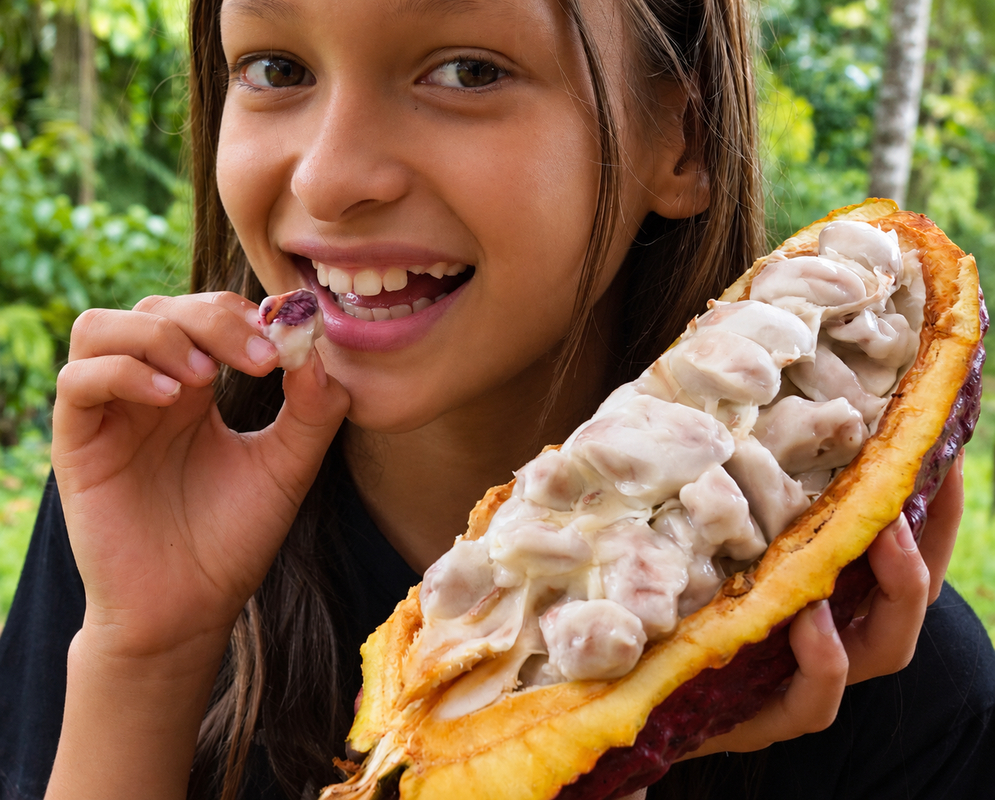
Native from Costa Rica to tropical South America, cacao is an evergreen tree of humid forests and a major tropical crop. Flowers grow directly from the trunk and older branches, a habit called cauliflory. Their five whitish-yellow petals have dark purple markings and cup-shaped bases. The ridged fruits contain seeds surrounded by sweet, tangy pulp that can be eaten fresh. The seeds, or cocoa beans, undergo fermentation, drying and roasting to develop chocolate flavor. Their fat becomes cocoa butter, used in chocolate and cosmetics; the remaining solids provide cocoa powder. Ivory Coast, Ghana, Ecuador, Nigeria and Cameroon are major cocoa-producing countries.
Cacao use at Santa Ana-La Florida in southeastern Ecuador dates back about 5,300 years, supported by starch grains, chemical residues and ancient DNA in pottery. Later Mesoamerican societies used cacao beans as currency and prepared them as ceremonial drinks. Cocoa flavanols have also been studied for cardiovascular effects. A controlled trial in one hundred healthy middle-aged adults found improved blood-vessel function after a month of a standardized flavanol drink. A much larger trial of cocoa extract in older adults did not significantly reduce its primary measure of total cardiovascular events. These preparations differ from ordinary chocolate, whose flavanol content varies with processing. Photographed in the Chocó region of Ecuador.