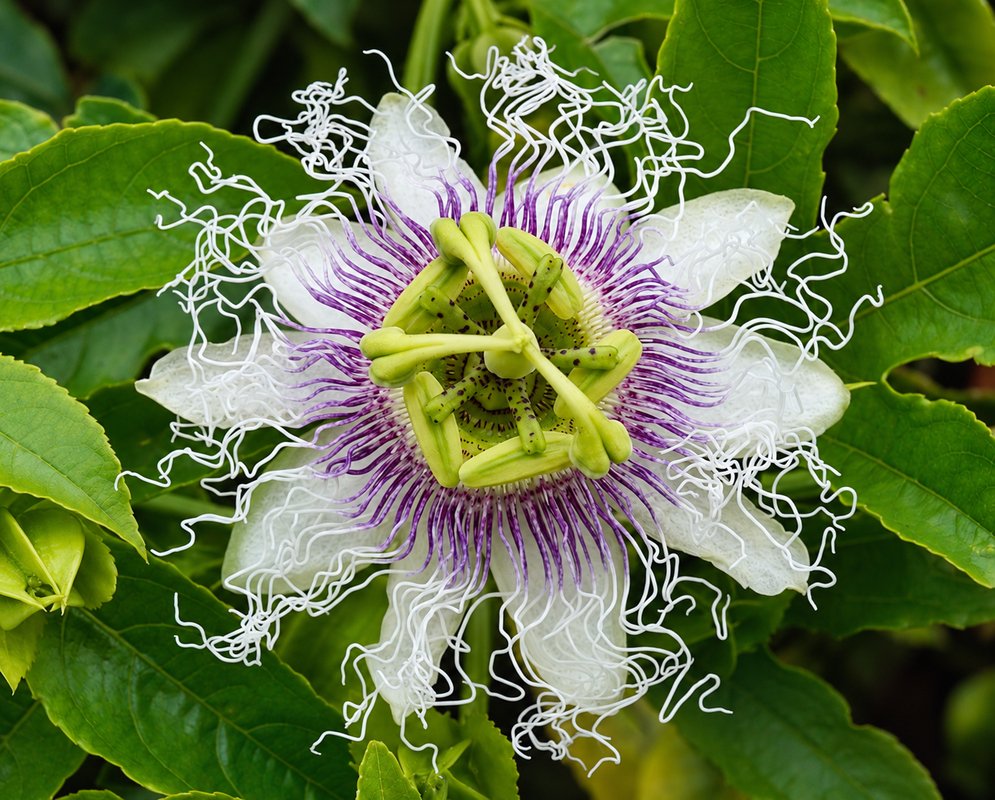

Passiflora edulis (Yellow Passionfruit)
Native to Brazil, Paraguay and northeastern Argentina, maracuyá is a perennial climbing vine with tendrils. Its solitary white flowers have purple-based corona filaments surrounding five stamens and three styles. Yellow passionfruit has a tough rind enclosing black seeds in orange-yellow, juice-filled sacs. The aromatic pulp is generally more acidic than that of purple passionfruit and is eaten fresh or processed into juices, flavorings, jams and jellies. Yellow-fruited forms are grown commercially in Colombia.
In Peru, the species has traditional medicinal uses involving fruit and flowers for high blood pressure; this use has not been established as an effective clinical treatment. The rind of yellow passionfruit is rich in pectin and has been processed into flour for food and health products. An eight-week randomized clinical trial of this flour in people with type two diabetes found no improvement in blood glucose control. That result concerns the tested rind preparation, rather than establishing a medicinal effect of the fresh pulp. Photographed in the central Andes mountain range of Colombia.